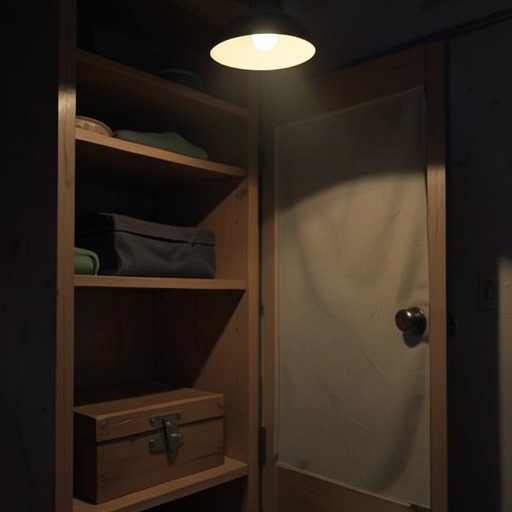
Mama Elena’s box of letters
Like Water for ChocolateMama Elena’s box of letters turns a hidden household object into the means by which Tita learns the history her mother never told her. A little key concealed in a heart-shaped locket opens the box, whose diary and dated letters from Jose Trevino disclose a forbidden love, a coerced marriage, and a secret about Gertrudis’s parentage. The discovery does not simply expose Mama Elena; it changes how Tita understands her mother and what she herself will choose to do with the inheritance of silence.
The Box and Its Hidden Key
For as long as Tita could remember, Mama Elena carried an enormous ring of keys chained to her. The keys gave her access to the house’s doors and recesses, while the household itself was governed by close supervision: even taking sugar from the pantry required her authorization. Yet the key to the box was separate from this visible apparatus of control. It was tiny, attached to a heart-shaped locket Mama Elena wore around her neck, and Tita noticed it while preparing her mother for the wake.
The box had been hidden in Mama Elena’s wardrobe, among the sheets. Tita first encountered it as a child during a game of hide-and-seek. She tried to open it but could not; Mama Elena discovered her and later made her remove the kernels from a hundred ears of corn in the cornloft. After finding the key and reading what the box contained, Tita reinterprets that punishment. She had believed she was punished for hiding among clean sheets with her shoes on; she now understands that her mother had been guarding the locked box and its contents. The childhood episode thus gives the object a history: its secrecy shaped Tita’s experience of discipline well before she knew what was being concealed.
What the Letters Reveal
Inside the box, Tita finds a diary and a packet of letters addressed to Mama Elena by Jose Trevino. She puts the letters in date order and reconstructs a relationship that had remained hidden from her. Jose was the love of Mama Elena’s life, but her parents prevented them from marrying because of his Black ancestry. His family history was connected to a community of Black people who had fled the American Civil War and the danger of lynching before settling near the village. Mama Elena’s parents forced her into an immediate marriage with Tita’s father after discovering her love for Jose.
Marriage did not end the correspondence. The letters show that Mama Elena continued secretly communicating with Jose, and they indicate that their relationship was not confined to writing. They also disclose that Gertrudis was Jose’s child, rather than the child of the man who raised her. This revelation recasts family identity: the history preserved in the box crosses the boundary between private correspondence and the public understanding of kinship in the household.
The diary and letters also trace the lost possibility of escape. When Mama Elena discovered she was pregnant, she planned to run away with Jose. As she waited for him in the darkness of a balcony, an unknown man attacked and killed him. After his death, Mama Elena remained with her husband. He did not learn the full story for many years; on the day Tita was born, he heard the information from someone at a bar while celebrating his daughter’s birth. The news preceded his fatal heart attack. These events, assembled from the papers, give Tita a history of Mama Elena’s marriage that the visible household order had concealed.
Tita’s Response to the Discovery
Learning the truth does not make Tita triumphant. She feels guilty for having uncovered her mother’s secret and hesitates over what to do with the letters. She considers burning them, but decides that she has no right to destroy what Mama Elena herself had kept. Instead, she returns the papers to the box and puts everything back where she found it. Her choice preserves the evidence without turning it into a public accusation; the secret is now known to Tita, but the object remains hidden.
The discovery also changes the meaning of the wake and funeral for her. At the wake, Tita studies her mother and recognizes that she had not understood the person behind the authority that governed her life. At the funeral, she weeps not for the mother who had repressed her, but for the woman whose love had been frustrated. She vows at the tomb never to renounce love. For a moment, she believes John Brown is the person she truly loves, because he has supported her without reservation. Then she sees Pedro arrive with Rosaura, and her certainty falters. The box therefore informs Tita’s new conviction about love, but does not settle whom she loves.
Narrative Significance
The box makes the past readable through physical traces rather than through Mama Elena’s own explanation. Its key, hidden in the locket, joins intimacy to secrecy; its location among the household linens connects the concealed record to the domestic space Mama Elena controlled. The letters’ dates let Tita arrange fragments into a sequence, turning objects kept out of sight into a history that explains the marriage, Jose’s loss, and Gertrudis’s parentage.
That history complicates rather than cancels Tita’s experience of Mama Elena’s authority. The woman who enforced rules and punished curiosity had herself lived under the force of racial prejudice and an imposed marriage, and had preserved evidence of a love she could not openly pursue. Tita’s decision to return the papers leaves the secret physically contained even as its meaning has changed. The box thus carries both concealment and recognition: it held the account of Mama Elena’s private life, and its opening allows Tita to grieve for a person she had not previously been able to see.