Pedro and Rosaura’s Marriage
Like Water for ChocolatePedro and Rosaura’s Marriage is arranged after Mama Elena bars Pedro from marrying Tita and proposes Rosaura as a substitute. The match joins Pedro to the sister of the woman he loves, while Tita remains bound by the family rule that the youngest daughter must care for her mother. Its significance extends beyond the immediate rejection: the marriage exposes a conflict between public family arrangements and private attachments that recurs in the history of the De la Garza family.
Causes and Constraints
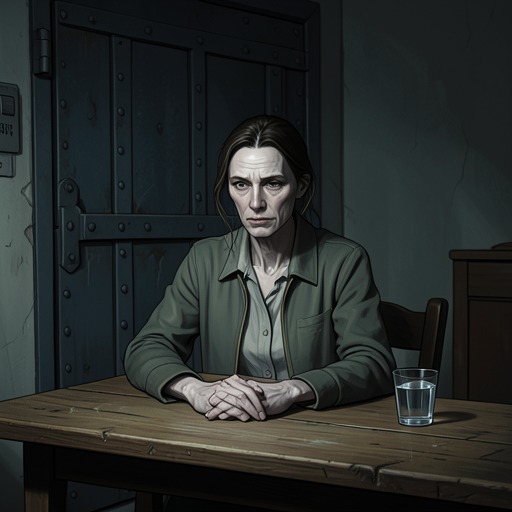
When Mama Elena asks Tita whether Pedro intends to seek her hand, Tita can barely answer. Mama Elena treats the question as settled: because Tita is the youngest daughter, she must remain unmarried and care for her mother until Mama Elena dies. The rule is not presented as a negotiable preference. Mama Elena speaks with the authority of a command, making the tradition the obstacle Pedro’s proposal cannot overcome.
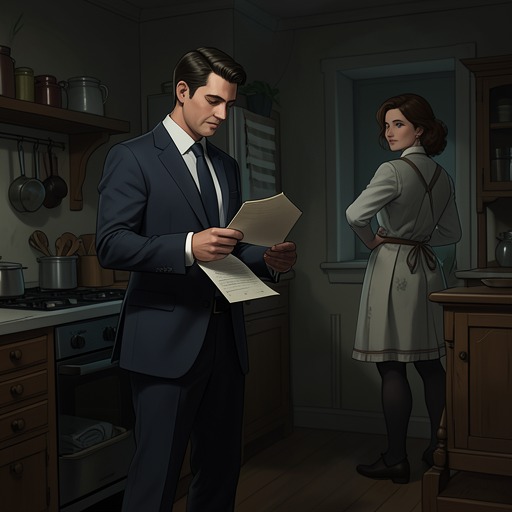
The following day, Pedro arrives with his father to ask for Tita’s hand. His visit is unexpected because Tita had sent word through Nacha’s brother asking him to abandon his suit. Mama Elena receives Pedro and his father politely, but her explanation is decisive: Tita cannot marry. She then suggests Rosaura, who is two years older than Tita, as a daughter available for marriage. The proposal redirects Pedro’s request without removing the family constraint that prompted the refusal.
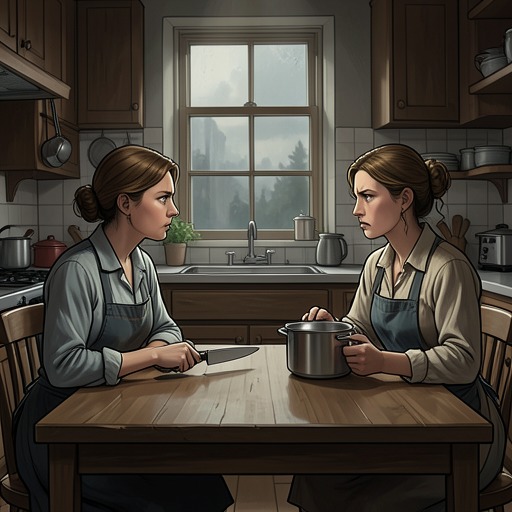
The negotiations take place while Tita, Rosaura, and Gertrudis are in the kitchen making Christmas Rolls for Tita’s approaching sixteenth birthday. Chencha carries coffee and cookies into the living room, nearly drops the tray when she hears the exchange, and hurries back to report what is happening. The sisters stop their work to listen. This kitchen-side account makes the marriage decision a family event even before its participants have explained it to one another: the news passes from the formal reception room to the women gathered around the birthday preparation.
Pedro’s Decision and the Marriage
After Mama Elena agrees to Pedro’s marriage to Rosaura, Nacha accompanies Pedro and his father to the ranch gate and overhears their conversation. Pedro’s father challenges him over accepting a match with Rosaura after his declaration of enduring love for Tita. Pedro answers that when marriage to the woman he loves is forbidden, marrying her sister offers his only chance to remain close to her. He describes his love for Tita as something that will not end, even though he is proceeding with Rosaura.
Nacha does not hear the entire exchange. The ranch dog, Pulque, runs past barking, and the conversation fades beneath the sound of dry leaves. The interruption leaves the report incomplete, but the part Nacha carries back to Tita clarifies Pedro’s purpose. His decision is not evidence that his attachment to Tita has been replaced by affection for Rosaura; in his account, marriage to Rosaura is the route left open by Mama Elena’s refusal.
When Mama Elena confirms that Pedro will marry Rosaura, Tita experiences the decision as a profound emotional shock. Nacha’s account of Pedro’s promise does not relieve it. The marriage therefore separates what Pedro intends from what Tita must live through: he sees the match as a means of staying near her, while she faces the fact that he will become her sister’s husband. The available account establishes the decision and its emotional consequences, but does not describe the wedding ceremony itself.
Marriage, Love, and Family History
The arrangement belongs to a wider family history in which marriage does not necessarily settle questions of love or parentage. After Mama Elena’s death, Tita opens a locked box containing a diary and letters from José Treviño. She learns that José had been the love of Mama Elena’s life, but Mama Elena’s parents opposed the relationship because he had Black ancestry and forced her to marry Juan De la Garza. Mama Elena continued corresponding secretly with José after her marriage. The letters also reveal that Gertrudis was José’s daughter, not Juan’s.
This history offers a pointed parallel to Pedro and Rosaura’s marriage without making the two arrangements identical. Mama Elena herself had entered a marriage imposed by her parents while maintaining a private attachment elsewhere; Pedro, by contrast, accepts Rosaura’s marriage as a way to remain near Tita. In both histories, the publicly recognized marriage does not disclose the full emotional or familial truth. The contrast also shows that marriage operates within family authority and racial classification, not only between the people whose names appear in the match.
The concealed parentage later becomes consequential. When Gertrudis gives birth to a child of mixed ancestry and Juan threatens to leave her, Tita reveals the secret preserved in Mama Elena’s letters. The disclosure helps establish Gertrudis’s innocence and keeps the couple from separating. This later episode does not change the circumstances of Pedro and Rosaura’s arrangement, but it makes the family’s pattern of concealed attachments and contested legitimacy visible across generations.
Narrative Significance
The marriage is a turning point because it converts Mama Elena’s rule into a lasting relationship among the sisters and Pedro. Her refusal does not end Pedro’s love for Tita; it redirects his proposal toward Rosaura, leaving Tita to confront the consequences of an arrangement made within the household’s hierarchy. The sisters’ shared preparation of Tita’s birthday rolls frames the shift with domestic continuity: the work proceeds even as the family’s future is being decided elsewhere in the house.
Nacha’s incomplete but consequential report also shapes how the decision is understood. Her hearing is imperfect, and the dog interrupts the conversation, yet she supplies Tita with Pedro’s explanation. The account thus holds two facts in tension: Pedro says that his love for Tita will endure, and he nonetheless marries Rosaura. That tension, rather than a simple change of affection, defines the marriage’s place in the family story.