Rosaura and Esperanza's Mother-Daughter Relationship
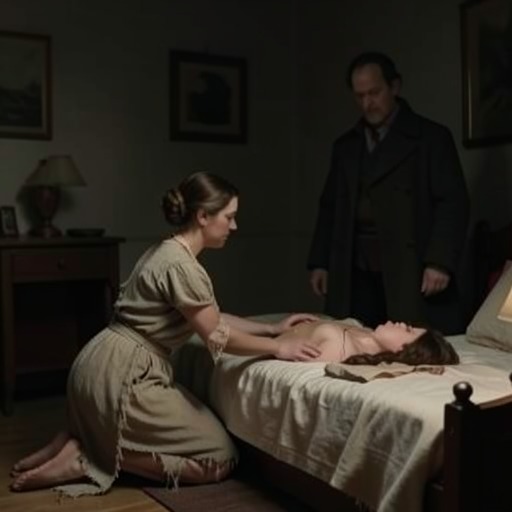
Like Water for ChocolateRosaura and Esperanza's Mother-Daughter Relationship is defined by a conflict over what a daughter owes her mother. Rosaura loves and depends on her only child, but she also expects Esperanza to remain with her for life under the De la Garza family tradition. Tita, who was herself assigned that duty, helps Esperanza imagine a different future. Their struggle turns private care into a contest over education, marriage, and who has the right to shape a daughter's life.
Identity and Family Inheritance
Rosaura gives birth to Esperanza after her mother's death. The child is born prematurely, and complications during the delivery leave Rosaura unable to have more children. As a result, Esperanza is both Rosaura's only child and the youngest daughter in the family: precisely the position to which the inherited rule assigns lifelong care of her mother. Tita asks that the baby be named Esperanza rather than Josefita, the name Pedro prefers, because she does not want her own name to determine the child's destiny. Her choice signals an early effort to keep the next generation from simply repeating the life prescribed for her.
That prescription is not new to Rosaura and Esperanza. When Pedro seeks Tita's hand, Mama Elena tells Tita that, as the youngest daughter, she must care for her mother until her death. Tita questions how the custom can be justified and whether the daughter it binds has ever been consulted, but in the family obedience is expected. The rule thus reaches Esperanza through more than a statement about duty: it reproduces a system that determines which daughter must provide care and narrows the life she may choose.
Care, Dependence, and the Household
Rosaura's dependence on Esperanza becomes especially apparent when Rosaura fears that Pedro may leave her. Troubled by changes in her health and appearance, she asks Tita for help and takes comfort in believing that her daughter is obliged to stay. Her expectation combines affection and anxiety with a claim established by family custom: Esperanza is not only someone Rosaura loves, but also the person she believes will remain available to her.
Rosaura's earlier difficulties after childbirth also shape who cares for Esperanza. Tita had nursed her nephew Roberto, but after the painful experience of losing that child, she does not become a wet nurse to Esperanza. Instead, she feeds the baby gruels and teas, following the approach Nacha used when Tita was an infant. Care passes among women in the household, but it does not take a single form: Tita provides practical nurture while resisting the idea that Esperanza's future must be fixed by her birth order.
Education and Competing Futures
The sisters' conflict over Esperanza's upbringing makes their different expectations explicit. Rosaura initially sees no need for her daughter to attend school. If Esperanza's future is to be caring for her mother, Rosaura reasons, she need not acquire what she regards as unnecessary academic learning. Music, singing, and dancing, by contrast, would entertain Rosaura and help Esperanza shine at social gatherings. Education is valued chiefly for its usefulness within the life Rosaura has planned.
After three difficult conversations, Pedro and Tita persuade Rosaura to send Esperanza to school. Rosaura agrees partly because she believes schooling will help the child converse pleasantly and meet prominent families in Piedras Negras. Esperanza attends the best school, where she can develop her mind; Tita complements that education by teaching her what the kitchen reveals about love and life. Their differing contributions matter: Rosaura consents to formal schooling for reasons that remain connected to social standing, while Tita intends to give Esperanza knowledge that supports a wider understanding of life.
The Pact and Its Limits
Rosaura, Tita, and Pedro later live under an agreement meant to preserve the appearance of a harmonious family. Tita and Pedro promise discretion about their relationship and agree not to have a child together. In return, Rosaura is prepared to share Esperanza: Tita will feed her, and Rosaura will educate her. Rosaura is also expected to live with them on friendly terms and avoid jealousy and complaints. The arrangement makes caregiving part of a negotiated household order, but it leaves the sisters in disagreement about what Esperanza should learn and what her adulthood should allow.
When Alex courts Esperanza, that unresolved difference becomes a direct confrontation. Rosaura opposes the match and invokes her rights under the pact, while Pedro and Tita support Esperanza. To Rosaura, the proposed engagement threatens not merely a family arrangement but the future she has treated as hers: her daughter is supposed to stay with her. The argument grows into several days of intense conflict, during which Rosaura breaks the pact and directs her anger at Pedro and Tita. Her digestive illness worsens, and she dies after those three days. The account connects her death to her longstanding health problems without specifying a more precise cause.
Change and Narrative Significance
Tita's greatest triumph is to see Esperanza marry Alex. At the wedding, Esperanza appears self-confident, intelligent, prepared, and happy. The marriage marks a future that Rosaura had tried to prevent and that the family rule would have denied: Esperanza leaves the role of permanent caregiver rather than inheriting it simply because she is the youngest daughter. Tita takes pride in the woman Esperanza has become, and her support helps turn education and choice into concrete alternatives to the customary obligation.
The relationship therefore carries both intimacy and constraint. Rosaura's reliance on her daughter is real, but the expectation that Esperanza must remain with her converts care into a duty fixed by descent. Tita's own history makes her alert to that injustice, while her everyday care and advocacy give Esperanza room to develop beyond the role assigned to her. The conflict does not erase Rosaura's importance as a mother; it shows how affection can coexist with an inherited claim that restricts a child's independence. Esperanza's wedding closes that struggle by making a different life possible.