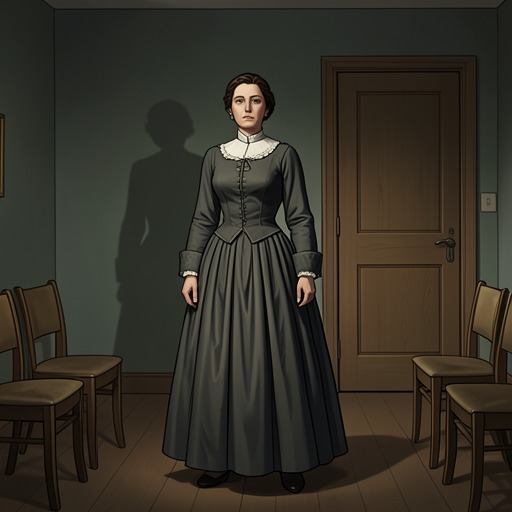
The dovecote
Like Water for ChocolateThe dovecote is a large pigeon loft formed by two slopes of the roof of the De la Garza ranch house. Reached by a twenty-foot ladder and entered through a small door, it is both a familiar part of Tita’s daily life and, at two decisive moments, a refuge that becomes a place of confinement. Its changing emptiness and activity mark the losses surrounding Tita, while her care for one surviving newborn pigeon gives her a small, practical focus when life elsewhere feels unbearable.
Structure and Life at the Ranch
The loft occupies a striking position above the house. Reaching it requires climbing a tall ladder, and its narrow side windows are openings through which Doves and pigeons come and go. Inside, the birds gather in darkness, their constant cooing making the dovecote a living presence rather than merely a part of the roof. The space’s height and limited access distinguish it from the ranch’s ordinary rooms, but the text presents it as part of Tita’s everyday surroundings: the sound of the birds has accompanied her since birth.
During a raid on the ranch, three rebels climb to the loft and are initially so impressed by its size, darkness, and birds that they stand still before acting. They close its door and windows to prevent the birds from escaping, then capture enough to feed the entire battalion for a week. The dovecote’s abundance is thus turned abruptly into a resource for the troops. The capture also creates a silence that Tita will experience not as a military detail but as a personal loss.
Silence, Loss, and the Surviving Pigeon
After the soldiers leave, Tita climbs the ladder and finds the familiar covering of feathers and droppings, but the birds’ cooing is gone. The sudden quiet makes her loneliness more acute. She feels the absence of Pedro, Rosaura, and Roberto, and the empty loft gives that separation a concrete setting. A newborn pigeon has survived the raid, however. Tita picks it up and, before descending, pauses to look at the dust left by the departing horses.
Tita places the little pigeon against her body so that she can keep both hands free on the dangerous ladder. From then on, feeding it becomes her chief concern. Her breasts have stopped producing milk after her separation from Roberto, and she repeatedly worries about who is feeding him and how he is managing. Caring for the pigeon does not replace nursing a human child, but it recalls something of that satisfaction and gives her a task around which to organize her attention. The loft’s silence is therefore not simply an image of what has been taken from her: the surviving bird provides a fragile reason to act within it.
Refuge and Confinement
The dovecote becomes a more forceful refuge after Tita openly resists Mama Elena’s commands. Following their confrontation, Tita runs upstairs with the pigeon and a pail of worms. Mama Elena orders the ladder removed and leaves her there overnight. A space Tita had climbed to by choice is made difficult to leave by the removal of its only described access. Its height, formerly a feature of the loft’s place in the house, now helps turn it into a means of isolation.
The following day, Mama Elena orders Chencha to bring Tita down. Mama Elena herself does not climb the ladder because she fears heights. When she decides that Tita should be taken to an asylum, John Brown arrives and goes up to the dovecote. He finds Tita in severe distress and does not bring her down immediately; he spends hours with her before leading her back down, dressed, and taking her away in his carriage. The loft is thus the setting for the transition from Tita’s enforced isolation at the ranch to her departure with John Brown.
Narrative Significance
The dovecote’s meaning changes through its successive encounters with loss. During the raid, it holds birds in numbers sufficient to feed a battalion; afterward, its emptiness makes Tita feel the separation from her family more sharply. The one pigeon the soldiers miss becomes an object of care, while the loft later becomes a place where Tita withdraws from the conflict with Mama Elena. Abundance, silence, fragile survival, and confinement are gathered in the same elevated space.
The ladder makes those changes visible. It is the route by which Tita climbs toward the birds and later carries the surviving pigeon back down, but it can also be removed to keep her above the household. The dovecote does not resolve her grief or restore her place in the family. Instead, it gives the story a precise setting in which her isolation becomes tangible and care persists in miniature: amid the aftermath of the raid and the rupture with her mother, Tita tends one vulnerable creature.