Tita Discovers Mama Elena’s Secret Letters
Like Water for ChocolateTita Discovers Mama Elena’s Secret Letters is a turning point in which a private archive overturns Tita’s understanding of her mother and the family’s past. After Mama Elena’s death, a small key hidden in a heart-shaped locket leads Tita to letters and a diary that disclose a thwarted love, a concealed parentage, and the history behind her mother’s guarded life. The discovery does not simply expose a secret: it makes Tita reconsider a childhood punishment, feel guilty for learning what was hidden, and mourn the person her mother had been beyond her role as an oppressive parent.
The key and the childhood punishment
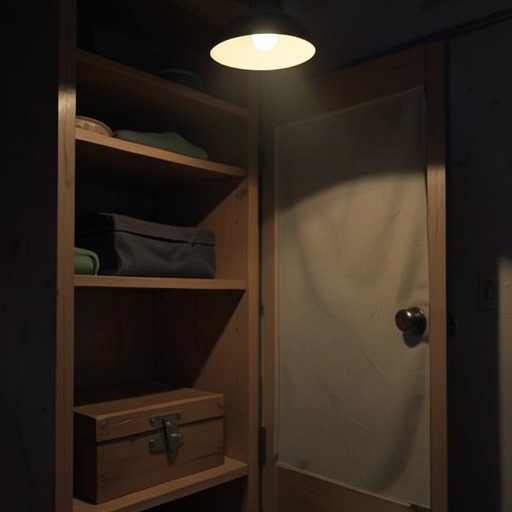
The discovery begins as Tita helps prepare Mama Elena for her wake. The large ring of keys removed from her mother’s belt recalls how thoroughly access to the household had been controlled: doors and storage places were locked, and even taking sugar from the pantry required permission. Alongside that familiar ring, Tita notices a small key inside a heart-shaped locket around Mama Elena’s neck. Unlike the keys that enforced order throughout the house, this one offers access to a secret kept close to her mother’s body.
Tita already knows which lock it opens because of an incident from childhood. While playing hide-and-seek, she once hid in Mama Elena’s wardrobe and found a locked box among the sheets. Mama Elena discovered her there and punished her by making her remove the kernels from a hundred ears of corn in the cornloft. At the time, Tita believed the punishment was disproportionate to hiding among clean sheets with her shoes on. Finding the key after Mama Elena’s death changes the meaning of that memory: Tita realizes that her mother had punished her for trying to discover what was inside the box.
What the letters disclose
With the key, Tita opens the box and finds a diary and a packet of letters from Jose Trevino. She arranges the letters by date and reconstructs the history they describe. Jose was Mama Elena’s great love, but her parents opposed their marriage because he had Black ancestry. The letters connect that objection to a wider history: a community of Black people had fled the United States during the Civil War, seeking refuge from the danger of lynching, and settled near the village. Jose was the son of an illicit relationship between an older Jose Trevino and a Black woman.
When Mama Elena’s parents learned of her relationship with Jose, they forced her to marry Juan De la Garza instead. The marriage did not end her correspondence with Jose, and the letters indicate that their relationship continued beyond written communication. They also reveal that Gertrudis was Jose’s daughter, not Juan De la Garza’s. The box therefore changes the apparent family history: the parentage Tita had taken for granted is contradicted by evidence kept hidden within Mama Elena’s own household.
The letters describe a further rupture. After learning she was pregnant, Mama Elena planned to leave with Jose. As she waited for him one night, an unknown man attacked and killed him. Following this loss, Mama Elena remained with her legal husband. Juan De la Garza learned the story only when Tita was born. While celebrating the birth of his new daughter at a bar, he heard the secret from someone who disclosed it; the shock brought on a heart attack. In Tita’s reconstruction, the concealed history thus reaches into the circumstances of her own birth, while also explaining why the truth was dangerous within the family.
Tita’s response to the archive
Tita is troubled by what she has learned and feels guilty for uncovering her mother’s secret. She considers burning the letters but does not do so, reasoning that if Mama Elena herself had not dared to destroy them, Tita should not take that step. Instead, she returns everything to the box and puts it back where it had been. Her choice preserves the record while leaving the secret concealed again; discovery does not become an act of public exposure or retaliation.
That restraint contrasts with the force of the revelation. Tita has found evidence that the mother who controlled the household also endured a love she could not openly pursue and kept its history in secret. The discovery does not erase the harm Tita experienced under Mama Elena’s authority. It gives her another, more complicated way to understand the woman who wielded that authority, and it makes the hidden box an archive of both private attachment and enforced silence.
From recognition to resolve
At the funeral, Tita weeps for Mama Elena not as the mother who repressed her, but as a person who had lived through a frustrated love. She swears at the tomb that, whatever happens, she will never renounce love. The vow follows directly from the history in the letters: the same secret that reveals how Mama Elena’s circumstances constrained her becomes a warning Tita applies to her own life.
At first, Tita believes that John Brown, who has remained beside and supported her, is the person she truly loves. But when she sees Pedro approaching with Rosaura, her certainty falters. Rosaura, visibly pregnant, embraces Tita in tears; Pedro then takes Tita in his arms, and Tita’s body responds with an involuntary tremor. She is grateful for the occasion to see and embrace him, yet quickly pulls away. She believes Pedro showed weakness by leaving her and cannot forgive him. The discovery therefore ends not with a settled romantic choice, but with Tita’s resolve to honor love colliding with her anger and divided feelings. The secret letters illuminate the costs of a love denied while leaving Tita to confront, in the present, what her own commitment will require.