Tita and Esperanza's Aunt-Niece Relationship
Like Water for ChocolateTita and Esperanza’s aunt-niece relationship becomes one of the novel’s central forms of chosen kinship. Tita helps care for Esperanza from infancy, becomes her closest confidante, and ultimately supports her marriage to Alex Brown against Rosaura’s insistence that her daughter remain at home. The bond is shaped both by tenderness and by Tita’s knowledge of what it means for family duty to foreclose a woman’s choices.
Kinship and inherited duty
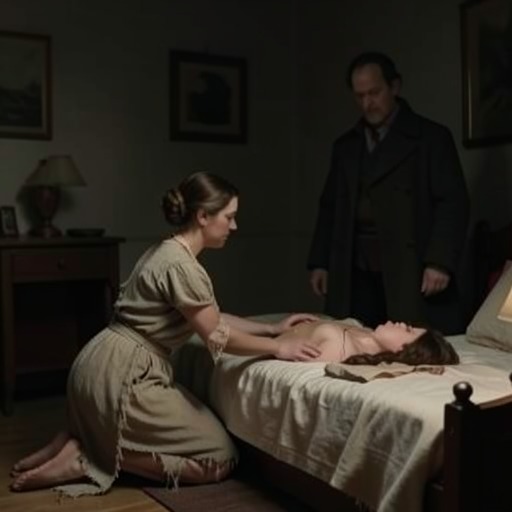
Esperanza is the daughter of Tita’s sister Rosaura and Pedro, making Tita her aunt. From birth, however, the child’s place in the family carries an expectation beyond ordinary kinship: she is a girl and the youngest child, so the De la Garza youngest-daughter tradition designates her to care for her mother for life. Tita knows the force of this rule firsthand. When Pedro’s proposal to Tita is rejected, Mama Elena tells her that, as the youngest daughter, she must care for her mother until the day Mama Elena dies. Tita questions the tradition’s fairness and asks who will care for a daughter who is prevented from marrying and having children. Her doubts remain unanswered, but her experience gives her a clear reason to resist the same fate being imposed on Esperanza.
Care in Esperanza’s infancy
After Rosaura gives birth, she is unable to nurse Esperanza. Tita does not become the baby’s wet nurse, as she had for her nephew Roberto. Having suffered when Roberto was taken from her, she chooses not to form the same intense nursing bond with another child who is not hers. Instead, she feeds Esperanza gruels and teas prepared according to the method Nacha had used when Tita herself was a baby. This decision marks a boundary shaped by loss, not an absence of care: Tita remains closely involved in the child’s daily life.
As Esperanza grows, Tita feeds her bean broth with a small silver spoon and remembers the happiness of hearing the spoon touch the baby’s first tooth. She watches for new teeth so that she will not hurt them while feeding her. Tita also imagines the ordinary acts of care Rosaura has not yet learned to perform, from bathing and dressing the child to comforting and holding her. Her concern is practical and affectionate, but it also exposes a painful complication: Tita fears that her own attachment will deepen while Rosaura may claim the role of mother and send her away. She considers leaving the ranch so Rosaura can begin a new life with her daughter, and because Tita believes that a family with John Brown could offer her a future no one could take from her.
A bond made through everyday life
Rosaura eventually insists that Tita stop feeding Esperanza, accusing her of offering a bad influence and threatening to separate aunt and niece. The threat strikes at the heart of their closeness. Tita remembers the child’s preferences and feeding routines, and worries that Rosaura will not know how to care for her in the same intimate, daily ways. Her thoughts are not simply about who performs particular tasks: they reveal how care has made Tita a dependable presence in Esperanza’s life.
That closeness later becomes part of an agreement among Tita, Pedro, and Rosaura. To preserve the appearance of a respectable family and allow Esperanza to grow up within it, Tita and Pedro promise to keep their relationship secret and not have a child together. Rosaura agrees that Tita may feed Esperanza while she oversees her education, and is expected to live with them without jealousy or complaint. The arrangement gives Tita an acknowledged place in the child’s care, although it also makes that place conditional on Rosaura’s terms.
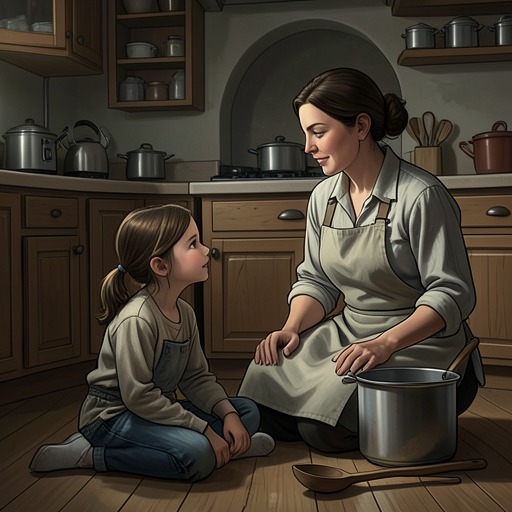
In practice, Tita’s influence extends well beyond feeding. Esperanza spends much of the day with her in the kitchen, which is the child’s favorite place; Tita becomes her best friend and confidante. Their time together gives Tita opportunities to share knowledge that differs from Rosaura’s plans, including what Tita understands about love and life through the kitchen. The kitchen is thus both a working household space and the setting in which their trust is built, through shared time and the transmission of knowledge.
Education and the contest over Esperanza’s future
Tita’s care includes supporting Esperanza’s education and independence. Rosaura initially objects to sending her daughter to school because she expects Esperanza to care for her indefinitely. In Rosaura’s plan, the girl should study music and dance, both to entertain her mother and to make an impression at social gatherings. Tita and Pedro argue for schooling; after three conversations, Rosaura reluctantly agrees. Esperanza attends the best school, while Tita continues teaching her in the kitchen. These contrasting forms of education express a larger disagreement: Rosaura prepares her daughter for a life organized around family duty and social approval, while Tita offers knowledge that leaves room for a life of her own.
The conflict becomes sharper when Esperanza tells Tita that Alex Brown is courting her. Tita is the first to hear of the relationship, and recognizes the young couple’s attraction. Rosaura opposes the courtship, claiming that Tita and Pedro have violated their agreement by supporting Esperanza’s wishes. For Rosaura, the prospect of marriage threatens the future in which her daughter remains to care for her; for Tita, defending the relationship means refusing to let that inherited obligation decide Esperanza’s life. After three days of fierce conflict in the household, Rosaura dies. Tita’s support helps make Esperanza’s marriage to Alex possible.
Fulfillment and legacy
Tita regards Esperanza’s wedding as her greatest triumph. She sees her niece as self-confident, intelligent, happy, and prepared, and takes pride in the woman Esperanza has become. The wedding does more than unite Esperanza and Alex: it marks the defeat of the expectation that she must remain with her mother instead of choosing a partner and future for herself.
The relationship also continues through what Esperanza inherits. After Tita and Pedro die and the ranch is destroyed, Esperanza returns from her wedding trip to find Tita’s cookbook among the ruins. She later bequeaths it to her own daughter. The recipes preserve the story of the family and of Tita’s love, extending the aunt’s influence beyond her direct care of Esperanza. Their bond therefore joins everyday nurture to a larger inheritance: Tita helps Esperanza escape a restrictive family role, and the cookbook carries Tita’s knowledge and memory into the next generation.