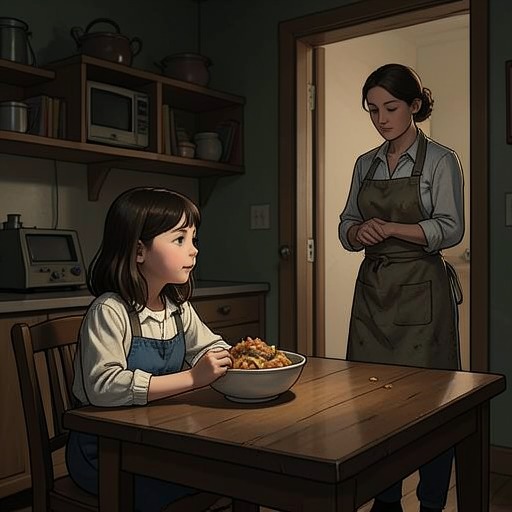
Tita and Nacha’s maternal-like bond
Like Water for ChocolateTita and Nacha’s maternal-like bond is formed through feeding, teaching, and shared life in the kitchen. Nacha becomes Tita’s caregiver when Mama Elena cannot nurse her, then shapes her understanding of food and offers her comfort when family life leaves her distressed. After Nacha dies, Tita’s memories of her remain a source of nourishment and practical knowledge, allowing the relationship to continue through recipes and care passed on to others.
A Bond Formed Through Care
When Tita is two days old, her father dies and Mama Elena’s milk dries up from the shock. With no powdered milk available and no wet nurse found, Nacha offers to feed the infant. Although Nacha has never married or had children, she believes her experience in cooking gives her the knowledge to educate the child’s stomach. Mama Elena accepts her offer while occupied with mourning and the demands of running the ranch. This arrangement makes Nacha Tita’s first sustained caregiver, though it does not replace the fact that Mama Elena is her mother.
Tita grows up on teas and thin corn gruels in Nacha’s care. Her knowledge of when she is hungry becomes closely connected to the kitchen’s daily work: she anticipates food by the smell of beans, the preparations for plucking chickens, and bread baking for dinner. The kitchen is not merely where she is fed; it becomes the first world she knows. Nacha’s daily care gives Tita a practical, bodily familiarity with food that later becomes one of her defining forms of knowledge.
The Kitchen as Home and School
Nacha’s importance extends beyond feeding. Though she cannot read or write, she is deeply knowledgeable about cooking, and Tita grows up under her culinary instruction. Nacha introduces her to foods beyond the ordinary meals Mama Elena tries to give her, while Tita proves willing to eat almost anything. This shared appetite and work distinguish Tita’s closeness to Nacha from Rosaura’s picky eating, which contributes to Nacha’s lack of affection for Rosaura. The kitchen thus sustains not only Tita’s body but also a particular intimacy between caregiver and child.
Their companionship is also marked by tears. Tita cries when Nacha chops onions, and both understand the cause; the episodes become a source of amusement rather than alarm. During Tita’s childhood, laughter and sorrow are not clearly separated for her. This early pattern gives their shared kitchen life a distinctive emotional language: ordinary work can bring tears, but Nacha’s presence makes those tears familiar and bearable.
Nacha’s care also includes affection beyond food. She saves her wages over time to buy Tita a zoetrope, a device that projects moving images onto a wall using a petroleum lamp. Tita remembers the gift and the afternoons when she and her sisters watched it. In retrospect, she places this childhood happiness among the memories of Nacha’s cooking, remedies, laughter, and bedtime care. The gift shows Nacha investing not only in Tita’s physical needs but also in her delight and imagination.
Refuge in a Time of Distress
The bond becomes especially evident during the preparations for Rosaura’s wedding. After three days of work on twenty courses, Nacha is exhausted, and Tita is struggling to help under Mama Elena’s supervision. Once Mama Elena has gone to bed, Nacha takes the spoon from Tita and embraces her. She gives Tita space to cry in private, particularly so that Rosaura will not see her distress the following day. Nacha recognizes that Tita is close to a collapse even without having a name for the condition. Her response is attentive and protective: she notices what Tita can no longer manage and intervenes before asking her to continue.
Nacha cannot later speak in Tita’s defense when Mama Elena believes that Tita and Nacha deliberately ruined Rosaura’s wedding cake. On the wedding day, Tita finds Nacha dead, holding a picture of her fiancé. This loss leaves Tita deeply depressed; she experiences it as though her real mother has died. When Tita is made the ranch’s official cook, she is pleased to take on the work but remains sorrowful at losing the person who taught it to her. The kitchen succession is therefore both an inheritance and a reminder of absence.
Knowledge That Persists After Death
Nacha’s teaching continues to guide Tita after Nacha can no longer be present. When Tita receives roses from Pedro and has to decide what to do with them, she seems to hear Nacha dictating a recipe that uses rose petals. The remembered instruction turns a painful situation into an act of cooking and begins a new stage in Tita’s own culinary practice. She starts writing her cookbook that night, recording how the dish should be served and arranged. What Nacha once transmitted through teaching and shared work now passes through Tita into written form.
Nacha’s remembered knowledge also becomes a means of caring for someone else. When Pedro needs treatment for his burns, Tita recalls that Nacha, like Morning Light before her, recommended bark from the tepezcohuite tree. Tita seeks it out and uses the advice as part of her efforts to ease his pain. The episode shows that Nacha’s legacy is not confined to recipes or nostalgia: her practical knowledge remains available to Tita when she must act under pressure.
Memory and Inheritance
Years later, ox-tail soup restores Tita’s ability to remember and speak through food. As she eats, memories of Nacha return: Nacha stroking her hair, caring for her when she was sick, playing with her in the kitchen, going with her to the market, and making food they shared. The recollection gathers particular dishes and ingredients, including still-warm tortillas, Christmas rolls, chocolate atole, cumin, garlic, and onion. Tita and Chencha laugh over the remembered times and cry as they recall the recipe’s steps. Remembering the first step, chopping the onion, allows Tita to remember how to cook again. In this scene, food does not simply represent the past; it makes Nacha’s care accessible to Tita in the present.
The connection survives in the cookbook and in the act of preparing inherited recipes. After the ranch is destroyed, Esperanza finds the cookbook among its remains and passes it on to her daughter. The narrator associates Tita’s continued presence with the people who cook her recipes, and remembers eating the produce grown on the land where the ranch stood. Nacha’s influence is part of that chain of transmission: she feeds and teaches Tita, Tita records and carries forward what she learned, and later generations encounter the family’s past through its food. Their bond endures not as a biological relationship, but as a practiced intimacy preserved in care, memory, and culinary knowledge.