Tita and Pedro’s Consummation
Like Water for ChocolateTita and Pedro’s Consummation marks the passage of their forbidden love from emotional and bodily communication into a hidden relationship, first in a storeroom and finally in their last reunion. The encounters unfold against Tita’s engagement to John Brown and the family’s history of policing her attachment to Pedro; at the close, an intense experience of illumination makes intimacy inseparable from the choice to remain alive.
Background and Conflicting Commitments
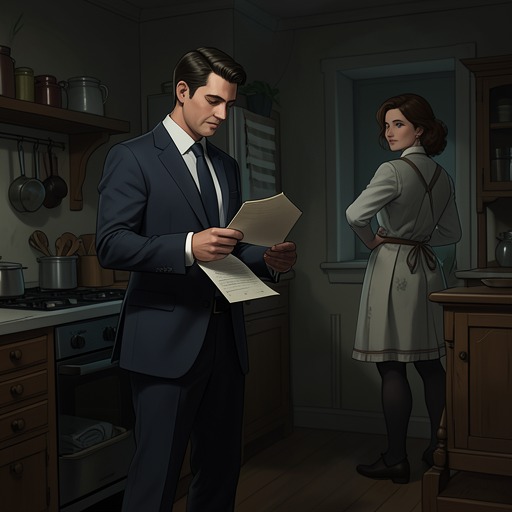
The first consummation follows John’s formal request for Tita’s hand at a family gathering. Pedro, acting as the man of the house, gives his sullen approval. The conversation about a wedding date sharpens Tita’s predicament: John wants to postpone the ceremony so he can bring his only living aunt from the northern United States, while Tita wants to leave the ranch—and Pedro’s proximity—as soon as possible. John gives her a diamond ring, and the engagement is thereby made public, but it does not resolve her attachment to Pedro.
The strained gathering briefly veers toward open conflict when Pedro and John debate the country’s political situation. After the engagement is formalized, a champagne toast intensifies the unease: Pedro strikes his glass so hard against the others that it breaks and splashes the group. Chencha’s announcement that supper is served redirects everyone from the broken toast to the meal. The scene places Tita’s competing commitments in a domestic setting where food repeatedly restores the appearance of ordinary order, even as the relationships around the table remain unsettled.
The Storeroom Encounter
After supper, Tita goes back to the kitchen to put away pots and pans. Her work gives her a practical way to occupy herself while she remains awake and tries to order her conflicting thoughts. She carries a large earthenware pot and an oil lamp into a storeroom that had formerly been the Darkroom. After Mama Elena’s death, the family had converted the unused bathing space into storage for kitchen utensils. The room’s repurposing gives this concealed encounter a place among the equipment and routines of domestic life.
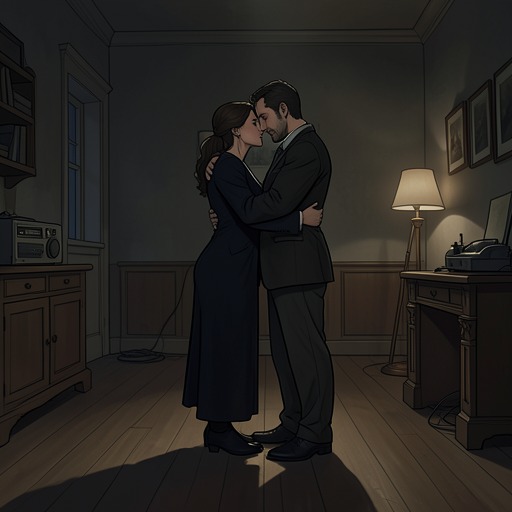
Pedro enters behind Tita and bars the door. The narrative reports that they consummate their relationship there, on a brass bed that had belonged to Gertrudis. It is Tita’s first sexual encounter with Pedro and a decisive breach of the family’s restrictions on their love. The bed connects this secret meeting to Gertrudis, while the storeroom’s former and present uses place the encounter in a space reshaped after Mama Elena’s death. The episode thus follows the public recognition of Tita’s engagement to John with a private act that binds her more closely to Pedro.
Discovery Through Light
At the same time, Rosaura is trying to settle her crying baby, Esperanza. Passing the window, she sees a strange glow coming from the storeroom: colored lights rise into the sky. Her calls for Tita and Pedro bring no reply. Chencha, who has come looking for sheets, is so astonished that she cannot speak; she then interprets the sight as evidence that Mama Elena’s ghost is wandering. Esperanza stops crying. The household registers the hidden encounter indirectly, through an extraordinary light and the reactions of those outside the room, rather than through an explanation from Tita or Pedro.
The glow also reverses the room’s associations. A former bathing space converted to storage becomes the apparent source of a spectacle that unsettles Rosaura and Chencha and briefly quiets Esperanza. The narrator links the women’s fear of meeting Mama Elena’s ghost to the opportunity it gives Tita and Pedro to meet unseen. The dead mother’s continuing power still shapes the family’s behavior, but in this moment the terror she inspires inadvertently provides the lovers privacy in a place once associated with her household authority.
Final Reunion and the Choice to Live
The account returns to Tita and Pedro’s intimacy at the close of the story. After years of contained passion, they reunite, while the brass headboard’s striking and the sounds of the encounter are accompanied by a mass departure from the ranch. The doves take flight, followed by the other animals, including cows, pigs, chickens, quails, lambs, and horses. Tita is initially unaware of this exodus: her attention is absorbed by the intensity of the moment.
With her eyes closed, she sees a brilliant tunnel. She remembers John’s explanation that powerful emotion can light the candles carried within a person, reveal a radiant passage, and call the soul back toward its divine origin, leaving the body lifeless. The recollection changes the stakes of the encounter. Tita checks her passion because she does not want to die; she wants to experience these emotions again. The ending therefore makes consummation neither a simple fulfillment nor a retreat from consequence. Tita recognizes a possible passage out of life and chooses continued life instead, understanding the reunion as a beginning she still wants to inhabit.
Narrative Significance
Across these two encounters, intimacy moves from secrecy under family constraint to a final confrontation with mortality. The first follows Tita’s public engagement to John and takes place in a storeroom after the family has resumed its meal; the last is accompanied by the animals’ departure and the vision of a luminous tunnel. In each case, domestic or bodily events open onto the marvelous without displacing the household details around them: kitchen work, a reused room, a brass bed, a window, and a flock leaving the ranch.
The encounters also distinguish emotional transmission from lasting freedom. Earlier, Tita’s presence in the rose-petal meal reaches Pedro through Gertrudis, who becomes the medium for their unspoken desire. The storeroom meeting makes their relationship physically explicit, but it does not erase the danger and secrecy surrounding it. At the final reunion, Tita’s remembered understanding of the inner candles gives her a choice that the earlier episode does not present in the same way: she can stop before desire becomes death. Her decision preserves the possibility of further experience, even as the departing animals and the vision of the tunnel place that choice at the threshold of an ending.