Tita's Chronic Chill
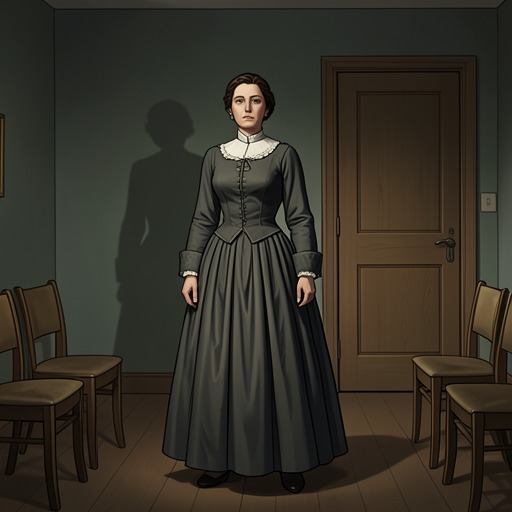
Like Water for ChocolateTita’s Chronic Chill is the persistent bodily expression of a grief Tita cannot dispel after learning that Pedro will marry Rosaura. It begins as an acute cold that turns her cheeks red and hollows her chest, then outlasts the night, the clothes she piles on, and even the care that helps her recover from a breakdown. Its recurrence makes cold more than a passing sensation: it becomes the physical measure of a wound that remains present even when its circumstances change.
Origin in the Marriage News
The chill first takes hold after Mama Elena announces that she has agreed to Pedro’s marriage to Rosaura. Tita has just heard Chencha’s story, and Nacha then tells her what she overheard while escorting Pedro and his father from the ranch. In that conversation, Pedro explains that marrying Rosaura is his only way to remain near the woman he loves. He insists that his love for Tita will endure, but the explanation does not undo the fact that he is marrying her sister. Tita thanks Nacha for telling her, yet feels newly icy toward Pedro. The body registers the contradiction before she can find words for it: he professes lasting love while entering a marriage that makes their own future impossible.
The narration connects this cold to an earlier memory of heat. At the previous Christmas dinner, Tita had felt Pedro’s gaze as an almost burning force, so intense that she imagined herself bubbling like batter plunged into hot oil. Remembering the scene now sharpens the contrast between that bodily heat and the cold that follows his impending marriage. The earlier moment had made desire physically undeniable; the chill marks the painful reversal, when desire remains but cannot be lived openly. Tita cannot sleep and imagines a black hole at the center of her chest, an image that gives form to a grief she cannot yet name.
Failed Remedies and the Bedspread
Nacha’s Christmas Roll has often helped Tita when she is in pain, and she has left one beside a glass of milk on Tita’s bureau. This time eating brings no comfort. Tita realizes that the hollow sensation in her stomach is not hunger but grief, and nausea replaces the relief the food has previously offered. The failure matters because food has been a dependable source of solace for her: the familiar remedy cannot reach this particular wound.
Tita tries to meet the cold literally, first putting on a wool robe and heavy cloak, then felt slippers and two more shawls. None helps. At last she takes up the crocheted bedspread she began on the day Pedro first spoke of marriage. It would take about a year to complete, exactly the length of time the two had planned to wait before marrying. Now that shared timetable has collapsed, but the work remains in her hands. Tita uses the yarn rather than letting it go to waste, working and weeping until dawn before throwing the bedspread over herself. It still does not warm her. The object thus holds two versions of the future at once: the year of waiting she and Pedro had imagined and the enduring labor of carrying on after that expectation has been broken. The chill will return on many nights, and Tita will never be free of it.
Persistence in John Brown’s House
Later, after Tita’s breakdown, John Brown takes her to live with him rather than obeying Mama Elena’s order to put her in a madhouse. His kindness helps her feel better each day, and she is grateful for the refuge. Yet recovery in his care does not mean the cold disappears. In John’s little laboratory, Tita sits by a window whose light gives her only a faint, almost imperceptible warmth. Even covered by the heavy woolen bedspread, she cannot feel warm. Her chronic chill persists in a place where she is safer and treated gently, showing that it is not simply the immediate discomfort of the ranch or a lack of clothing.
The bedspread returns as a repeated sign of that persistence. Tita continues working on it at night, now with yarn John has bought for her. What began as a project bound to her expected marriage to Pedro becomes ongoing work in a different household and under another person’s care. The altered circumstances do not erase its origin: the blanket remains both a practical covering and a record of the year Tita once thought she and Pedro would spend waiting to marry.
Inner Fire and the Meaning of Cold
The laboratory scene places Tita beside John as he completes procedures for making matches. The adjacent account of the soul needing the body to provide nourishment gives the match imagery a particular force: Tita recognizes the truth of that description in herself, then admits that her own matches are damp and moldy and that no one will be able to light them again. She knows what sets off her explosions, but each time she has managed to light a match it has been blown out. The passage does not present her chill as a condition cured by simple warmth; it links the cold to a repeatedly thwarted capacity for emotional ignition.
Across these scenes, physical sensation makes Tita’s inner state legible without reducing it to a single moment of heartbreak. The chill begins with Pedro’s marriage, resists the comfort of food and clothing, and remains after Tita has found refuge with John. Its persistence contrasts with the remembered heat of Pedro’s gaze and with the possibility of flame suggested by the match-making work. The bedspread and the damp matches make that contrast tangible: Tita keeps working to cover herself, while the spark she longs to kindle cannot reliably catch.