Tita’s cookbook
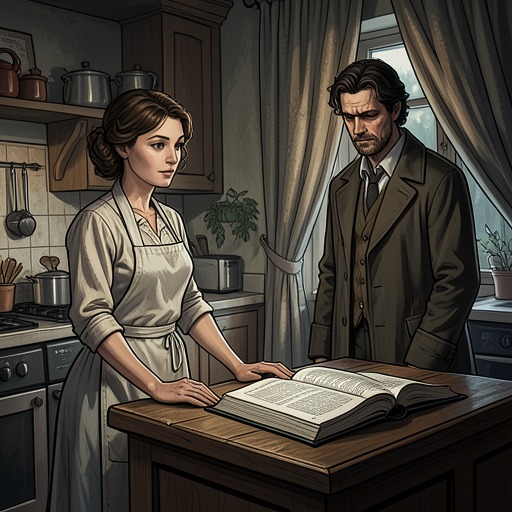
Like Water for ChocolateTita’s cookbook is both a practical collection of recipes and the surviving record of a family history carried through food. Begun on the night Gertrudis left the ranch, it gathers instructions, memories, and moments that might otherwise have disappeared; after the ranch burns, its passage through Esperanza to the narrator allows Tita’s story to continue in the act of cooking.
Origins and Form
Tita began writing the cookbook after preparing Quail in rose petal sauce, on the same night Gertrudis ran away. As she recorded the dish, she specified a serving detail that mattered to her: the quail could be served individually rather than on a platter, so the rose garnish would not slide out of place. The recipe therefore preserves both a usable technique and Tita’s attention to how food should be presented.
That night’s entry also links the recipe to what happened at the meal. Tita added a note that Gertrudis had run away while they were eating. The cookbook’s form thus allows a recipe to carry an event alongside its culinary instructions: the meal is not separated from the family history that unfolded around it.
Recipes as Memory
The significance of that record is especially clear in the meal itself. Tita’s presence seemed to dissolve into the rose-petal sauce, quail, wine, and aromas, and through Gertrudis the meal conveyed Tita’s desire to Pedro. The cookbook preserves the dish associated with that charged encounter; later, Tita prepared it each year in tribute to Gertrudis’s liberation. Its recurring preparation made the recipe a reminder of both a particular night and its lasting effect on the family.
The book’s larger organizing principle is similar: recipes hold more than instructions. At the end of the story, it is described as telling, through its recipes, the history of a love buried beneath the ranch’s remains. Food gives the account a repeatable form. A remembered event can be carried forward not only as a story, but also as a dish prepared again.
Domestic Knowledge and Inheritance
The cookbook also stands in tension with the domestic duties that shaped Tita’s life. Under Mama Elena’s authority, Tita’s days were filled with cooking, feeding the animals, washing dishes, and other household work, performed without time to ask whether that life was what she wanted. The book turns knowledge acquired within that prescribed labor into something she records and that others can inherit.
That transmission also occurs face to face. Tita taught Esperanza what she understood about love and life through the kitchen, even as Rosaura planned a different education for her daughter and wanted her to remain at home as a caregiver. The cookbook’s legacy belongs to this broader passage of knowledge: domestic skill is not only work demanded of Tita, but also a means through which experience can reach the next generation.
Survival and Continuing Use
When Esperanza returned from her wedding trip, the ranch had been reduced to a deep layer of ash. The cookbook was the one thing she found among its remains. She later bequeathed it to the narrator, making the book a material link between the destroyed household and the family that continued beyond it.
The narrator’s present-day cooking completes that passage. Preparing Christmas Rolls for a birthday celebration, the narrator recalls that Esperanza made them every year and connects her own tears while cooking with Tita’s sensitivity to onions. The book’s endurance therefore rests not only on its survival as an object, but also on the continued preparation of its recipes: as long as someone cooks them, Tita’s memory remains active.