
From Saltivka to the Political Stage
LimonovThis thread follows Eduard Limonov’s passage from a provincial Ukrainian childhood through literary celebrity, war, prison, and a marginal opposition career.
increasing Bearing strength in each event
 decreasing
Bearing strength in each eventdecreasingA Child of Victory
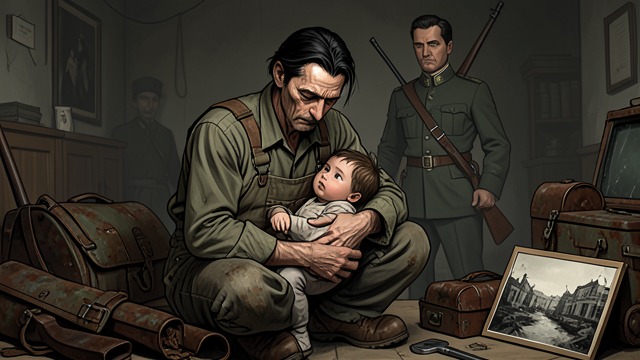
Born into Victory
A wartime beginning
Eduard Limonov was born in a Soviet world organized around war, sacrifice, and military authority. His parents’ story connected his birth to the turning point at Stalingrad, and he grew up hearing that he belonged to the generation saved by victory.
A heroic inheritance
His father, Venyamin Savenko, served in the state security organs rather than at the front. The gap between military grandeur and his father’s actual duties would later complicate the young boy’s idea of what courage and authority meant.
Saltivka’s Dangerous School
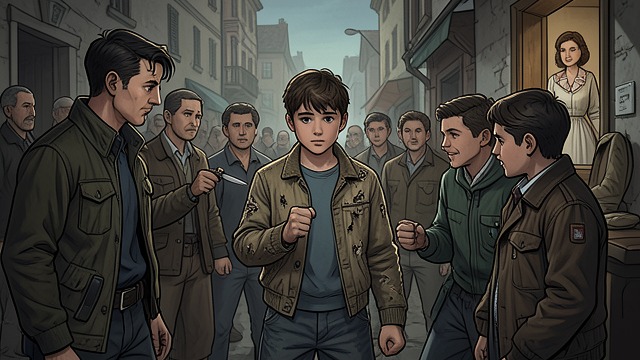
Learning the Rules of Force
From officer’s home to workers’ district
After the family moved to Saltivka, Limonov encountered working-class children, street violence, and a social world unlike the officer community of his early childhood. He began to admire the toughness of delinquents more than the respectable discipline his parents represented.
The outlaw ideal
A beating taught him to divide people into those who could be struck and those who seemed ready to kill. Knife carrying, drinking, and the company of older criminals became experiments in remaking himself as someone who would not be treated as weak.
The Kharkov Poet
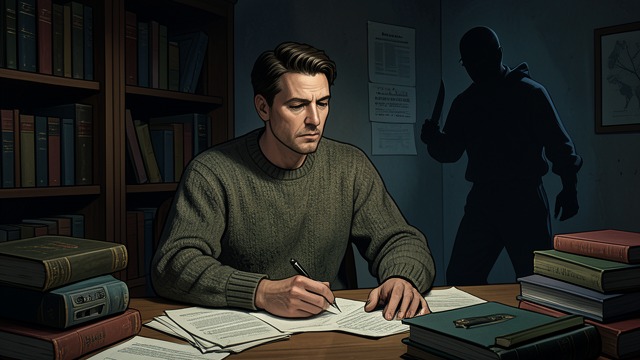
A Poet in the Underground
Escape through art
After a period as a foundry worker and a suicide attempt, Limonov found his way into Kharkov’s bohemian circle through a bookstore and its after-hours conversations. Reading samizdat and encountering avant-garde poetry gave him a new route out of the life he feared.
A name of his own
He developed a disciplined writing practice, copied poems by hand, and adopted the name Limonov. The literary identity did not erase his attraction to danger; instead, it offered a stage on which his ambition and abrasive persona could grow.
Exile and Reinvention
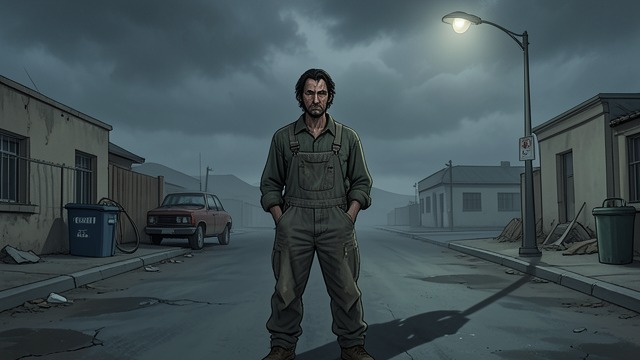
Leaving the Soviet World
Departure without return
Limonov and Tanya emigrated in 1974, leaving behind a country where legal emigration meant a rupture with home. Their first destination was New York City, where their hopes of entering an exciting Western life soon collided with poverty and loneliness.
The book that made him visible
After Tanya left, Limonov survived on welfare and odd jobs, wrote about his own degradation, and transformed the material into It’s Me, Eddie. Its publication in France made him a provocative literary figure, turning failure into the raw material of a public persona.
The Unsettled Return
Homecoming and Its Discontents
A changed country
Invited back in 1989, Limonov found the Soviet world he remembered altered by public argument, social disorder, and political uncertainty. His return did not restore old friendships or give him the uncomplicated homecoming he might have imagined.
A life still in motion
He built the National Bolshevik Party, went to war, was imprisoned, and later returned to opposition politics. At the book’s end, he rejects the quiet country-house future others imagine for him and speaks instead of an existence among the dispossessed.
February 1943, during the Battle of Stalingrad
Late 1950s to early 1960s, in Saltivka
Late 1960s, in Kharkov
1974–1980, from Moscow to New York City and Paris
1989–2009, from Moscow to the final countryside visit
