
Limonov’s Search for a Gang
LimonovThis thread traces his repeated search for a community strong enough to turn isolation into purpose.
increasing Bearing strength in each event
 decreasing
Bearing strength in each eventdecreasingSaltivka’s Crew

The First Gang
Belonging through danger
Limonov’s delinquent friends offered a code of toughness that opposed the quiet, respectable life he associated with his parents. Their drinking, fights, and criminal stories gave him a community where risk conferred status.
A limited escape
The group could not provide the larger life he imagined. Limonov looked beyond petty delinquency toward literary and political worlds that might make him exceptional on a wider stage.
The Bohemian Circle

Another Kind of Gang
Art as admission
The Kharkov poets and artists offered a circle whose codes were books, argument, and shared nights rather than street violence. Limonov entered through work at the bookstore and his poems.
A household role
With Anna Moiseyevna Rubinstein, he became more than a visitor: he was a partner and host. The bohemian group satisfied his need for belonging while preserving his ambition to dominate rather than remain a subordinate.
The Parisian Gang

Friendship as a Literary Scene
A circle of provocateurs
In Paris, Limonov joined journalists, publishers, and artists who enjoyed argument, drinking, and scandal. The group gave the newly arrived writer a social home and an audience for his provocations.
A gang with an editor
Jean-Edern Hallier’s L’Idiot international welcomed contradictory writers and rewarded attacks on consensus. Limonov experienced its gatherings as a company of swashbucklers, a social form that echoed his childhood desire for a gang.
The Political Bunker

A Gang Becomes an Organization
Shared work and shelter
The National Bolshevik Party’s bunker gathered provincial recruits, writers, musicians, and activists. Its mix of political work and communal life gave members a place where they could stop feeling like isolated failures.
The leader’s authority
Limonov’s forceful presence and willingness to accept risk made him the center of the group. His members’ loyalty fulfilled a dream of brotherhood, but also made the organization dependent on his charisma and direction.
The Prison Brotherhood
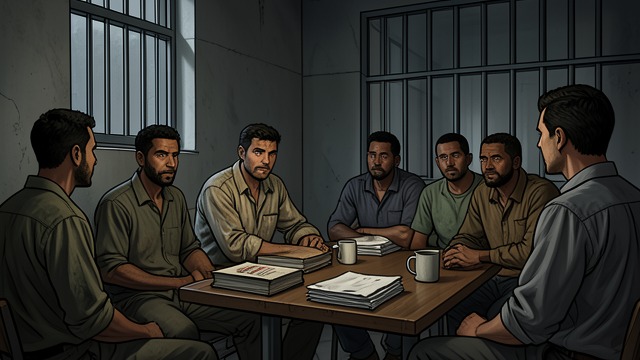
A Gang Among Convicts
Recognition without performance
In prison, Limonov’s cellmates judged him through daily conduct rather than literary reputation. He shared, worked, helped others, and learned the routines without insisting on special treatment.
A community that changes him
He became interested in the stories of prisoners who had committed serious crimes. Their recognition gave him the brotherhood he sought, while prison’s constraints also made him more attentive to people outside his own legend.
Early 1960s, in Saltivka
Mid-1960s, at the Kharkov bookstore
1980s, among writers and nightlife figures in Paris
1994–2000, in Moscow
2001–2003, in Saratov and Engels
