
The Escalation of Political Violence
LimonovThis thread follows the movement from political rhetoric and street demonstrations toward real armed confrontations and state repression.
increasing Bearing strength in each event
 decreasing
Bearing strength in each eventdecreasingCalls for Insurrection
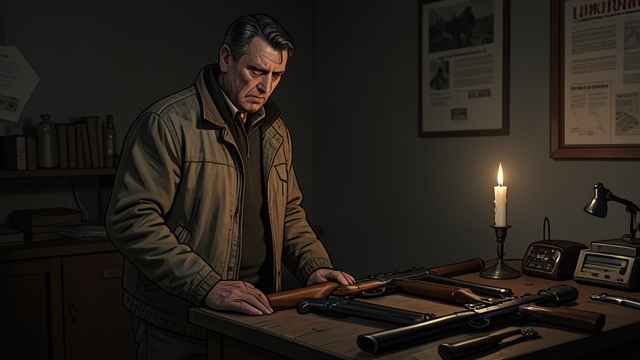
Revolution as a Personal Need
Frustration with talk
Limonov attended leftist meetings but found their caution and dispersal after speeches intolerable. He wanted a group that would remain together and act against institutions.
Violence as imagined proof
His desire for weapons and dramatic action was tied to a longing for purpose and recognition. Revolution promised to transform the poor, lonely writer into a leader rather than merely a participant in political discussion.
Nationalist Street Politics
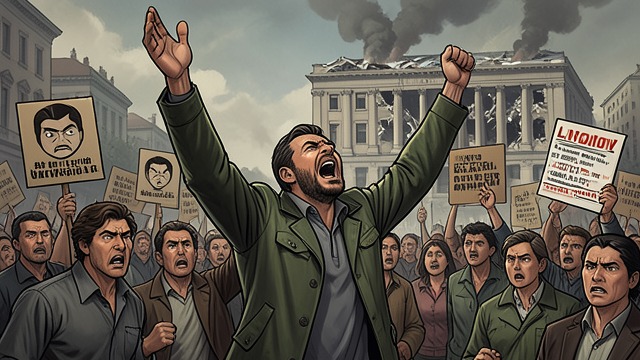
Rhetoric in the Streets
A platform for anger
Limonov spoke at demonstrations against the new economic order, blaming democratic politicians for betrayal and hardship. Crowds welcomed his language of national humiliation and impending conflict.
The threat becomes public
He urged people to prepare for civil war, even as he remained a writer and organizer rather than a military commander. His speeches helped normalize a politics in which violence appeared as a possible answer to social collapse.
The White House Occupation
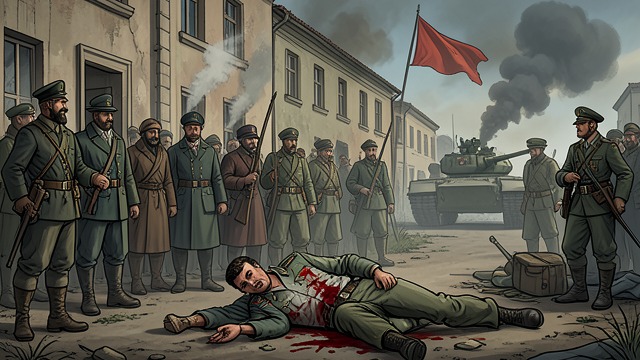
Constitutional Conflict
Rival claims to legitimacy
After Boris Yeltsin dissolved the parliament, opponents occupied the Moscow White House and declared Alexander Rutskoy president. Limonov joined them, convinced that the confrontation might become a revolutionary turning point.
Escalation into bloodshed
The standoff ended in armed violence around the building and Ostankino. Limonov was wounded, while the insurgents were defeated and the apparent chance of taking power disappeared.
A Party Under Pressure
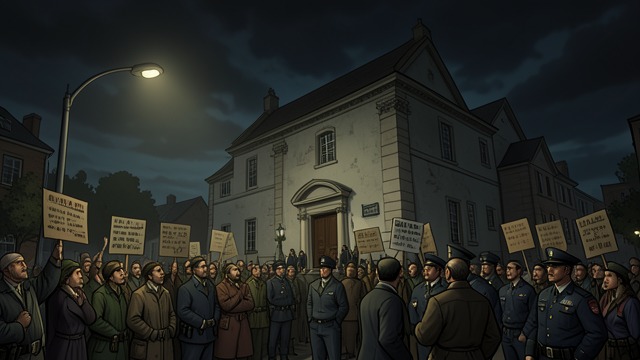
Protest Meets State Force
Increasingly risky demonstrations
National Bolshevik activists staged occupations and symbolic protests, including an action in Riga’s St. Peter’s Church. Their acts were designed to force attention onto political prisoners and Russian communities beyond Russia’s borders.
Punishment and contradiction
Activists received severe sentences, while the Russian state cooperated with other authorities in suppressing them. The party’s experience showed how a government could share its members’ nationalist nostalgia yet repress their independent mobilization.
The Altai Arrest
Rhetoric Becomes a Criminal Case
A camp treated as a threat
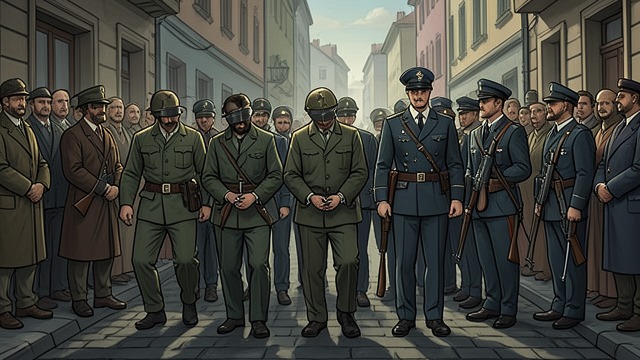
Security forces raided the Altai cabin and arrested Limonov and his companions. The authorities described the group as a dangerous organization, despite the limited weapons found at the site.
The political effect
The arrest transformed the party’s conflict with the state into a legal case with terrorism and extremism charges. Limonov’s life in opposition now included the prison experience he had once imagined as a necessary chapter of a hero’s story.
Late 1970s, in New York City
Early 1990s, in Moscow
September–October 1993, in Moscow
Late 1990s to early 2000s, in Moscow and Riga
2001, during the raid on the mountain camp
