
A Career Made from a Life
LimonovThis flow traces how Limonov repeatedly turns lived experience, failure, and notoriety into books and a literary identity.
increasing Bearing strength in each event
 decreasing
Bearing strength in each eventdecreasingPoems from the Margins

The First Literary Identity
Reading and imitation
Limonov began by reading Russian poets and trying out poems among friends who were themselves drawn to the promise of art. His work grew from the same environment as his street life, rather than from a separate, respectable literary apprenticeship.
A self-made author
At the bookstore known as 41, he learned to judge poetry, copied his own collection by hand, and began to see literary recognition as a possible escape. The poet’s name and the delinquent’s reputation would remain intertwined.
The New York Manuscript
Writing from the Bottom
Life becomes material
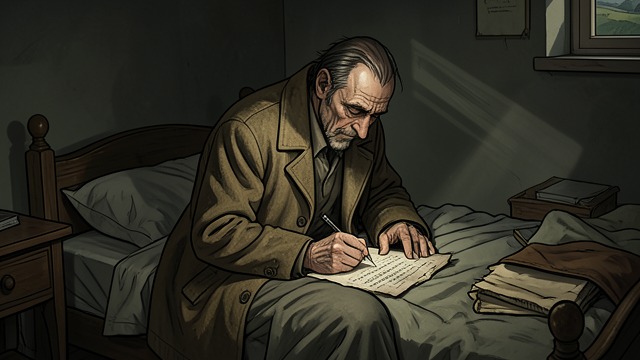
After Tanya’s departure, Limonov sank into poverty at the Winslow Hotel and moved through the city as a rejected émigré. Rather than treating this period as an interruption, he watched and recorded it as a possible book.
A voice of exposure
In Central Park he filled notebooks with humiliations, sexual longing, class resentment, and fantasies of revolt. It’s Me, Eddie emerged from this practice of writing himself without protective distance, making extremity part of his style.
The Butler as Author

Servant and Observer
Entering the rich household
Limonov became the butler of Steven Gray, learning the rituals and comforts of a world whose inhabitants seemed to possess everything he lacked. He performed the work expertly while privately imagining the class antagonism hidden beneath civility.
A double life on the page
His later account revealed that he had used the master’s rooms and belongings when alone and had imagined violence while serving him. The contrast between impeccable service and inward hostility turned the job into both a survival strategy and a literary subject.
A Book Finds a Publisher

From Rejection to Publication
Repeated refusals
Limonov’s manuscript met indifference and rejection in the United States, deepening his fear that he would remain an unknown laborer. Encouragement from acquaintances did not remove the uncertainty of waiting for a publisher’s decision.
A scandalous title
Jean-Jacques Pauvert accepted the book in France and gave it a deliberately provocative title. Its arrival transformed Limonov from an obscure émigré into a figure whose biography, sexual candor, and style attracted attention.
The Limits of Literary Fame
Fame Without Security
A productive decade
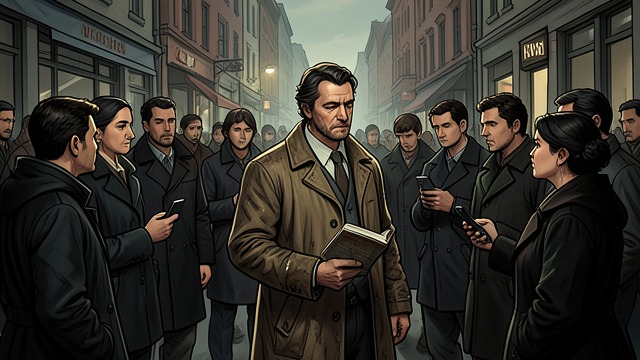
In Paris, Limonov published steadily, using childhood, exile, and New York as recurring material. His loyal readership valued his plain, energetic prose, but sales did not grow into the wealth or universal fame he wanted.
Politics overtakes writing
After returning to Russia, he gained mass readership and a cult following, yet the collapse of book distribution limited the money he earned. In later years he turned increasingly to political organizing and freelance writing, while literature lost its place as his principal pursuit.
Late 1950s, in Kharkov
Summer 1976, in Central Park
Late 1970s, at Sutton Place and in New York
1980, in Paris
Mid-1980s to the 2000s, in Paris and Moscow
