
Limonov’s Family and Origins
LimonovThis flow traces how Limonov’s parents, childhood environment, and early shame shaped his attraction to toughness and self-invention.
increasing Bearing strength in each event
 decreasing
Bearing strength in each eventdecreasingParents in Wartime
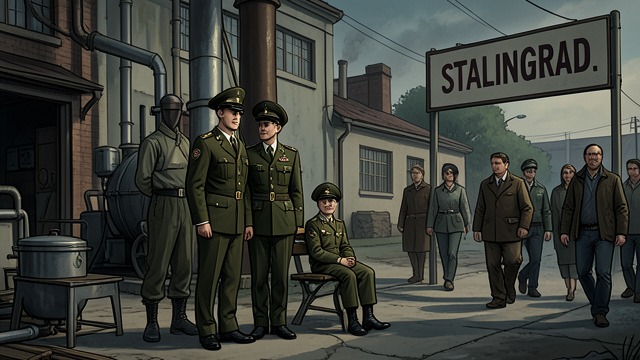
A Family Formed by War
A chance encounter
Venyamin Savenko and Raya Zybin met during wartime service near an industrial weapons factory. Their relationship unfolded amid displacement, danger, and the strict authority of the Soviet state.
A child amid catastrophe
Eduard’s birth coincided with the turning of the war at Stalingrad. His family later framed him as a child of victory, giving his childhood a national story that sat uneasily beside the private vulnerability of his home life.
The Officer’s Household
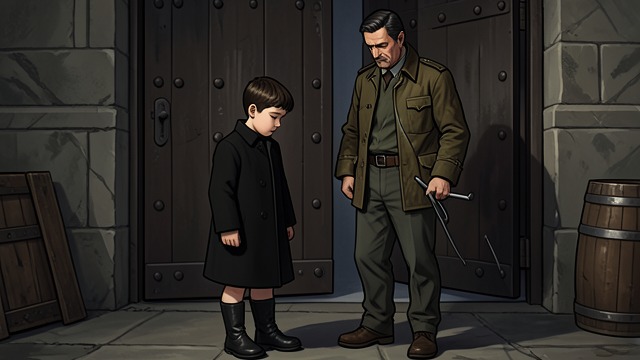
Respectability and Its Limits
A child of military culture
Limonov admired his father’s uniform, pistol, boots, and disciplined rituals. His mother emphasized toughness and treated consolation as weakness, teaching him that suffering should be met with endurance rather than tenderness.
A diminished father
The family’s move from an officer’s community to a working-class suburb reduced their social standing. Limonov began to see his father as decent but ineffective, while his own ideals shifted toward danger and force.
The Convoy at the Station
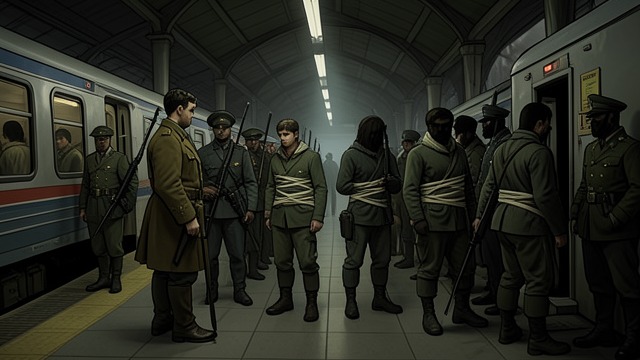
The Father as Enforcer
A hidden scene
Waiting for his father at the station, Limonov saw prisoners being transferred under armed guard. The officer supervising the operation was Venyamin, a discovery that unsettled the boy without giving him a clear understanding of the political system behind it.
Shame and allegiance
The scene conflicted with Limonov’s new admiration for street outlaws. His father seemed less like a soldier than a minor police functionary, while the imprisoned young man described at home became a model of composure and resistance.
The Failed Gangster

Becoming Someone Dangerous
A borrowed code
Limonov joined delinquent companions, carried a knife, and admired men who had endured prison. His brief arrest and exposure to a former Kolyma prisoner convinced him that he could surpass the petty criminals around him.
Ambition beyond the street
His hunger for distinction was not satisfied by ordinary criminality. He sought a life that would make him exceptional, and when gang life proved unavailable, writing and bohemian culture opened another path toward recognition.
The Son Returns
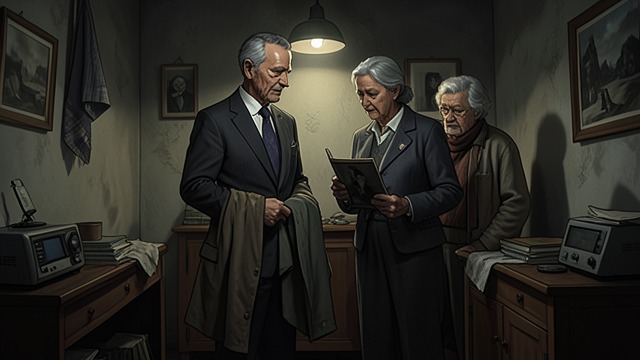
Reunion Without Reconciliation
A brief homecoming
After fifteen years abroad, Limonov visited his aging parents in Saltivka. They welcomed him with affection but quickly returned to practical concerns, asking about his coat, his wife, and the possibility of grandchildren.
Different measures of success
He tried to explain his publishing success, but his parents could not enter the world in which that achievement mattered. Their concerns remained domestic and immediate, while his life had been organized around fame, danger, and escape.
1942–1943, in Dzerzhinsk and the Volga region
Late 1940s, after the family settled in Kharkov
Early adolescence, during one of Venyamin’s assignments
Mid-1950s to early 1960s, in Saltivka
December 1989, during Limonov’s visit to Kharkov
