Horse
Little House on the PrairieHorses are the indispensable engines of the Ingalls family's westward journey and their survival on the High Prairie. They pull the covered wagon across the Mississippi River and through Wisconsin, Minnesota, Iowa, Missouri, and Kansas; they draw the plough that breaks the prairie sod for planting; they carry Pa on his hunting and trading trips; and they carry the Osage Indians whose presence defines both the family's peril and its fascination. From the traded Pet and Patty to the wild Indian ponies and the cattle-drive cow ponies, horses mark every stage of the family's movement into Indian Territory and their uneasy coexistence with the land's original inhabitants. They embody the frontier's promise of strength and gentleness, the constant labor of settlement, and the boundary between the domestic world of the little house and the wild, untamed prairie that surrounds it.
The Trading for Pet and Patty
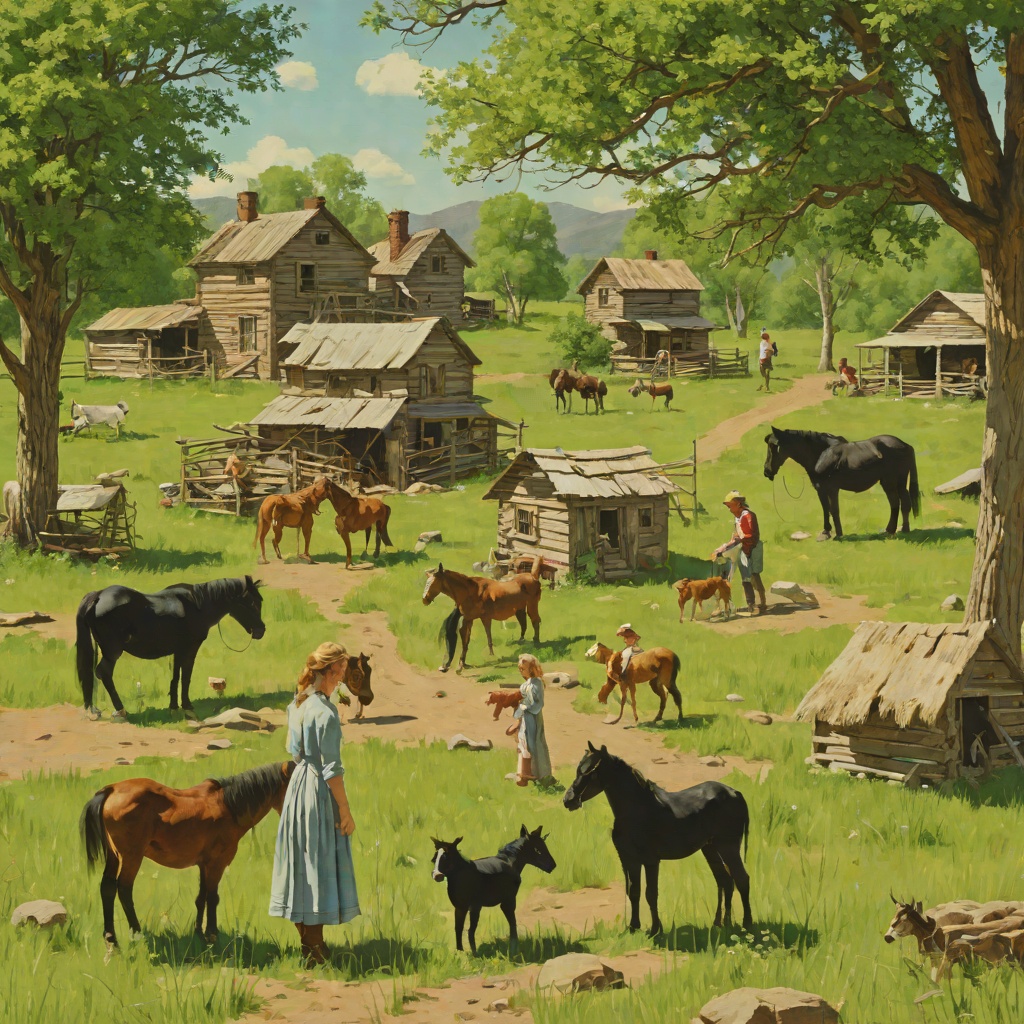
The family's first horses were tired brown animals that had carried them across the wide Mississippi River before the ice broke and through many other rivers and creeks. One day Pa sold these weary horses and acquired two small young black horses with soft gentle eyes and long tails. He called them "western horses," praising them as "very strong but very gentle." When Laura asked their names, Pa told her and Mary they could choose the names themselves, so the girls called one "Pet" and the other "Patty." This act of naming gave the children a personal stake in the animals that would carry them across the endless flat land of Kansas, where day after day they saw nothing but grass and a big sky. The horses were not merely transport; they were the family's partners in the great adventure westward, and their names became part of the household's daily vocabulary.
Horses as Labor and Companions
Pet and Patty were central to the family's survival and comfort. Pa built a stable for them as fast as he could, insisting they should be safe inside walls too, just like the family. The stable was built in one day with Mr Edwards's help, and by the time they put the roof on, it was dark. Pa declared, "Now! Let those wolves howl! I'll sleep tonight," showing that the horses' safety was as important to him as his own. The next morning, Laura found a surprise in the stable: a little colt with long ears stood beside Pet. When Laura ran toward it, gentle Pet put back her ears and showed her teeth, and Pa shouted, "Stay back, Laura! She could bite you." He reassured Pet, "You know we won't hurt your baby, Pet," and Pet let Pa touch the baby but not Laura or Mary. This moment revealed the horses' protective instincts and the family's respect for their boundaries. The horses also worked alongside Pa in the fields, pulling the heavy plough that broke up the grassy earth and turned it over. Pa liked the land because it was so rich, and there wasn't a tree or stone in it, and Pet and Patty were working hard, too, pulling the plough as Pa prepared to plant potatoes.
Horses in Danger and Escape
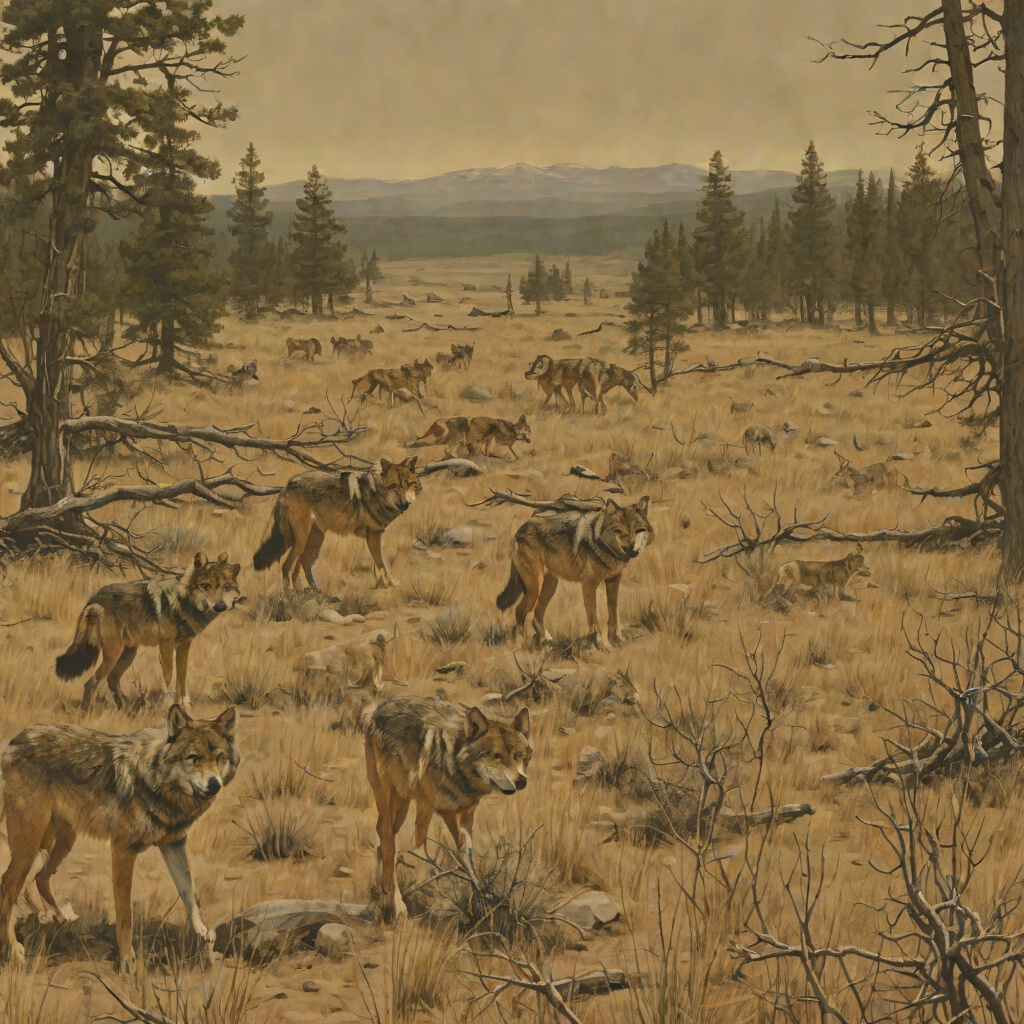
The horses were also exposed to the prairie's dangers. When Pa rode Patty across the prairie to see what he could see, a pack of fifty wolves surrounded them. Pa told the family, "Patty tried to run, but I pulled the reins hard and made her walk. Wolves will chase and hurt a running horse." The wolves walked along with them "like a pack of dogs going along with a horse," jumping and playing with each other. Patty was trembling all over with fear, and Pa admitted he was scared too, but he made her walk until they neared the creek, where the leader turned down toward the creek and the rest of the pack followed. Pa let Patty go only then, and he was scared the whole way home, thinking the wolves might come to the house. He knew the family could keep the wolves out of the house with the gun, but Pet and her colt were outside. This episode showed the horses' vulnerability and the constant threat of the wild prairie. The horses also sensed danger before the family did. When the prairie fire came, Pet and Patty came running from the field pulling the plough behind them and with Pa running after them, shouting "Prairie fire!" The horses' flight was the family's first warning of the approaching disaster, and their instinct to run saved them from the flames.
Horses and the Indian Presence
Horses were also the medium of the family's encounters with the Indians. Indians came riding on the path that passed so close to the house, sitting up straight on their naked horses and not looking right or left, but their black eyes shone. Mary and Laura sat against the house and looked up at them. The Indians' horses were different from Pet and Patty—they were ridden without saddles or bridles, and the riders seemed part of the animal. During the Indian war-cry crisis, Laura saw a little black horse with an Indian on its back, the Indian having a blanket around him, feathers on his head, and a gun at his side. He rode by as fast as the wind, and then he was gone. Pa recognized him as the tall Osage Indian who had come to the house once and talked French to him. Later, when the Indians left the prairie, the tall Indian chief who had saved their lives came first on his black horse. Laura's heart beat fast as she looked at his moccasins, his colourful blanket, and his naked brown-red arms that carried the long gun. The horse and the Indian chief went by without looking at Pa or Ma or Mary or Laura or the house, and then other horses and Indians with eagle feathers in their hair went by. The women and children came riding behind the Indian men, and little naked brown Indians, no bigger than Mary and Laura, went riding by on their horses. Laura looked and looked at the Indian children, and they looked at her, and she had a sudden wish to be a little Indian girl, to ride naked in the wind and the sun. The horses carried the Indians away from the prairie, leaving the family in silence and emptiness, and the world seemed very quiet and lonely.
Horses and the Cattle Drive
Horses also connected the family to the wider world of the cattle trade. Laura and Mary watched the prairie one day, and suddenly cattle came running out of the dusty grass, not far from the stable. They ran fast, their feet beating the ground, and a cowboy on a black-and-white horse rode faster to get in front of them. He waved his big hat and shouted at the cattle as he moved them along, and they all went over a low hill and disappeared. Laura ran around outside, waving her hat and shouting wildly, until Ma said, "Laura, stop that! A young lady shouldn't shout like that." Laura replied, "I wish I could be a cowboy, Ma." Late that afternoon, Pa rode home with two cowboys, a cow, and a little black-and-white calf. The cowboys had given Pa the cow because she was too thin to sell, and the calf was too small to travel, and they gave him the beef too. The cowboys' horses were working animals, tools of the trade, and they represented a life of freedom and adventure that Laura longed for. The horses of the cattle drive were a contrast to the family's own Pet and Patty, who were gentle and domestic, and they opened a window onto a world beyond the little house.
The Significance of Horses
Throughout the book, horses are the constant companions of the Ingalls family's journey and settlement. They are the means by which the family moves west, the labor that breaks the prairie for planting, the transport that carries Pa on his errands, and the connection to the Indian world that surrounds them. The horses are also a measure of the family's changing circumstances: the tired brown horses of the beginning are traded for the young black Pet and Patty, who in turn become parents and workers. The horses' gentleness and strength mirror the family's own qualities, and their vulnerability to wolves and fire mirrors the family's exposure to the dangers of the prairie. The horses of the Indians, ridden bareback and free, represent a different relationship to the land and its creatures, one that Laura briefly longs for. In the end, the horses carry the Indians away, and the family is left alone on the prairie, their own horses still beside them, ready for the next stage of their journey.