Indian Territory
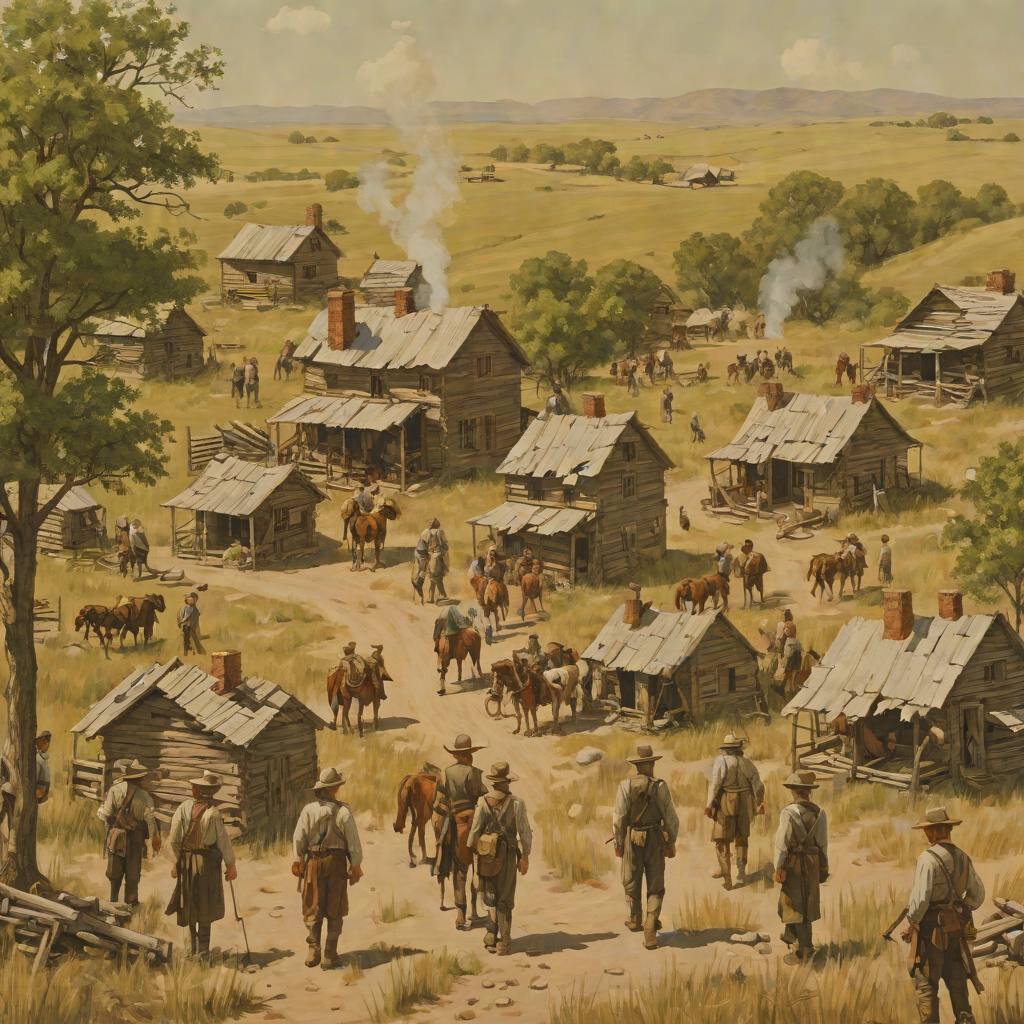
Little House on the PrairieIndian Territory is the vast, contested region that serves as both the destination of the Ingalls family's westward journey and the stage for their most significant encounters with the Osage Indians. It is a land the U.S. government has set aside for Native American tribes, yet it is also the place where white settlers like Charles Ingalls come to claim the best land, creating a fundamental contradiction that drives the family's entire sojourn. The territory is defined by its emptiness to the settlers' eyes — an endless flat land covered with tall grass, where day after day they see nothing but grass and a big sky — yet it is densely inhabited by the Osage, whose presence shapes every major event of the family's time there. The family's arrival, their building of a home, their illnesses, their celebrations, and their final departure all unfold within this politically charged landscape, making Indian Territory not merely a setting but the central force that determines the family's fate.
A Land of Contradiction and Desire
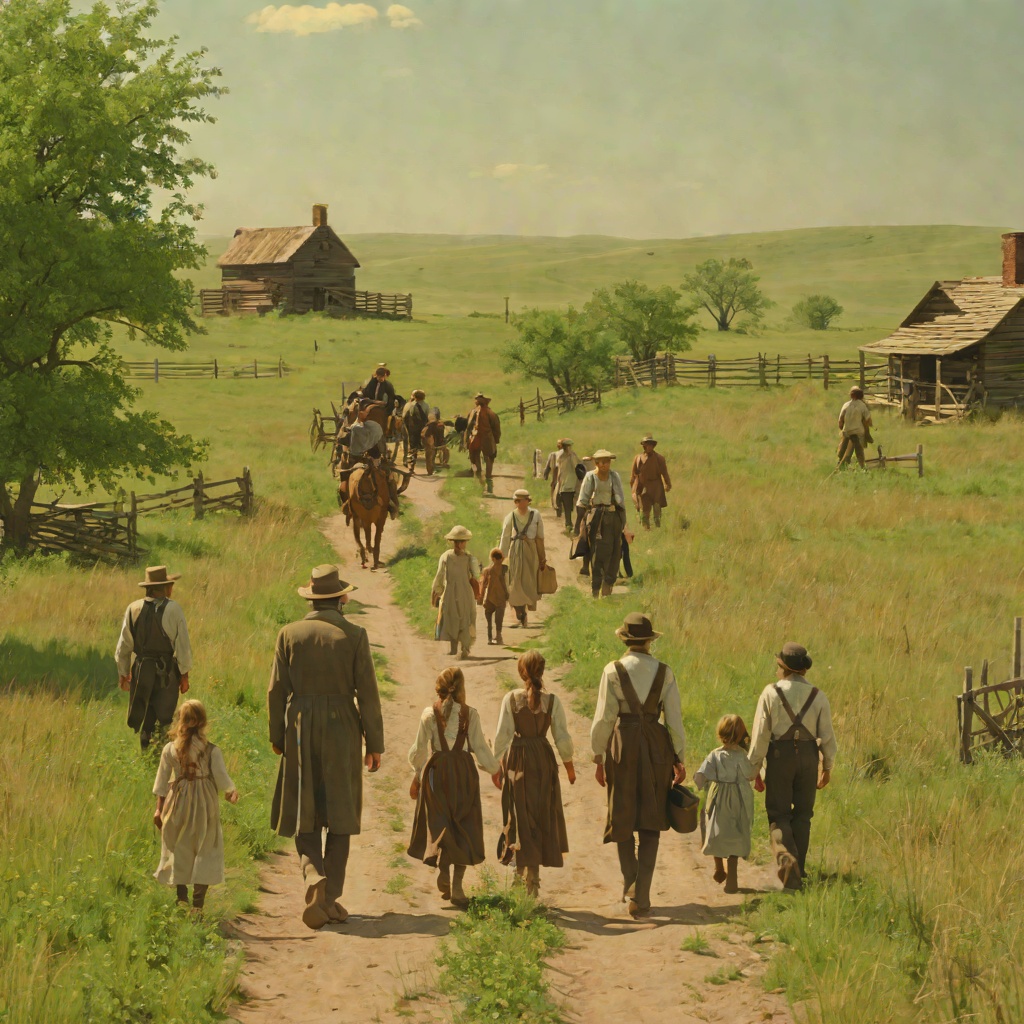
The Ingalls family's decision to travel to Indian Territory is rooted in Charles Ingalls's dissatisfaction with Wisconsin, where he believes there are too many people and where wild animals no longer stay. He longs for a country where animals live without fear, where the land is flat and the grass grows thick and high, and where only Indians live. This vision of an unspoiled, sparsely populated frontier draws the family westward, and they cross the wide Mississippi River before the ice breaks, traveling through Wisconsin, Minnesota, Iowa, and Missouri before entering Kansas and finally reaching Indian Territory. The journey itself is arduous, with the horses travelling as far as they could almost every day and the family stopping in a new place almost every night. Along the way, Pa trades the tired brown horses for two small young black horses with soft gentle eyes and long tails, which Laura and Mary name Pet and Patty. The family's little dog Jack walks along under the wagon the entire way, a constant companion through the long crossing.
Once they arrive, the territory reveals itself as a place of profound beauty and danger. Laura likes the great big sky, the winds, and the wide land, finding everything so clean and big and wonderful. The family builds their little house on the prairie, with Pa promising that before winter comes he will make a wood floor and a solid roof, and that they will be happy there for the rest of their lives. Yet even as they settle in, the territory's original inhabitants make their presence known. Laura, who has been eager to see Indians since learning about papooses — little brown Indian babies — finally gets her wish when two tall, thin, fierce-looking men with reddish-brown skin, black shining eyes, and feathers on their heads walk directly into the house. The encounter terrifies Mary and Laura, and Jack growls angrily, jumping and trying to break free, but the Indians' arrival marks the beginning of the family's complex relationship with the land's rightful owners.
The Osage Presence and the Politics of Removal
Indian Territory is not an empty wilderness but the homeland of the Osage Indians, and their presence is felt throughout the family's time there. The Osage visit the house, sitting silently with Pa by the fire, wearing trousers made of animal skins and moccasins covered with beads, their eagle feathers so still they do not move. They smoke pipes together in silence, communicating through gesture rather than language, and then the tall Indian gets up and goes away without a sound. These encounters are marked by a tense, wordless diplomacy, with Pa holding onto Jack and replying 'How!' to the Indian's greeting, then tying the dog to the bed before the visitor enters. The family also discovers evidence of the Osage's prior habitation, finding Indian beads at an abandoned camp, and they witness the great cattle drive and the movements of the Indian tribes across the prairie.
The political reality of Indian Territory, however, is one of displacement and contradiction. When Pa tells the family about the Indians who visited, he looks serious and says, 'But all's well that ends well. And soon all the Indians here will move west.' When Laura asks why they go west, Pa explains that when white settlers arrive in a place, the Indians have to move away from there, and that the government makes them. He tells Laura, 'That's why we're here. Lots of white people are going to come and live here. We came first to choose the best land.' Laura, confused, asks whether the Indians will be angry if they have to leave, but Pa cuts off her questions, saying it is time for bed. This exchange reveals the central contradiction of the family's presence: they have come to Indian Territory because the government has designated it for Indians, yet they are also part of the wave of white settlement that the government is encouraging, a wave that will inevitably push the Osage out.
The Government's Reversal and the Family's Departure
The family's time in Indian Territory is marked by both hardship and hope. They suffer through a malaria outbreak that leaves Ma and the girls desperately ill, with Laura crawling across the floor to get water for Mary and later being tended by a big, black-faced man with soft black eyes who gives her bitter medicine that tastes like chicken broth when she wakes. They endure the cold, rainy winter, with Laura worrying that Santa Claus cannot travel without snow and Mary doubting that he can find them so far away in Indian Territory. They celebrate Christmas with Mr Edwards, who swims the creek to bring them gifts. They fight a prairie fire, survive an Indian war-cry crisis, and witness the silent, powerful passage of the Osage chief Great Soldier, who prevents an Indian attack on the settlers. Through it all, Pa maintains his optimism, promising that when the seeds grow in this rich land, they will be living like kings.
But the rumors that have been circulating in Independence prove true. Pa hears that the government is going to move the white settlers out of Indian Territory, and though he initially refuses to believe it, saying the government has always let settlers keep the land, the news eventually arrives with certainty. Mr Scott and Mr Edwards tell Pa that the government is sending soldiers to make the settlers leave. Pa's reaction is one of fury and defiance: 'No, Scott! I won't stay here until the soldiers take me away like a criminal. The government in Washington told us it was all right to build our houses here. But if now they want us to go, we'll go. We won't wait for the soldiers to make us leave. We're going now!' His face is very red and his eyes are like blue fire, and Laura is frightened, having never seen Pa look like that. Mr Edwards declares that he is going too, and the family prepares to leave the little house they have built with such care.
The Meaning of Indian Territory
The family's departure from Indian Territory is quiet and resolute. Pa climbs to his place beside Ma and takes the reins in his hands, Jack goes under the wagon, and Pet and Patty walk away from the little house on the prairie. As far as they can see, to the east and to the south and to the west, nothing is moving; only the green grass is waving in the wind. Pa says, 'It's a great country, Caroline. But there will be wild Indians and wolves here for many years.' Pa and Ma are still and silent, and Mary and Laura are quiet too, but Laura feels all excited inside. The family leaves behind the house they built, the land they plowed, and the dreams they had of living like kings, driven out by the same government that had encouraged them to come. Indian Territory thus becomes a place of profound loss and contradiction — a land that promised freedom and prosperity but delivered displacement and uncertainty, a place where the settlers' claim to the land was always provisional, subject to the whims of a distant government in Washington. The territory remains, in the end, a place that belongs to no one for long, a landscape of waving grass and big sky where the only constant is change itself.