Laura Ingalls
Little House on the PrairieLaura Ingalls is the most active child observer in the Ingalls family's movement from Wisconsin to Indian country and its eventual departure from the prairie. Through her curiosity, fear, impatience, and wonder, the family’s westward experience is rendered as a succession of bodily sensations and vivid discoveries: cold mornings, dangerous water, wolf cries, bright beads, passing Indian families, sickness, and the final backward glance at the house. She is not merely carried through these events. Her questions test the adults’ explanations, her impulses repeatedly challenge household discipline, and her changing responses expose the emotional contradictions of settlement life.
Identity and Introduction
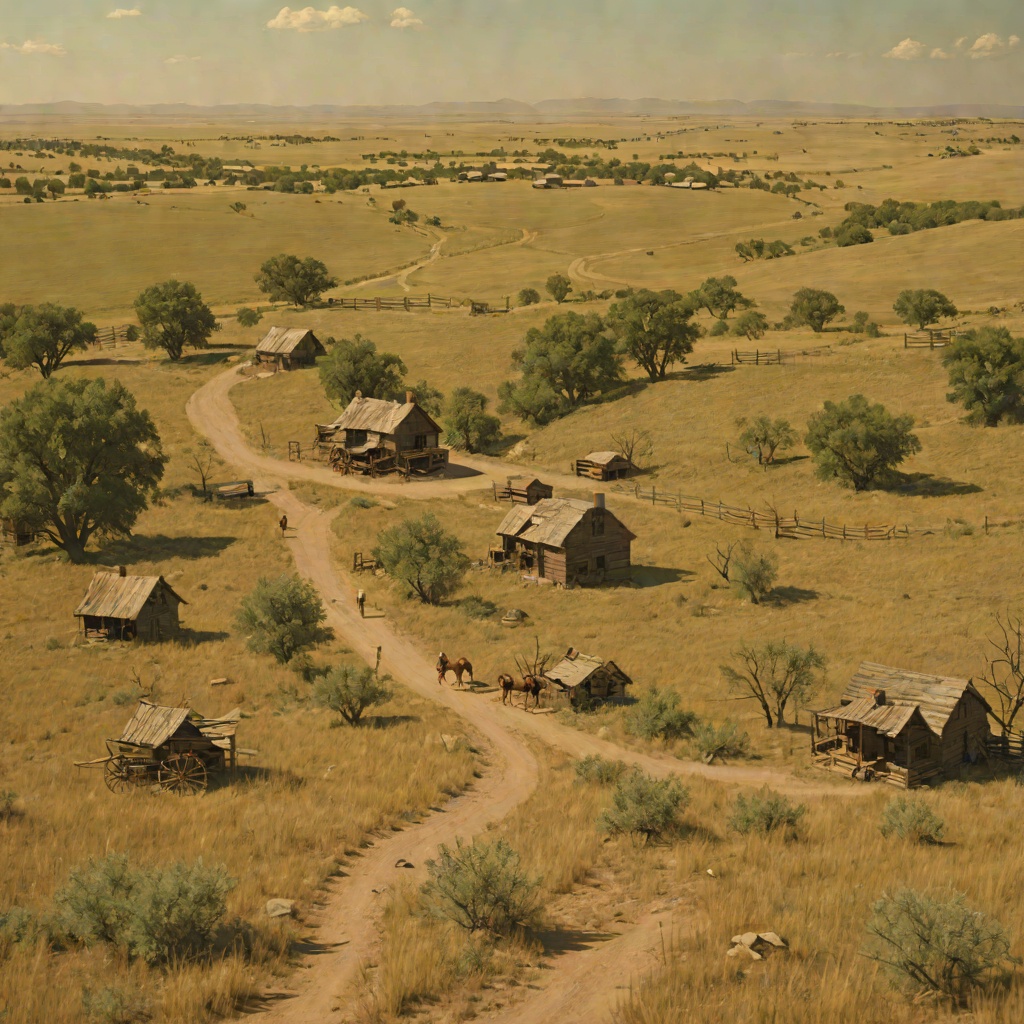
Laura Ingalls leaves the family's little house in Wisconsin with Ma, Pa, Mary Ingalls, and Baby Carrie. The move is presented as a deliberate search for a less crowded country, where wild animals still live without fear and where the land is flat, grassy, and apparently free of settlers. Pa's description of the West gives Laura an imaginative promise as well as a destination: he tells her she will see a Papoose, and she immediately asks what that unfamiliar word means. Her first response to the journey is therefore linguistic and exploratory. She wants the new world explained, but she also wants to see it for herself.
The physical journey establishes Laura as a child whose endurance is real but limited. The family travels across Wisconsin, Minnesota, Iowa, Missouri, and Kansas, while Jack walks beneath the wagon and Pet and Patty carry the travelers onward. The endless grass and sky leave her with little to look at, and she asks Ma whether she and Mary Ingalls may run behind the wagon because her legs are tired. She also wants to stop because she is hungry. Ma's brief command to remain quiet is enough to make Laura understand that obedience matters even when the journey has become monotonous and uncomfortable. Her character emerges through this tension between the discipline expected of a frontier child and the restless energy of a child confronting an immense landscape.
Life and Plot Trajectory
Laura's journey repeatedly places her close to danger while keeping her within the family’s protective structure. During the crossing of a flooded creek, Ma orders the girls to lie down and pulls a blanket over their heads. Laura nevertheless sits up and looks out, seeing water everywhere and the heads of Pet, Patty, and Charles Ingalls in the flood. Charles Ingalls holds Pet's head and speaks calmly to the horses while Ma sits white-faced and frightened. Laura closes her eyes, but the image of the terrible water and her father inside it remains vivid. Her looking is both an act of courage and a source of trauma: she witnesses what the adults would prefer to shield her from.
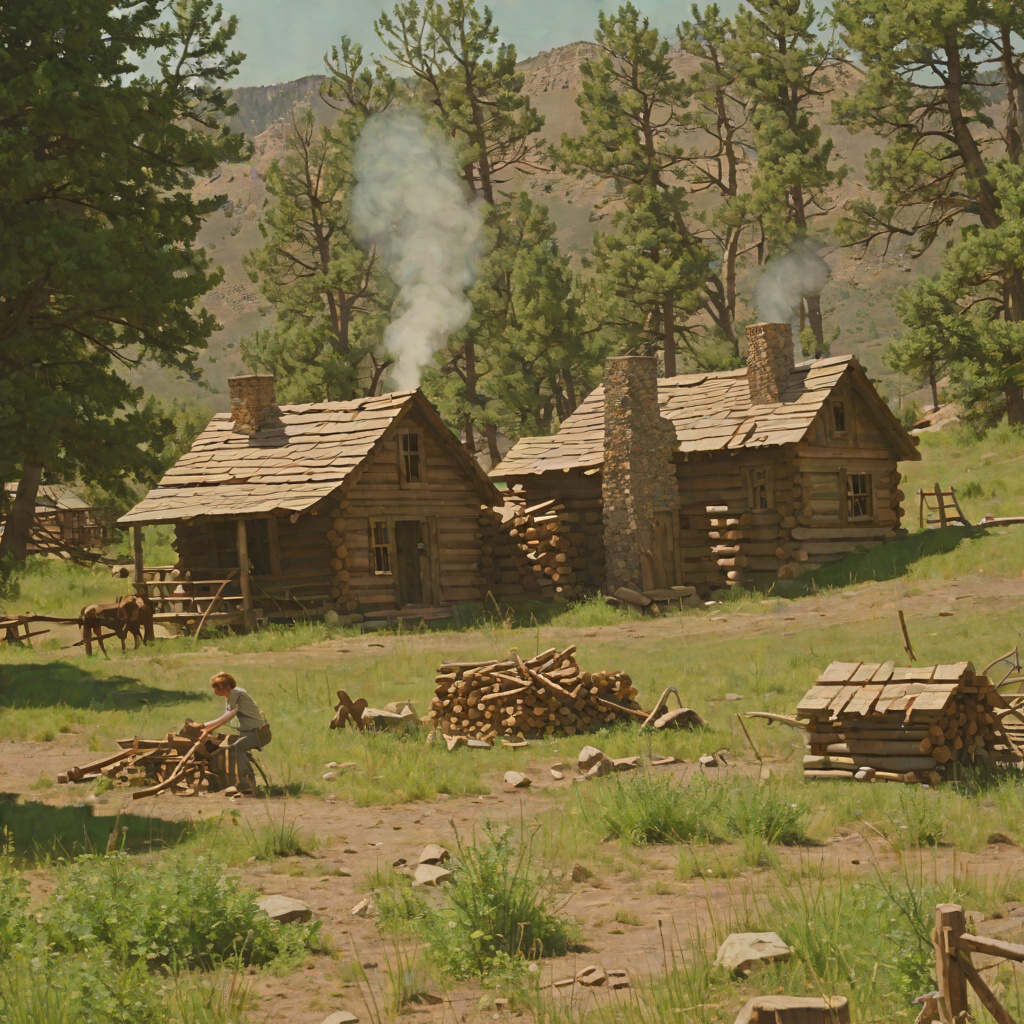
The completed little house gives Laura a temporary center. After Charles Ingalls finishes the walls, canvas cover, and fireplace, the family eats prairie chicken inside, and Laura sits upright on a log chair, using her knife and fork as Ma has taught her. She does not speak at the table until spoken to, yet her happiness is conveyed through the care with which she observes the restored rituals of domestic life. The house makes the prairie feel inhabitable, but its security remains provisional. At night, the cry of a wolf reaches her through the walls; later, a wolf howls directly beside her ear, and many others surround the house. From the window, held up by Charles Ingalls, she sees a half circle of wolves, including a gray, green-eyed animal taller than she is. Fear does not prevent her from looking. The protected child and the determined witness are present at once.
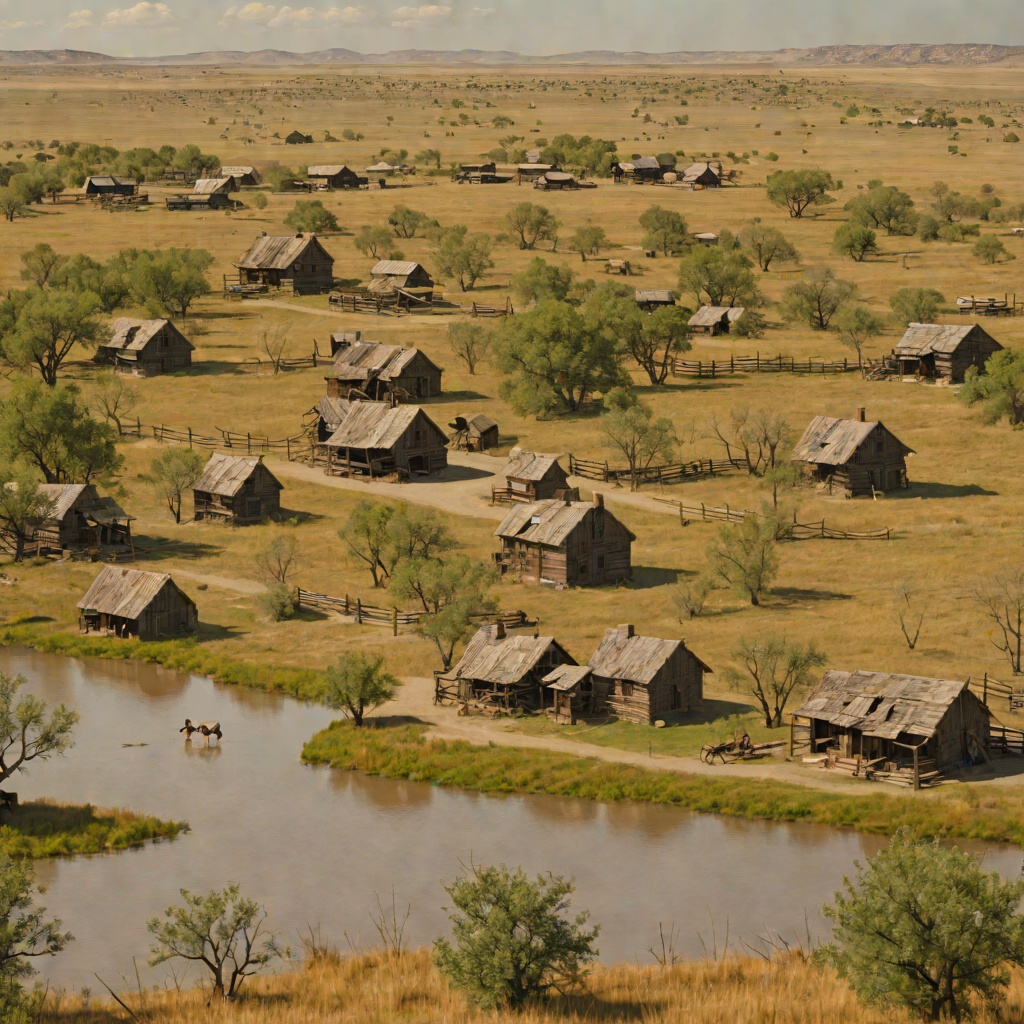
Laura's curiosity also turns the prairie into a field of treasures. While exploring the site of an abandoned Indian camp with Charles Ingalls and Mary Ingalls, she notices a bright blue bead shining on the ground. The discovery leads to red, green, white, and brown beads scattered through the old camp. Laura and Mary Ingalls spend the afternoon gathering them until the sun goes down, and Charles Ingalls carefully carries their handfuls home. The beads transform traces of an absent people into objects of wonder for the children, while the old fires, horse tracks, moccasin prints, and cooking places quietly insist that the land was inhabited before the family arrived.
Key Actions and Objectives
Laura's most persistent objective is to see and understand what lies beyond the limits imposed by adults. She asks when she will see a Papoose, watches the wolves rather than retreating from them, and searches the abandoned camp with sustained attention. Her questions are not ornamental; they create encounters that broaden the narrative beyond the family's immediate chores. At the same time, she acts on impulses that do not fit Ma's rules. When cattle and cowboys pass by, she runs outside, waves her hat, and shouts wildly until Ma tells her to stop because a young lady should not behave that way. Laura then says she wishes she could be a cowboy. The wish reveals her attraction to movement, risk, and public action rather than only to the quiet domestic behavior prescribed for girls.
Her conduct around the Indian families is more complicated and more emotionally exposed. When Indians pass the house, Laura studies the men, women, horses, feathers, blankets, beads, and children. She is especially struck by the little children riding in the open air and suddenly wishes to be a little Indian girl herself. When an Indian mother rides past with a baby in a basket, Laura looks directly into the infant's black eyes and then cries when the Papoose disappears. Ma cannot understand why Laura wants an Indian baby, but Laura can explain only that its eyes are so black. Her longing is childish and immediate, yet it also shows how intensely she responds to a human presence that the adult household tends to classify as distant or threatening.
Laura's actions remain bounded by obedience. When Ma tells her and Mary Ingalls to look during the Christmas morning visit from Mr Edwards, she does so, and she races to the fireplace when a bright new tin cup shines from her stocking. Her excitement is physical: she jumps, shouts, and laughs, while Mary Ingalls stands still and gazes at her own cup. The cup is a small object, but for Laura it marks possession, recognition, and a return to ordinary joy after the family's isolation and illness. Her capacity for exuberance is one of the ways she converts hardship into lived experience rather than allowing danger to define the whole journey.
Relationships and Conflict
Laura's closest relationships are formed through shared dependence and contrast. With Mary Ingalls, she shares the wagon, the search for beads, the frightening crossing, the sickness that overtakes the household, and the excitement of Christmas. The sisters do not always react alike: Laura rushes toward the tin cup, while Mary Ingalls remains still with bright eyes; Laura wants to run and shout, while Ma repeatedly calls her back to quiet. Their differences sharpen Laura's identity as the more impulsive and outward-looking child.
Ma's discipline is the immediate counterforce to Laura's energy. A single refusal prevents Laura from running behind the wagon; a sharp command makes her lie down during the flood; a rebuke stops her from shouting like a cowboy; and a quiet instruction governs the Christmas revelation. Yet Ma's rules are inseparable from care. The same household that limits Laura's movement dresses her warmly, shelters her from the flood, maintains table manners and routines, and nurses the children through sickness. Laura's conflict with Ma therefore dramatizes not a simple opposition between freedom and repression, but the frontier family's attempt to preserve order while surrounded by forces it cannot control.
Charles Ingalls is both Laura's guide to the outside world and the person who makes dangerous sights bearable. He explains what a Papoose is, names the western horses after allowing Laura and Mary Ingalls to choose, lifts Laura to the window to see the wolves, and stands beside her as the family observes the abandoned Indian camp. During the flood, Laura sees his small wet head in the water and hears him speak calmly to the horses; during the wolf encounter, she listens as he points out the largest wolf's shining coat. Their relationship is marked by trust in his competence, but Laura's perspective also records his vulnerability. When malaria leaves the family helpless, she sees Charles Ingalls lying on the floor, too weak to rise, while Jack pulls at his shirt and howls. Laura tries to get up when Ma asks her to fetch water, falls because she is still weak, and then holds onto Jack. The scene reverses the usual pattern: the child who watches Pa protect the family must confront the possibility that the protector cannot stand.
Change, Ending, and Narrative Role
Laura's development is measured less by a declared moral lesson than by the widening and darkening of what she can see. At first, the West is chiefly a promise of Papooses, animals, open land, and new names for horses. Gradually, her observations include floods, wolves, disease, abandoned camps, the displacement of Indian families, and the precariousness of the household itself. Pa explains that when white settlers arrive, Indians have to move away because the government makes them do so. Laura's earlier fascination with Indian children and the Papoose now exists beside an explanation of forced removal, though the family's own settlement is still treated as part of the movement of white people into the region.
Her child perspective exposes the limits of the adults' language. Laura can perceive the beauty of the passing Indian children and the loneliness left after the procession disappears, while Ma asks why she wants an Indian baby and Pa frames the Indians' departure as the condition that will allow more white settlers to come. Laura does not resolve this contradiction. Instead, her grief and wonder preserve the human immediacy that the settlement logic tends to suppress. She looks at the children as children, even while the larger story organizes them as groups moving away.
At the end, Laura climbs into the wagon with Mary Ingalls and Baby Carrie, then suddenly wants to see the house once more. Charles Ingalls opens the back of the wagon cover so the girls can look at the little log house. Jack goes beneath the wagon, while Pet and Patty walk away from it. The family carries clothes, food, and dishes, but cannot take the plough, and the house that had promised permanence is left behind. Laura's inward excitement at the prospect of what may happen next coexists with the stillness of Ma and Pa and the silence of the prairie. Her final position is therefore both backward-looking and forward-moving: she witnesses the loss of the home, yet remains open to the unknown future of travel in a covered wagon.
Laura's narrative significance lies in this double vision. She embodies the frontier child's appetite for discovery, but her experiences also reveal how quickly wonder can touch danger and how settlement depends on displacement. Her longing to be a cowboy, her fascination with Papooses, her fear before the wolves, her delight in beads and a tin cup, and her final look at the house all make the family's movement emotionally legible. The world is large enough to promise freedom, but Laura's close attention ensures that its costs, silences, and sudden reversals remain visible.