Mosquito
Little House on the PrairieThe mosquito is a pervasive and destructive presence in the Ingalls family's life on the Kansas prairie, serving as the unseen agent of the malaria outbreak that nearly kills the family and as a constant tormentor that shapes daily routines, social life, and even Pa's ability to play his fiddle. Though small, the mosquito exerts an outsized influence on the narrative, transforming the idyllic promise of the West into a season of illness and misery. Its role is twofold: it is both a mundane nuisance that dictates when the family can be outdoors and a lethal vector whose true danger remains unknown to them, a fact the narrative reveals only in retrospect.
The Mosquito as a Seasonal Plague
The mosquitoes arrive in force during the hot afternoons, particularly in the blackberry bushes by the creek where Laura goes with Ma to pick berries. The insects swarm there, and they like to bite Laura and Ma. The result is a vivid portrait of childhood discomfort: Laura's fingers and mouth turn purple-black from eating the big blackberries, while her face, hands, and feet become covered with mosquito bites. Despite the constant biting, the harvest continues daily, with buckets full of berries brought home and laid out in the sun to dry. The mosquitoes are not merely an outdoor problem; they invade the house itself. In the day there are only a few inside, but at night, if the wind is not blowing hard, there are lots of them. On still nights Pa burns wet grass around the house to keep them away, but they come just the same, rendering the family's domestic defenses futile.
The infestation reaches such intensity that it disrupts the family's most cherished rituals. Pa cannot play his fiddle in the evenings because so many mosquitoes bite him, silencing the music that is a central comfort of their frontier life. Mr Edwards does not visit after supper because there are too many mosquitoes in the creek, isolating the family from their nearest neighbor. Every morning Laura's face is full of red mosquito bites, a daily reminder of the insects' relentless presence. Pa offers a promise of relief, saying, "It'll get colder soon, and then they'll go," but the cold does not arrive in time to prevent the worst consequence.
The Hidden Cause of Malaria
The mosquitoes' most devastating impact is indirect and initially unrecognized. Laura begins to feel unwell, feeling cold even in the hot sun and unable to get warm by the fire. She tells Ma, "I'm cold now. And my back aches," and Ma calls to Pa, "Look at the girls. I think they're sick." Pa and Ma put the girls to bed in the middle of the day, and Laura enters a strange, prolonged state of semi-consciousness. She does not really go to sleep, but she does not really wake up again for a long, long time. Strange things seem to be happening; she hears voices but no words, and she alternates between feeling as cold as ice and burning with fever. Days and nights pass like this, with the illness spreading through the family. Pa tells Ma, "Go to bed, Caroline," and Ma replies, "You're sicker than I am, Charles," revealing that both parents are also stricken.
The narrative explicitly notes the family's ignorance: no one knew, in those days, that the illness was malaria, and that it came from the mosquitoes. This retrospective clarification casts the entire ordeal in a tragic light. The family's suffering is not caused by a dramatic frontier danger like wolves or prairie fire, but by the tiny, ubiquitous insects they have learned to tolerate. The mosquitoes are the silent, invisible agents of a disease that nearly destroys the family, and their role remains hidden until after the fact, making the illness feel both arbitrary and inevitable.
The Mosquito in the Wider Frontier Ecology
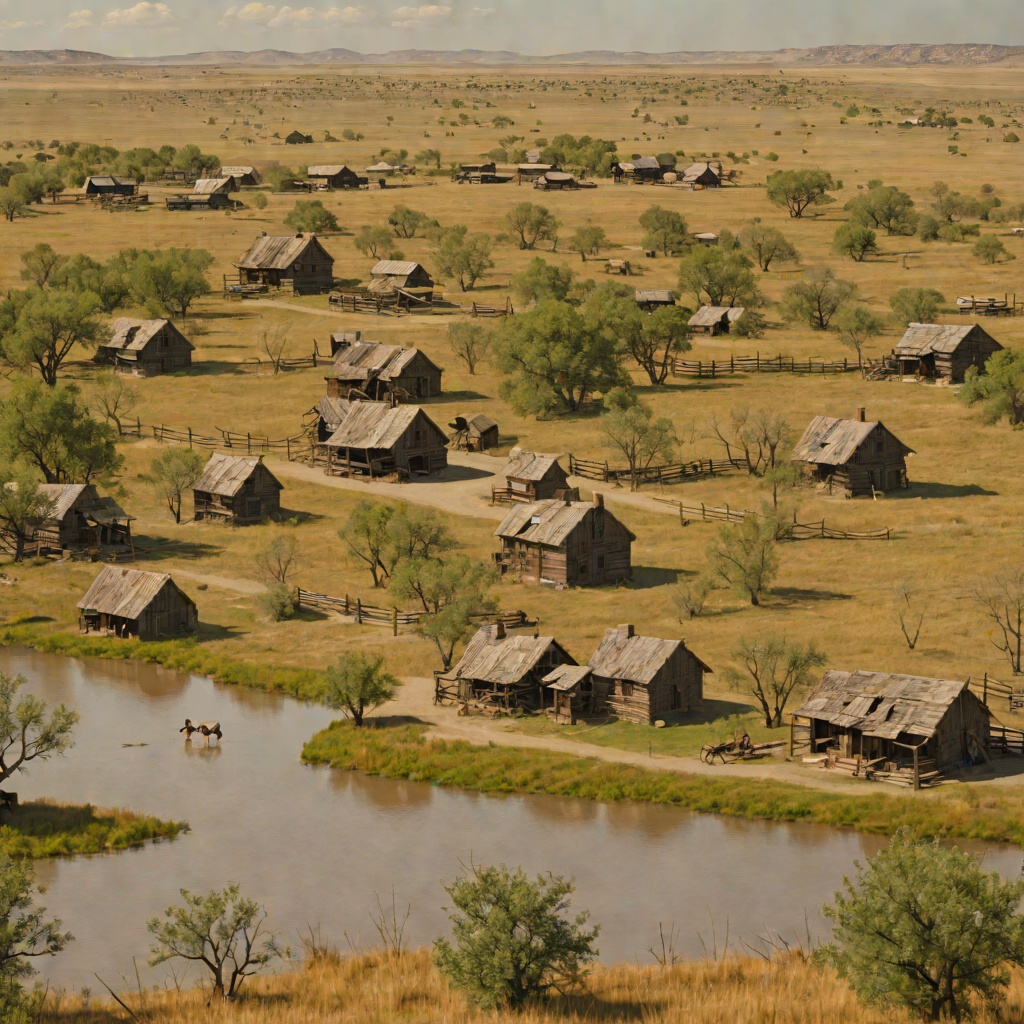
The mosquito's prominence is part of a broader ecological context that the narrative establishes. Pa's decision to leave Wisconsin is driven by his belief that there are too many people there and that wild animals do not stay in a country with so many people. He likes a country where animals live without fear, and he describes the West as a place where "the land is flat and the grass grows thick and high. Animals run freely and there are no settlers." This vision of an untouched paradise, however, does not account for the insects that thrive in the same conditions. The prairie that offers rich land and abundant game also harbors swarms of mosquitoes, a hidden cost of the frontier that Pa's romantic view overlooks.
The mosquito is thus one of several natural forces that challenge the family's settlement. The prairie fire, which Pa later explains the Indians have always burned to make the green grass grow more quickly and to make it easier to ride horses in shorter grass, is a dramatic and visible threat. The mosquito is the opposite: small, constant, and insidious. While the family can fight the fire with wet sacks and trenches, they can only burn wet grass and endure the mosquito bites. The insect represents the limits of human control over the environment, a reminder that the frontier is not merely a resource to be tamed but a living ecosystem with its own inhabitants, both large and small.
The Mosquito's Narrative Significance
The mosquito's role in the narrative is defined by its contrast with the more spectacular dangers the family faces. The wolves that surround the cabin, the flooded creek that nearly drowns the horses, and the prairie fire that threatens to consume everything are all dramatic, visible crises that demand immediate action. The mosquito offers no such drama; it is a background hum of discomfort that slowly, invisibly, and lethally undermines the family's health. This contrast gives the mosquito a unique narrative power: it is the enemy that cannot be seen, fought, or understood, and its victory is measured not in a single moment of terror but in the prolonged, wasting illness of the entire family.
The recovery from malaria is slow, with Pa thinner and walking slowly, and Ma often sitting down. Pa cannot work outside, so he sits in the house and makes a beautiful chair for Ma, and he plays his fiddle, making Mary and Laura happy. The return of the fiddle music signals the family's gradual return to health, but the memory of the illness lingers. The mosquito, having done its damage, recedes as the weather turns colder, fulfilling Pa's prediction. Yet the narrative's retrospective revelation of the mosquito's role ensures that the insect is not forgotten. It stands as a quiet, persistent reminder of the unseen dangers that accompany the family's westward journey, a force of nature that is as much a part of the prairie as the rich soil and the tall grass, and one that the settlers can neither escape nor fully understand.