Pa's rule of obedience
Little House on the PrairiePa's rule of obedience is the foundational disciplinary code of the Ingalls household, the principle that Laura and Mary must always do exactly as their father says. It is not a formal written law but a living command, spoken at moments of crisis and reinforced through daily life on the Kansas prairie. The rule carries the family's survival: when Pa speaks, the girls obey, and their obedience is what keeps them safe from the wolves, the flooded creek, the prairie fire, and the Indians who surround their little house. Yet the rule also reveals its limits, for Laura and Mary often obey without understanding, and their father's authority is tested by forces even he cannot control.
The Rule Is Spoken
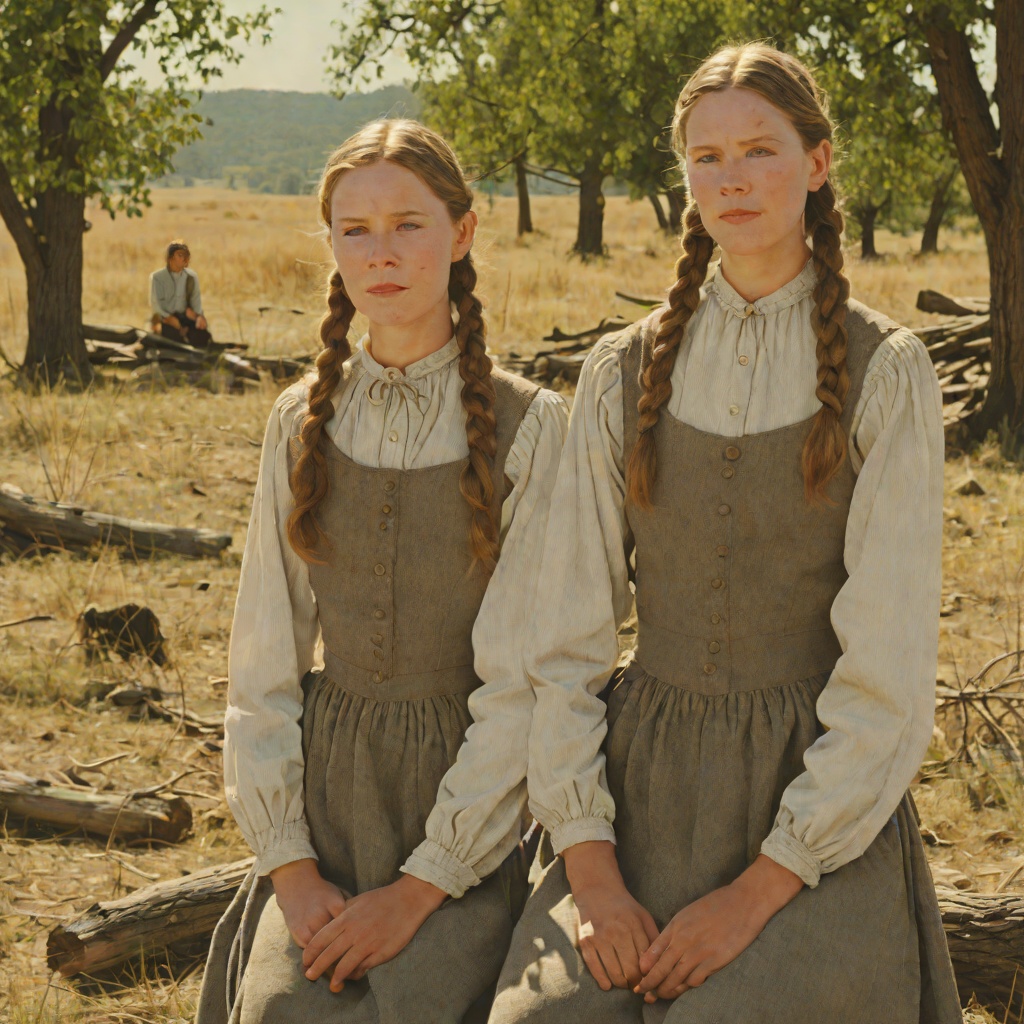
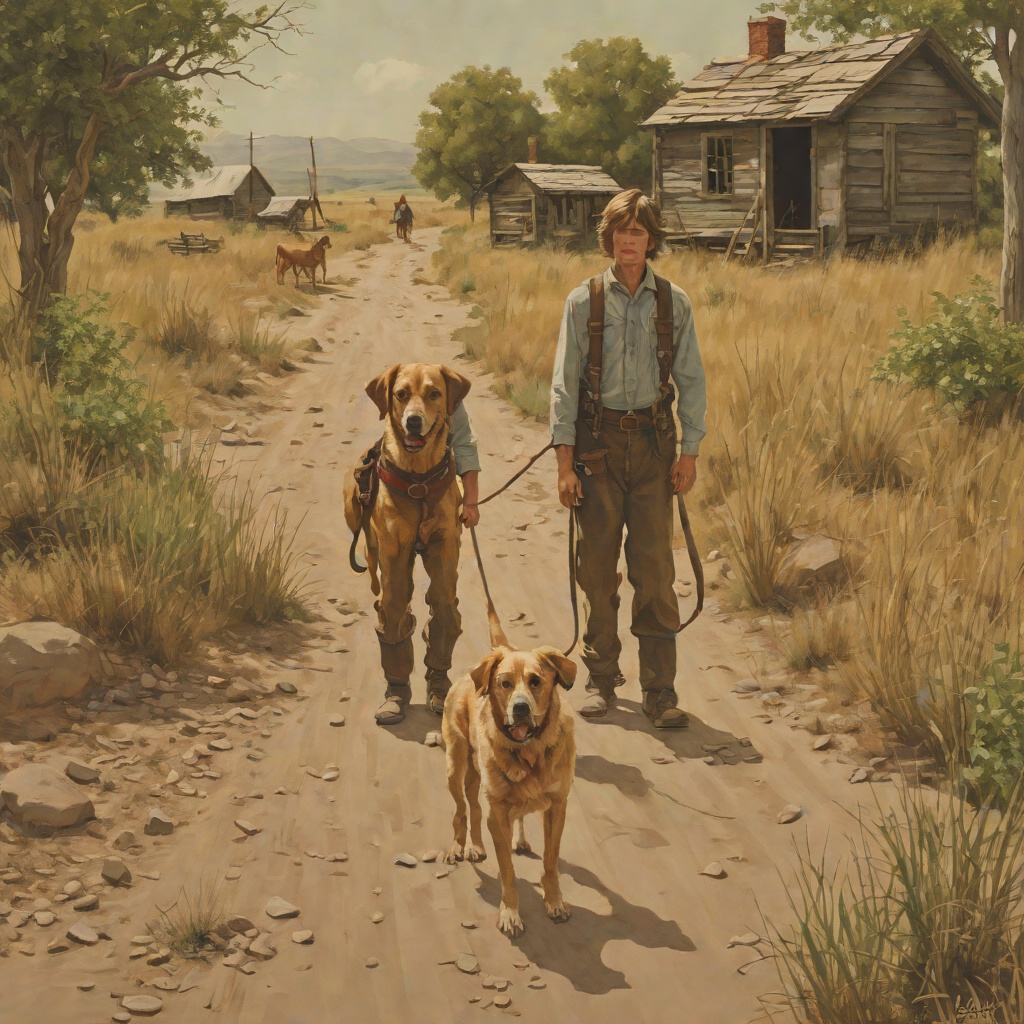
The rule receives its most explicit statement in the aftermath of a frightening encounter with Indians. Pa had warned the girls to keep Jack tied up, but when the Indians came to the house, the dog was loose, and Pa feared the consequences. After the danger passed, Pa spoke in his angry voice: 'After this, you girls must do as I say. You must always obey me. Do you hear?' Laura and Mary whispered their assent, 'Yes, Pa.' But the narrator notes that they did not understand. Pa pressed the point: 'If the Indians come again and Jack is untied, he'll bite them. And then there will be trouble. Bad trouble. Do you understand?' Again the girls said yes, but still they did not grasp the full weight of the warning. Pa concluded with the rule's simplest formulation: 'Do as you're told, and you'll be safe.'
This moment is the rule's origin in the text, but it is not its first appearance. Earlier, on the long journey west, Ma had enforced a quieter version of the same principle. When Laura begged to run behind the wagon because her legs were tired, Ma simply said, 'No, Laura.' When Laura complained she was hungry and wanted to camp, Ma said only, 'Laura.' That was all she said, but Laura understood that she should stay quiet. The rule, then, is not solely Pa's; it is the family's shared code, spoken by both parents, though Pa's voice gives it its most forceful articulation.
Obedience in Daily Life
The rule governs not only moments of danger but the ordinary rhythms of the household. At the first meal eaten in the new house, Laura sat up straight on her log chair and used her knife and fork nicely, as Ma had taught her. She did not say anything, because children must not speak at the table until they are spoken to. This silence at the table is obedience made habit, the rule internalized into manners. The same principle shapes the girls' play: when Ma told Laura to stop shouting like a cowboy, Laura obeyed, even though she wished she could be a cowboy. The rule extends to the smallest gestures, training the children to be quiet, still, and compliant.
Yet the rule also chafes against Laura's nature. She is a child who wants to run, to shout, to see the world. When the cattle drive thundered past, Laura ran around outside, waving her hat and shouting wildly, until Ma stopped her: 'Laura, stop that! A young lady shouldn't shout like that.' Laura's response, 'I wish I could be a cowboy, Ma,' reveals the tension between the rule and her desires. The rule demands she become a young lady, but her heart longs for the freedom of the cowboy. This tension runs through the novel, as Laura's obedience is constantly at war with her curiosity and her wish to be something other than what the rule requires.
The Rule in Crisis
The rule's true test comes in the family's moments of greatest danger. When the wagon crossed the flooded creek, Ma shouted, 'Lie down, girls! Don't move!' Mary and Laura dropped flat on the bed, obeying instantly. When Ma spoke like that, they obeyed her. This obedience was not blind; it was the family's survival instinct. As the wagon rocked in the water and Pa disappeared into the flood, Laura sat up and looked out, seeing only water and the three heads of Pet, Patty, and Pa. She closed her eyes, but she could still see the terrible water. The rule had kept her safe, but it could not shield her from fear.
Similarly, when the wolves surrounded the house, Pa stood with his gun while Laura lay in bed, a wolf howling right in her ear. She pulled away from the wall, too scared to speak, and got out of bed. Pa turned and asked softly, 'Do you want to see them, Laura?' The rule did not forbid this; Pa himself invited her. But the moment shows how the rule operates: Laura does not act on her own, but only when Pa permits. Her fear is real, but her obedience to Pa's authority gives her a place in the scene.
The rule is tested most severely during the prairie fire. As the flames roared toward the house, Mary and Laura stood against the house and held hands and trembled. Laura wanted to do something, but inside her head it was roaring like the fire. Her body shook. The smoke burned her nose, and her red eyes couldn't stop crying. Jack howled. In this moment, the rule offers no comfort; the girls can only stand and wait, obeying the implicit command to stay put while Pa and Ma fight the fire. Their obedience is passive, and it is all they can do.
The Limits of the Rule
The rule's limits become clear during the Indian war-cry crisis. Night after night, the Indians shouted and danced and beat their drums. The silent days were worse than the nights. The animals stayed in the stable. Mary and Laura could not go out of the house. And Pa watched and listened all the time. He didn't eat much. One day his head fell onto the table and he slept a little. He was so tired. But in a minute he woke up with a jump and said, crossly, to Ma, 'Don't let me do that again!' Pa himself is exhausted by the vigil, and his rule cannot protect the family from the terror outside. The rule keeps the children inside, but it cannot stop the war-cries that make their blood run cold.
Nor can the rule govern the Indians themselves. When the Osage chief rode past with his people, Pa lifted his hand to say hello, but the chief went by without looking at Pa or Ma or Mary or Laura or the house. The rule of obedience applies only within the family; it has no power over the world beyond. Laura watched the Indian children ride by, naked and happy, and she had a sudden wish to be a little Indian girl, to ride naked in the wind and the sun. This wish is a rebellion against the rule, a longing for a life where obedience to Pa is not the highest law. When Laura cried for the papoose, Ma asked, 'I've never heard of such a thing. Why do you want an Indian baby, of all things?' Laura could only say, 'Its eyes are so black.' She could not say what she meant. The rule cannot give her words for her longing.
The Rule's Significance
The rule of obedience is the novel's quiet engine, the principle that holds the Ingalls family together in a world of constant danger. It is a survival strategy, a way of keeping children safe when the prairie offers no guarantees. But it is also a limitation, a force that shapes Laura into a young lady even as her heart yearns for the freedom of the cowboy and the Indian child. The rule is spoken most forcefully by Pa, but it is enforced by Ma, internalized by the girls, and tested by every crisis the family faces. In the end, the rule does not save the family from the Indians or the fire or the fever; it simply holds them together, obedient and afraid, until the danger passes. And when the Indians leave and the family prepares to leave Indian Territory, the rule remains, unspoken but understood, the constant that carries them through an uncertain world.