Prairie Fire
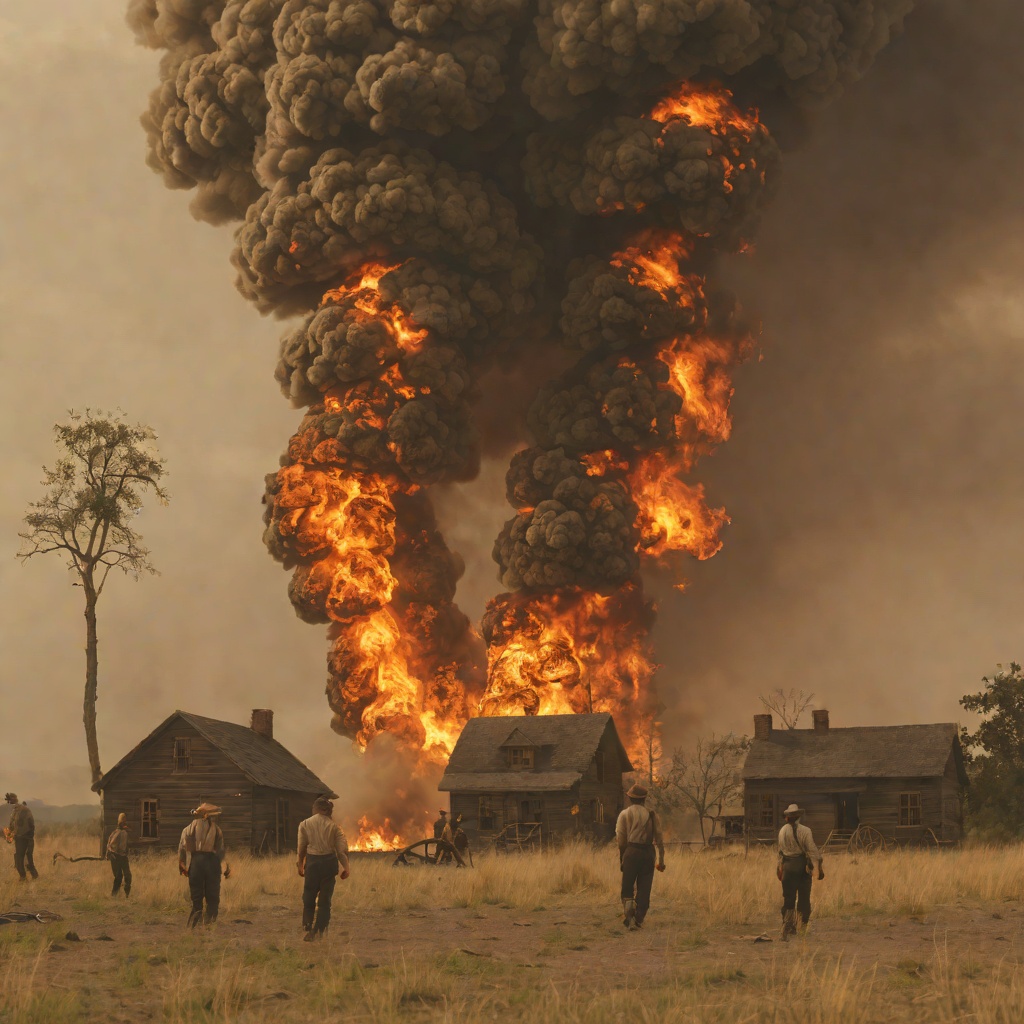
Little House on the PrairieThe Prairie Fire is the great natural catastrophe of the novel, the moment when the vast, sweet grassland that the Ingalls family has come to love turns into a wall of death. It arrives in spring, at the height of the family's hopes, when Pa is working the rich, stone-free soil to plant potatoes and the warm winds smell exciting. The fire is not a distant threat but a sudden, overwhelming presence that strips the world of color and sound, leaving only smoke, flame, and the screaming wind. It is the book's most sustained test of the family's courage and resourcefulness, and it ends by transforming the prairie itself, turning the wide, clean land into a blackened waste that feels different and miserable. The event also forces a reckoning with the land's other inhabitants, as the family must decide whether the fire is an act of malice or a natural, even beneficial, part of the prairie's cycle — a question that echoes the novel's larger anxieties about the Indians who share the territory.