Washington
Little House on the PrairieWashington is the remote, unseen seat of the U.S. government whose authority reaches across the continent to decide who may live on the Kansas prairie. Though the city itself never appears in the story, its power shapes every stage of the Ingalls family's time in Indian Territory. Washington is the source of the contradictory policies that first invite white settlers onto Osage land and then, within a single year, drive them off it again. The family's entire westward venture unfolds in the shadow of this distant capital, whose decrees arrive only as rumor and hearsay, yet carry the force of soldiers and eviction. Washington thus functions less as a place than as an abstraction of state power, a name that explains both the family's right to build their little house and the reason they must abandon it.
The Government's Promise and the Claim to the Land
Washington's first intervention in the family's fortunes is invisible but decisive: it is the authority that makes their settlement possible at all. When Pa explains to Laura why the Indians must move west, he grounds the policy in the government's will. 'The government makes them. Laura,' he says, adding, 'That's why we're here. Lots of white people are going to come and live here. We came first to choose the best land.' The logic is circular and self-justifying: because Washington has decreed Indian removal, the land is available; because the land is available, the Ingalls family may claim the best of it. The government in Washington is thus the unseen guarantor of the family's enterprise, the distant hand that has cleared the prairie of its prior inhabitants so that white settlers can arrive and prosper. Pa's confidence in this arrangement is absolute, and he repeats it as a settled fact rather than a matter for debate. When Laura presses him, asking whether the Indians will be angry at being forced out, he cuts the conversation short: 'No more questions, Laura. It's time for bed.' The question of Indian anger is not permitted to disturb the family's sense of entitlement, an entitlement that flows directly from Washington's authority.
The Dream of Prosperity Under Washington's Protection
Under the shelter of Washington's policy, Pa pursues the dream of a settled, prosperous life. When the house is finished, he promises Caroline that he will build a wood floor and a solid roof before winter, and declares, 'We're going to do well here, Caroline. We'll be happy here for the rest of our lives.' The ambition is rooted in the land itself, which Pa believes is rich and theirs by right. After his trading trip to Independence, he brings back a plough and seeds, and tells his family, 'I tell you, Caroline, when these seeds grow in this rich land of ours, we'll be living like kings!' The phrase 'living like kings' recurs as the family's refrain, a promise of abundance that depends entirely on the stability of their claim. Yet even as Pa celebrates, the first hint of Washington's reversal reaches them. People in Independence say the government is going to move the white settlers out of Indian Territory. The rumor lands in the middle of the happiest supper the family has had in a long time, and Laura sits very still and listens carefully. The dream of kingship and the threat of expulsion arrive in the same breath, both emanating from the same distant capital.
The Reversal: Washington Orders the Settlers Out
The government's second decree overturns the first. Pa learns from Mr Edwards and Mr Scott that Washington is sending soldiers to make the settlers leave Indian Territory. His reaction is immediate and furious. 'No, Scott!' he says. 'I won't stay here until the soldiers take me away like a criminal. The government in Washington told us it was all right to build our houses here. But if now they want us to go, we'll go. We won't wait for the soldiers to make us leave. We're going now!' The speech reveals the full arc of Washington's authority: the same government that licensed the family's settlement now criminalizes their presence. Pa's face is very red and his eyes are like blue fire, and Laura is frightened, having never seen her father look like that. The anger is directed not at the Indians whose land the family occupies, but at the distant government that has changed its mind. Washington is the only power that can make Pa leave, and it does so not through direct command but through the threat of soldiers. Pa chooses to preempt the eviction, to leave as a matter of pride rather than be taken away 'like a criminal.' Mr Edwards, the family's neighbor and friend, declares, 'I'm going, too,' and the exodus begins.
The Departure and the Unfinished Dream
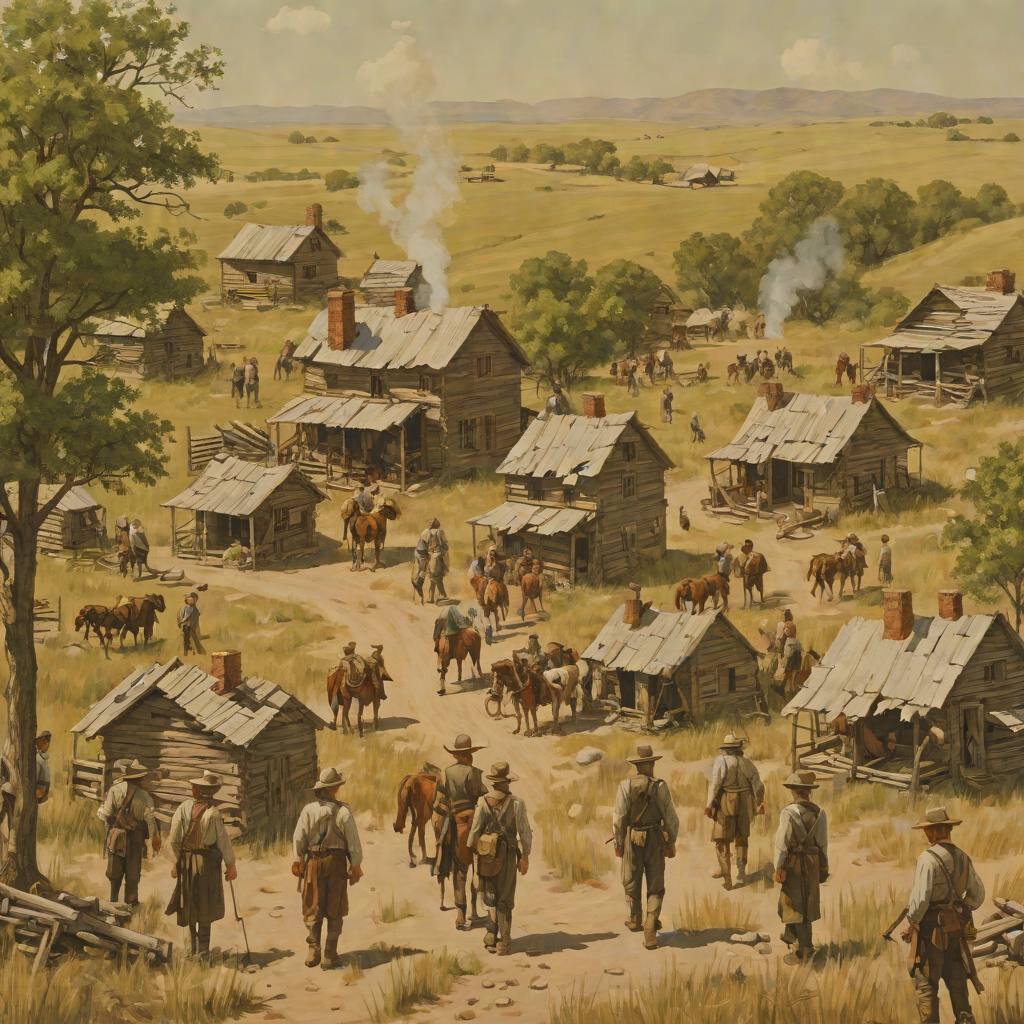
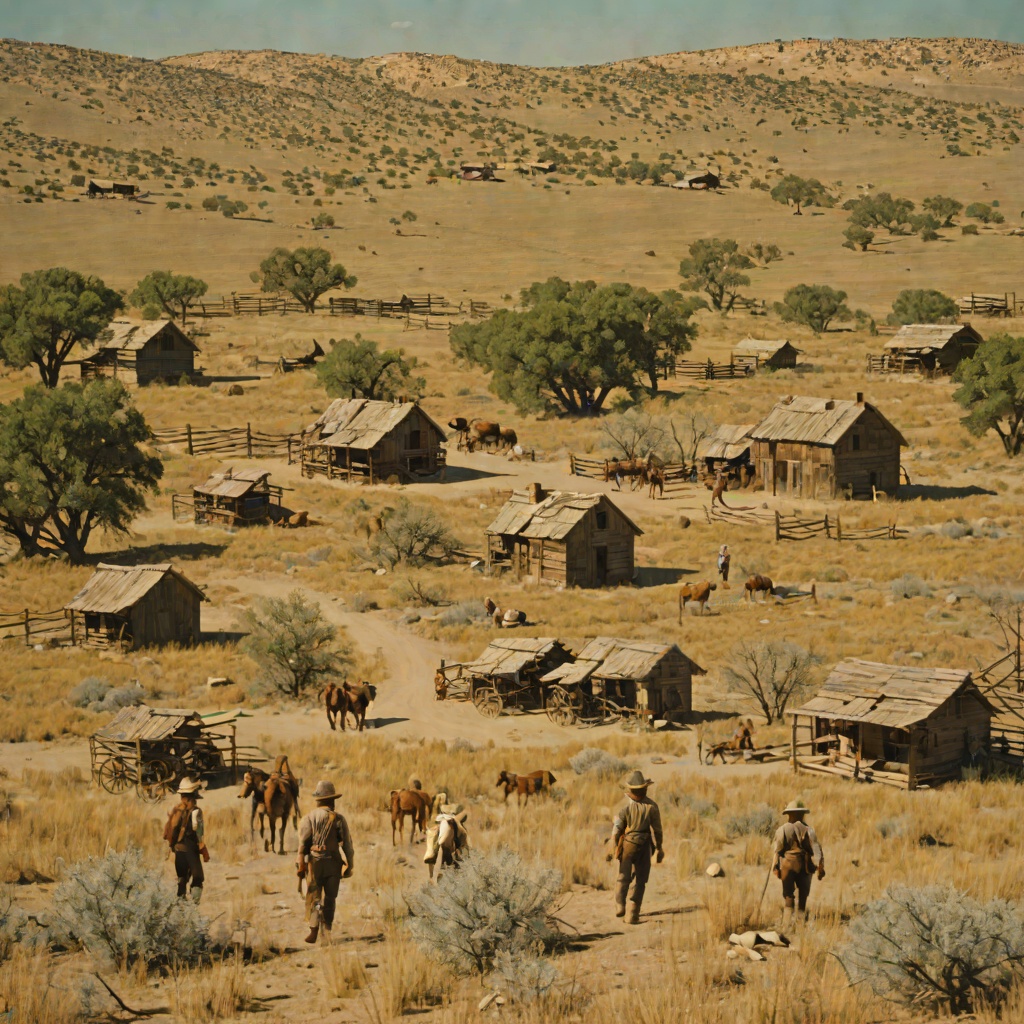
The family packs the wagon the next morning, leaving behind the plough, the one thing they cannot take. As they drive away from the little log house, Pa offers a final assessment of the land they are abandoning. 'It's a great country, Caroline,' he says. 'But there will be wild Indians and wolves here for many years.' The remark folds the family's departure into the larger story of the frontier: the land remains great, but it is not yet safe for them, and the Indians and wolves are cast as obstacles that will persist. Caroline, looking back on the single year they spent in Indian Territory, says gently, 'A year gone. Charles.' Pa answers with a smile, 'What's a year? We have all the time in the world.' The exchange captures the family's resilience and their refusal to mourn. Washington's reversal has cost them their house, their plough, and their dream of living like kings, but Pa treats the loss as a minor setback in an endless future. The government's authority, which once seemed to guarantee their prosperity, has proved arbitrary and reversible, yet the family's faith in the next horizon remains unshaken. Washington recedes behind them, an unseen power that has shaped their year on the prairie and now sends them onward into the unknown.
The Unseen Center of Settler Colonial Power
Washington's significance in the story lies in its absence. It is never described, never visited, never personified, yet it is the most powerful force in the narrative. The city stands for the entire apparatus of settler colonialism: the policies that remove the Osage Indians from their land, the promises that draw white families westward, and the soldiers who can be sent to undo those promises at will. The Indians themselves are visible and vivid, described with their reddish-brown skin, black shining eyes, and eagle feathers, and the family's encounters with them are immediate and physical. Washington, by contrast, is pure abstraction, a name spoken in rumors and explanations. This asymmetry is the story's central political fact: the power that decides the fate of both the Ingalls family and the Osage people operates from a distance so great that it can only be heard about, never confronted. Pa's anger at the government's reversal is real, but it is also helpless, directed at a capital he cannot reach. In the end, Washington's authority is total, and the family's only response is to pack the wagon and go, carrying with them the lesson that the government's promises are as changeable as the prairie wind.