the Indian beads
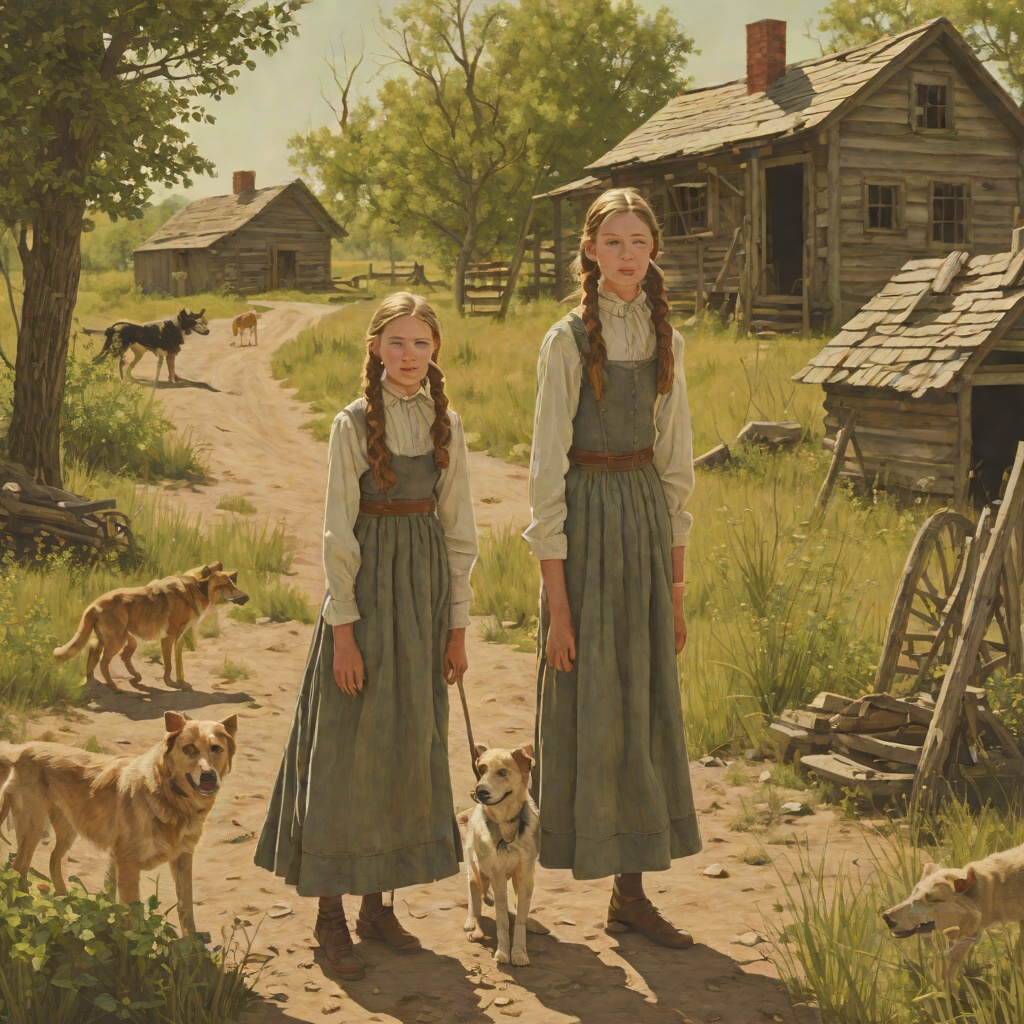
Little House on the PrairieThe Indian beads enter the story as a sudden flash of color on the ground of an abandoned Indian camp. Laura and Mary, walking with Pa among old campfires and patches where Indian horses had eaten the grass, saw something bright blue shining in the dirt. Laura picked it up: a beautiful blue bead. Then Mary found a red one, and Laura a green one, and the two girls forgot everything except beads. They found white beads and brown beads, and more red and blue ones, searching all afternoon until the sun was going down. When they finished, Laura had a handful of beads and so did Mary. Pa put them carefully in his pockets, and they all went home together.
Discovery and the Girls' Rivalry
The discovery of the beads came at the end of a day that had already been marked by the family's uneasy proximity to the Indians. Earlier, Laura and Mary had stood with Pa looking out at the camp, where they could see where Indian horses had eaten the grass, where big and small moccasins had walked, and where Indians had cooked and eaten. The beads were the tangible remains of that presence — small, beautiful objects left behind by people who were themselves about to leave. When the girls returned home, supper was cooking on the fire and Baby Carrie was playing on the floor. Pa announced their lateness with a cheerful apology, then took the beads out of his pockets and showed them to Ma. "Oh, they're beautiful!" Ma said with a smile.
The beads immediately became a test of the girls' character. Ma waited for Laura to speak, but Laura did not want to say anything. She felt all hot inside and wished that Mary was not always such a good girl. But she could not let Mary be better than she was. So she said, slowly, "Carrie can have mine, too." Ma pronounced them good little girls, put Mary's beads into Mary's hands and Laura's into Laura's hands, and told them they could make a pretty necklace for Carrie to wear around her neck.
Making Carrie's Necklace
Mary and Laura sat side by side on their bed and made Carrie's necklace. They did not say anything. Perhaps Mary felt sweet and good inside, but Laura did not. When she looked at Mary she wanted to hit her, so she did not look at her again. The beads made a beautiful necklace, and Carrie laughed when she saw it. Ma tied it around Carrie's little neck, and Laura felt a little bit better — it looked so pretty on her. But when Carrie felt the beads on her neck, she tried to break the necklace. So Ma untied it and put it away, saying, "Carrie can wear it when she's older." Laura still wanted those pretty beads for herself, but she knew it had been a wonderful day, and she knew she was never going to forget the Indian camp.
The necklace's fate — made with love, worn for a moment, then removed because the baby tried to break it — mirrors the family's larger situation. The beads were a gift from the land the Ingalls family had claimed, and the necklace was an attempt to make that gift into something domestic and wearable. But Carrie, too young to understand, tried to destroy it, and Ma put it away for a future that would never come in that place.
The Beads and the Family's Other Treasures
The Indian beads belong to a pattern of small, precious objects that mark the family's life on the prairie. The girls each received a bright new tin cup at Christmas, their very own cups to drink from, and two long sticks of red and white candy. Later, Pa returned from Independence with brown sugar, coffee, cornmeal, salt, and all the seeds they needed, plus a packet of pretty cotton cloth for Ma to make herself a dress, and combs for the girls — just alike, each with a bright star on top, Mary's star blue and Laura's red. The beads, like the tin cups and the combs, were objects of scarcity and delight in a life where most things were functional. But unlike the cups and combs, which were bought or traded, the beads were found — gifts of the land itself, and of the people who had lived on it before.
The Beads and the Indians' Departure
The beads take on their full meaning only in light of what happens later. When the Indians finally left the prairie, the family watched the long line pass by: the men with eagle feathers in their hair, the women and children riding behind, little naked brown Indians no bigger than Mary and Laura, their straight black hair blowing in the wind and their black eyes shining with happiness. Laura looked and looked at the Indian children, and they looked at her. She had a sudden wish to be a little Indian girl, to ride naked in the wind and the sun. When an Indian mother rode by with a baby in a basket at the side of her horse, Laura looked straight into the bright eyes of the little baby, black as a night when no stars shine, and she wanted it. "Quiet, Laura," Pa said. "The Indian woman wants to keep her baby." Laura began to cry. The little papoose was gone; she was never going to see it again. "I've never heard of such a thing," Ma said. "Why do you want an Indian baby, of all things?" "Its eyes are so black," Laura cried. She could not say what she meant.
The beads, found at the abandoned camp, were the first sign of the Indians' presence as something that could be picked up and kept. But the baby, unlike the beads, could not be kept. The beads were a remnant of a people who had already gone; the baby was a living person who was going away. Laura's wish for the baby, and her grief at its departure, echo her earlier wish to be a little Indian girl — a wish to belong to the world she was watching disappear. The beads, put away in a drawer, were the only part of that world the family could keep.
The Beads and the Leaving
When the family finally packed the wagon to leave Indian Territory, the beads were not mentioned. Pa and Ma packed the clothes, the food, and the dishes; the only thing they could not take was the plough. Laura and Mary climbed into the wagon and sat on the bed in the back, with Baby Carrie between them. Pa opened the back of the wagon cover, and the girls looked out at their little log house. Then Pa climbed to his place beside Ma and took the reins, Jack went under the wagon, and Pet and Patty walked away from the little house on the prairie. The beads, wherever they were packed, went with them — a small, bright reminder of the Indian camp, the abandoned campfires, and the people who had walked there in moccasins, leaving behind only beads and the memory of their passing.