the bundle of furs
Little House on the PrairieThe bundle of furs is one of the most consequential objects in the Ingalls family's year on the Kansas prairie, a tangible record of a winter's hunting that becomes the hinge between the family's survival and their future prosperity. Gathered skin by skin through the cold months, nearly lost to a pair of thieving Indians, and finally carried to Independence to be traded for a plough and seeds, the bundle condenses the family's labor, their economic hopes, and their uneasy place in a land claimed by others. Its story runs from the first snowfall to the final departure, and in its fate — traded away for the tools of farming, then abandoned when the family is forced to leave — lies the whole arc of the Ingalls venture in Indian Territory.
The Winter's Labor
The bundle of furs began as a winter's work. As the cold closed in and wild animals grew their thick winter fur, Pa went hunting every day, catching small animals and shooting large ones for their pelts. He carefully laid the skins outside the house to dry in the sun, and in the evenings he pulled the dry skins between his hands to make them soft, a patient, repetitive motion that Laura loved to watch and to feel with her fingers. Every day the bundle of furs on the floor grew bigger, a slow accumulation that measured the passing of the season and the family's industry.
The furs were not for the family's own use but for trade. Pa was saving them all to exchange the next spring in Independence, and the growing pile on the floor was thus a promise of future comfort — a promise that Ma made explicit when she told Laura that Pa was going to trade the bundle for a plough and lots of different seeds. The furs were the family's capital, the product of Pa's skill with his gun converted into the means of their transformation from hunters to farmers.
The Near-Theft
The bundle's value was made starkly clear one day when Pa was out hunting and two Indians walked right into the house. They were dirty and cross, and one of them looked at all the things in Ma's cupboard and took all the cornbread, while the other took Pa's tobacco. Then one of them picked up the bundle of furs. Ma held Baby Carrie in her arms, and Mary and Laura stood close to her, watching that Indian take all of Pa's furs, unable to do anything to stop him.
The Indian carried the furs as far as the door. Then the other Indian said something to him in an angry voice, and he dropped the bundle. They finally went away. The family was left shaken — Ma sat down and pulled Mary and Laura close to her, and Laura felt Ma's heart beating — but the furs were saved. Ma's response was a mixture of relief and rueful pragmatism: 'Well,' she said, smiling, 'I'm thankful they didn't take the plough and seeds.' The remark was a small irony, since the plough and seeds did not yet exist; they were only the future promise of the very furs that had just been spared.
The Trade in Independence
When Pa came home and heard about the Indians, he looked serious, but he offered a philosophical consolation: 'But all's well that ends well,' he said, adding that soon all the Indians here would move west. The near-loss of the furs was thus folded into the family's larger sense of their own impermanence and the Indians' impending departure.
Winter ended at last, and one day Pa said it was time to take his furs to Independence. Ma was anxious — 'But the Indians are so near!' — but Pa reassured her that they were very friendly, that he often met them when hunting in the forest. The trip was a success. Pa returned with the horses and the new plough, and with bundles containing brown sugar, coffee, cornmeal, salt, and all the seeds they needed. He also brought gifts: cotton cloth for Ma to make herself a dress, and for Mary and Laura two combs just alike, each with a bright star on top, Mary's blue and Laura's red. The furs had been transformed into the material basis of the family's spring planting and into small luxuries that made the children laugh with excitement — they had never had anything so pretty.
The Plough and the Leaving
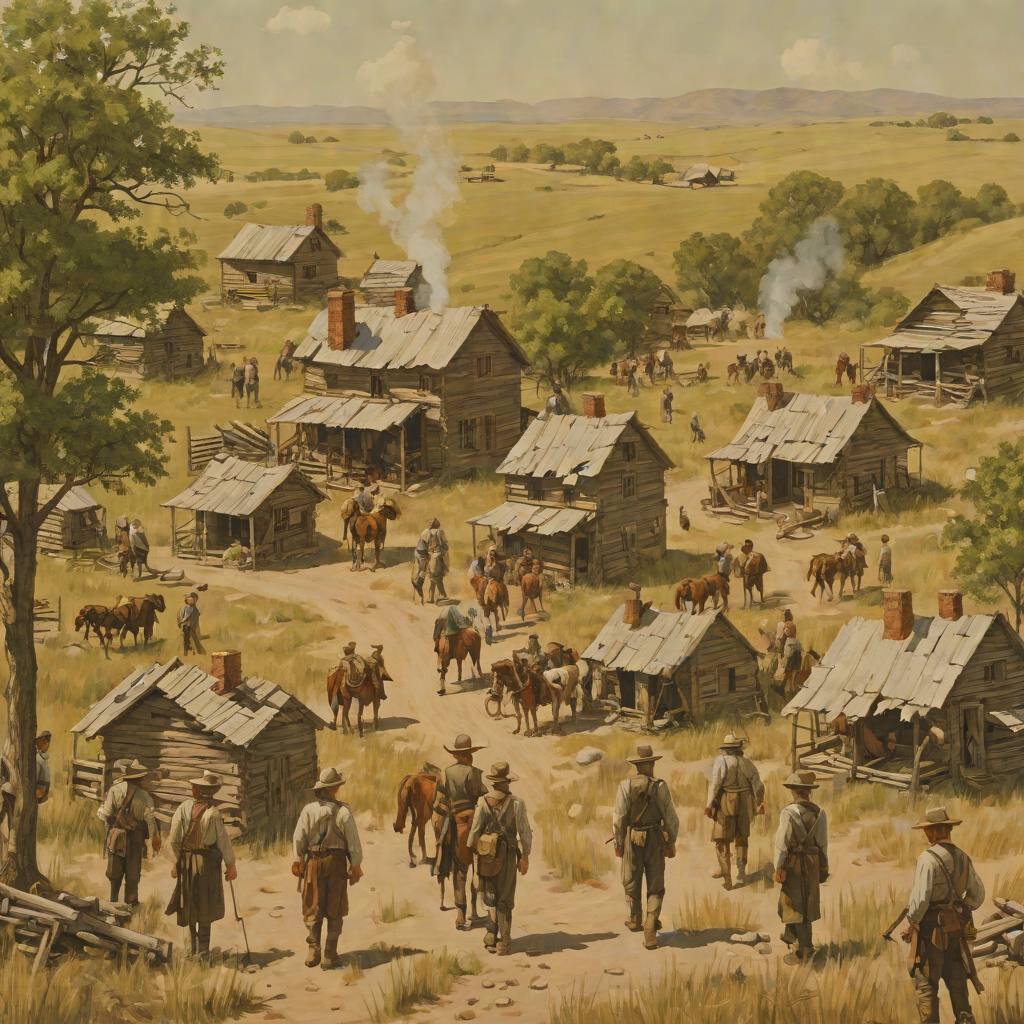
The plough that the furs bought became the instrument of the family's brief agricultural life. Pa worked hard getting ready to plant potatoes, with Pet and Patty pulling the heavy plough, breaking up the grassy earth and turning it over. Pa liked the land because it was so rich, and there wasn't a tree or stone in it. The furs had thus fulfilled their purpose: they had converted the family's winter hunting into the means of their spring planting, and Pa could look forward to the harvest with the words, 'Soon we'll have vegetables to eat and we'll live like kings!'
But the family's time in Indian Territory was cut short. When the order came for the white settlers to leave, Pa began to put the canvas cover on the wagon, and Laura and Mary knew it was true; they really were going away. The next morning, Pa and Ma packed the wagon, laying two beds across the back and packing the clothes, the food, and the dishes. The only thing they could not take was the plough. The object that the bundle of furs had bought — the very purpose of the winter's labor — had to be left behind. The furs themselves were long gone, traded away, and now their replacement was abandoned too. The family drove away from the little log house, with Jack going under the wagon and Pet and Patty walking away from the little house on the prairie, leaving behind the plough and the seeds and the land they had worked.
The Object's Significance
The bundle of furs thus traces a complete economic and emotional circuit. It begins as the product of Pa's hunting, the family's one marketable asset in a land where money was scarce and goods were traded directly. It is nearly lost to theft, saved by chance, and then converted into the tools of a settled agricultural life — the plough and seeds that represent the family's hope of permanence. But that permanence is denied them, and the plough is left behind when they are forced to move on.
The furs also mark the family's relationship with the Indians who surrounded them. The near-theft is one of the few moments of direct confrontation between the Ingalls and the Indians inside their home, and it ends not with violence but with an angry word between the two Indians themselves. The furs are saved, but the episode leaves the family shaken, and it is immediately followed by Pa's assurance that the Indians will soon move west — an assurance that frames the family's own eventual departure as part of the same larger movement. The bundle of furs, an object of simple economic value, thus becomes a measure of the family's precarious position on the prairie: their labor, their hopes, and their ultimate displacement are all written in its fate.