Amy burns Jo’s manuscript
Little WomenAmy burns Jo’s manuscript in retaliation for a quarrel, and the act becomes one of the most consequential conflicts among the March sisters. What Amy treats as payment for an insult destroys several years of Jo’s patient literary labor, converting a private family object into the visible measure of wounded ambition, anger, and love. The incident is not merely a childish prank: it tests whether resentment can override affection and whether remorse can repair damage that cannot be undone.
Causes and Background
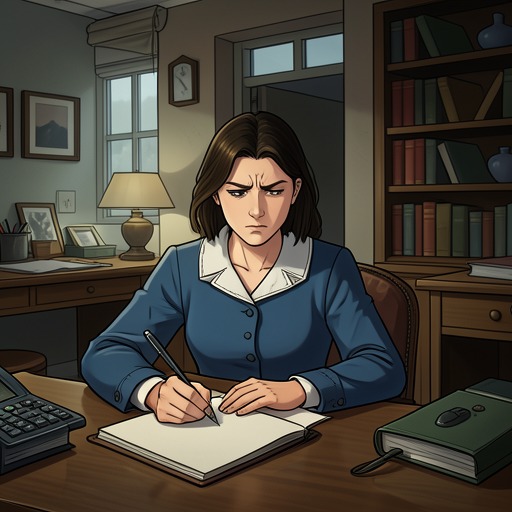
Jo’s manuscript is a small collection of fairy tales, only half a dozen, but it represents years of work and the deepest hopes of her literary life. Jo has recently copied the stories with great care and destroyed the earlier manuscript, intending to finish the book before Mr. March returns and hoping that the work might become good enough to print. Because the original has already been discarded, the manuscript is not an interchangeable draft; it is the sole surviving form of work into which Jo has put her whole heart.
The immediate cause is the sisters’ quarrel and Amy’s desire to retaliate. After returning home, Jo finds that Amy has not openly attacked her belongings, and she initially concludes that Amy has forgiven and forgotten their earlier grievances. The apparent calm therefore conceals a continuing resentment. The next afternoon, Jo enters the room excitedly and asks whether anyone has taken her book. Meg and Beth immediately deny having it, while Amy says nothing and reveals her guilt through her changing color. Jo confronts her, and Amy confirms that she has destroyed the manuscript as punishment for Jo’s earlier crossness.
The conflict also grows from a broader pattern in the family: anger is treated as a moral enemy that must be recognized, restrained, and gradually subdued. Jo’s temper repeatedly overwhelms her good intentions, while Amy’s vanity and selfishness lead her to answer injury with calculated retaliation. Their different faults meet in the manuscript scene. Jo’s explosive temper creates the emotional wound; Amy’s pride turns that wound into irreversible destruction.
What Happens
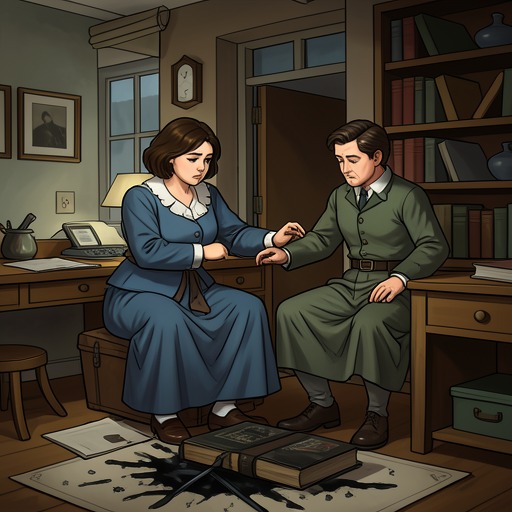
When Jo demands an explanation, Amy states plainly, "I burned it up." Jo turns pale, her eyes kindle, and her hands clutch Amy nervously as she realizes that the little book she cherished and had worked over has truly vanished. Amy admits that she had warned Jo she would make her pay for being cross and believes that the promised revenge has been accomplished. The act therefore has a clear intention: it is not accidental damage but an impulsive punishment designed to make Jo suffer.
Jo’s response is immediate and extreme. She declares Amy wicked, insists that she can never write the book again, and says that she will never forgive her. Meg moves to rescue Amy and Beth tries to pacify Jo, but Jo is beyond consolation. She strikes Amy on the ear, rushes to the old sofa in the garret, and continues the quarrel alone. The manuscript’s destruction releases Jo’s anger because it attacks both her creative identity and the private future she has imagined for her work.
The family recognizes the scale of the loss even though outsiders might regard it as minor. Mrs. March returns, hears what has happened, and brings Amy to understand the wrong she has committed. Beth mourns the book as though a beloved kitten had died, and Meg refuses to defend Amy. Mrs. March is grave and grieved, while Amy begins to feel that no one will love her until she asks Jo’s pardon. The manuscript thus becomes a shared household loss: its destruction disturbs not only Jo but the emotional peace of the entire home.
At tea, Amy meekly asks Jo to forgive her and says that she is very sorry. Jo answers that she never will forgive her and then ignores Amy completely. The family avoids discussing the trouble because experience has taught them that words are useless while Jo remains consumed by anger. Their ordinary evening continues outwardly: they sew, their mother reads aloud, and the family attempts to sing. Yet the music no longer coheres. Beth can only play, Jo remains silent, and Amy breaks down, leaving Meg and Mrs. March to sing alone. The damaged manuscript therefore produces a temporary damage in the family’s shared life, making the loss audible in the silence and broken harmony of the evening.
Consequences and Moral Education
Amy’s remorse is intensified by the fact that the manuscript cannot be restored. An apology may acknowledge the wrong, but it cannot return the years of labor or recreate the destroyed stories in their original form. Mrs. March’s intervention forces Amy to distinguish between being punished and understanding why her action was wrong. The event becomes a lesson in the limits of revenge: an act intended to balance a grievance can instead create a loss far greater than the original offense.
The manuscript conflict also prepares the larger moral education of the March sisters. In the schoolroom, Amy has already learned that rules have consequences when Professor Davis orders her to hold out her hand for bringing pickled limes to school. He insists that rules must not be infringed and that his word must not be broken; Amy endures several blows on her palm, experiencing public disgrace as a profound humiliation. Mrs. March does not simply sympathize with her afterward. She tells Amy that losing the limes was deserved because Amy broke the rules, while also criticizing corporal punishment as a method of teaching. Her emphasis falls on the vanity that makes Amy display her gifts and on the modesty required to use talent well.
That earlier punishment and the later burning of Jo’s book reveal two forms of moral correction. Professor Davis imposes external discipline through authority and pain. Mrs. March seeks an inward change, asking her daughters to understand their faults and correct them. Amy’s conduct gradually moves toward that internal standard. During Beth’s illness, she identifies selfishness as the largest item in her personal bundle of faults and decides to imitate Beth’s unselfishness. Her plan is supported by a ring worn as a reminder, transforming a private object into a practical aid for moral attention.
Mr. March later observes the change in Amy’s behavior in concrete terms. She takes drumsticks at dinner, runs errands for her mother, gives Meg her place, waits on everyone patiently and cheerfully, avoids fretting and mirror-gazing, and does not even mention the pretty ring she wears. He concludes that she is learning to think more of other people and less of herself, and that she is shaping her character with the same care she gives her clay figures. The movement from burning Jo’s work in anger to molding herself through repeated acts of service marks the difference between imposed shame and developing self-command.
The Sisters’ Pattern of Anger and Repair
The destruction of the manuscript belongs to a recurring family pattern in which anger breaks intimacy and later reflection makes reconciliation possible. Jo understands that her temper is her "bosom enemy": she can repent sincerely after an outburst, yet the fault continues to flare up and defeat her. Her mother explains that conquering such a weakness may require a lifetime. Mrs. March herself has spent forty years learning to control her anger, leaving the room when hasty words rise to her lips and trying to prevent them from breaking out against her will.
This advice gives the manuscript episode a wider meaning. Jo’s refusal to forgive is not presented as a final moral position but as another moment in the long struggle to master passion. After Amy’s later danger on the ice, Jo recognizes how close her hardness and anger have come to producing an irreversible catastrophe. She confesses that Laurie did the essential rescuing and that, if Amy had died, the fault would have been hers. The fear of losing her sister exposes the love beneath the quarrel and makes Jo condemn her own temper rather than merely Amy’s revenge.
The same ethic governs other March relationships. When Meg’s first serious disagreement with John Brooke makes her own angry words sound childish and unkind, she decides to ask forgiveness first despite her pride. Her penitential kiss restores their closeness more effectively than a long argument. Later, Mrs. March explains that Meg’s love for her children has caused her to neglect her duty to her husband, advising her to make their home pleasant so that he will not wish to leave. Across these episodes, family peace depends not on the absence of anger but on active emotional labor: self-examination, restraint, apology, and deliberate acts of care.
Narrative Significance
Amy burns Jo’s manuscript because the March household treats domestic objects as repositories of labor, aspiration, and affection. The book is physically small, but its destruction makes Jo’s unseen effort suddenly visible to everyone. A manuscript that had quietly embodied Jo’s hope of publication becomes a burned absence, and that absence forces the family to recognize the seriousness of creative work even when the work has not yet entered the public world.
As a scene, the action turns on a sharp reversal. Amy expects revenge to settle the quarrel, but the result is not satisfaction: Jo’s grief isolates her, Amy loses the sympathy of the family, and the household’s evening harmony collapses. The value shift runs from sisterly belonging to estrangement, then toward the possibility of restored affection through remorse and moral growth. The manuscript cannot be recovered, but the damage teaches the sisters that love must be protected before anger converts a temporary grievance into permanent loss.
The event also helps define the novel’s larger premise that self-conquest is achieved through repeated effort rather than a single decisive victory. Jo must learn to govern a temper that threatens to spoil her life and make others hate her; Amy must learn that talent, beauty, and social polish have little value without modesty and concern for others. Their growth is measured not by the disappearance of faults but by the increasing ability to recognize them, accept correction, and choose a better action. In that sense, the burned manuscript remains a wound in the family history, but also a difficult early lesson in how character is formed.