March–Laurence family friendship
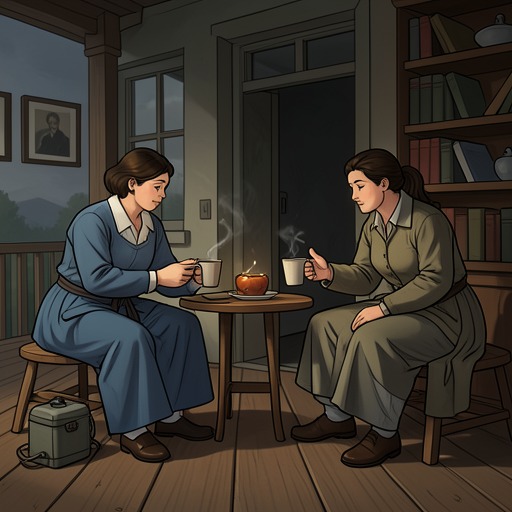
Little WomenMarch–Laurence family friendship turns a physical and social boundary into one of the most productive relationships in Little Women. The March family lives in an old, brown house that appears bare beside the stately Laurence mansion, whose conservatory, coach house, well-kept grounds, and rich interiors proclaim comfort and luxury. Yet the grand house is lonely, while the poorer home is animated by sisters, conversation, work, and welcome. The friendship grows from that contrast: the Laurence household possesses material abundance, but the March household supplies the companionship and domestic warmth that give abundance a human purpose.
A Friendship Across the Hedge
The two homes stand in a still countrylike suburb, separated by a garden and a low hedge. To Jo, the Laurence mansion first resembles an enchanted palace, filled with splendors that no one seems to enjoy. She notices Theodore Laurence at an upper window, looking wistfully toward the March garden, and interprets his isolation as a need for society and fun. Her daring decision to approach him begins the relationship not through formal introduction or family arrangement, but through a crossing of space: Jo digs her way through the snow to the hedge and then enters the strange house that had previously seemed inaccessible.
The first meeting reveals that the boundary is not only architectural. The Marches are poor and the Laurences are rich, and the sisters initially feel shy about accepting favors they cannot return. The difference in wealth creates a fear of obligation and dependence. At the same time, it does not prevent recognition. James Laurence is impressed by Jo's spirit and connects it with the bravery and honesty of her grandfather, whom he had known and valued. A family history therefore reaches across the hedge before the younger generation has fully established its own friendship.
From Hospitality to Reciprocity
The friendship changes rapidly once the two households begin visiting one another. After the March sisters give their Christmas breakfast to a poor woman and her six children, James Laurence sends them a supper after hearing about their sacrifice through Hannah Mullet. The gift restores the pleasure they had surrendered without treating their charity as foolish. It also makes the Laurence household present in the March family's domestic life, while the March family's generosity has already affected the Laurence household's feelings toward them.
The exchange is not represented as one-sided philanthropy. The March sisters discover that James Laurence regards their motherly welcome, cheerful society, and humble home as gifts to him. The wealthy old man cannot do enough to express his gratitude, and both families gradually stop measuring which side has given more. This is the decisive moral structure of the friendship: money, food, rooms, books, time, and affection circulate between unequal households, but the relationship becomes intimate only when each side admits that the other possesses something indispensable.
The same pattern appears in the family's treatment of Theodore Laurence. Having never known a mother or sisters, he responds quickly to the March sisters' influence. Their busy and lively ways make him ashamed of his indolent isolation, and he begins running over to their house so often that his tutor, John Brooke, must report that he is playing truant. James Laurence eventually accepts that the boy needs young society, amusement, and exercise, and recognizes that Mrs. March is doing more for him than the Laurence household can do alone. The friendship thus provides emotional and social care that wealth and private instruction have failed to supply.
Shared Houses and Shared Activities
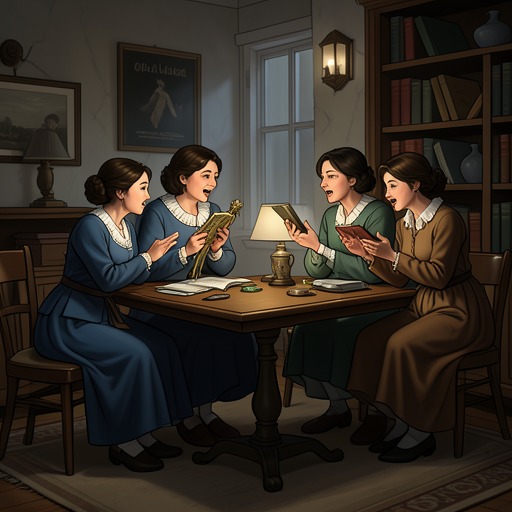
Once the families accept one another, the hedge becomes a passage rather than a barrier. The households share plays, tableaux, sleigh rides, skating frolics, evenings in the old parlor, and parties at the mansion. Each March sister finds a particular pleasure in the Laurence home: Margaret March enjoys the conservatory and its bouquets, Josephine March reads voraciously in the library and amuses James Laurence with her criticisms, and Amy Curtis March copies pictures and delights in the visible beauty around her. Theodore Laurence, meanwhile, plays the lord of the manor, turning his privilege into an opportunity for collective enjoyment rather than solitary display.
The library makes the attraction of the mansion especially concrete. It contains books, pictures, statues, cabinets of coins and curiosities, Sleepy Hollow chairs, tables, bronzes, and a great open fireplace with quaint tiles. Jo's delight in the room is not merely envy of luxury; the library gives her access to the intellectual materials that sustain her ambitions. Her reception there helps convert a forbidding private interior into a shared cultural space.
Elizabeth March's relationship with the Laurence house follows a more hesitant course. She longs for its grand piano but is frightened when James Laurence stares at her and speaks loudly. Instead of forcing her to overcome her fear publicly, he approaches her through music, talking about singers, organs, lessons, and teachers until she gradually comes nearer. He then sends her a little cabinet piano, addressed to Miss Elizabeth March, with a letter and key. The instrument is a gift, but it also acknowledges Beth on her own terms: music becomes the medium through which the old man reaches the timid girl and recognizes the value of the quiet affection she has brought to his household.
Mutual Aid in Crisis and Celebration
The friendship proves its practical strength when Mr. March is ill in Washington. Mrs. March prepares to leave and asks Elizabeth March to obtain bottles of old wine from James Laurence. He returns with every comfort he can think of and offers protection for the girls while their mother is away, even proposing his own escort before accepting that the journey is impossible for him. John Brooke then offers to accompany Mrs. March because James Laurence has commissions for him in Washington. The crisis activates a network of care extending from the neighboring household into travel, medical preparation, money, and protection.
James Laurence's assistance is not confined to his own resources. When Laurie returns with a note from Aunt March enclosing money, Mrs. March accepts the money but burns the reproachful note. The episode places Laurence generosity beside other forms of aid and shows why the March family values assistance that comes with respect rather than moral superiority. The friendship's material support is meaningful because it does not erase the Marches' dignity or their own willingness to sacrifice: Josephine March brings her mother twenty-five dollars from her own secret effort as her contribution to making her father comfortable and bringing him home.
When Mr. March finally returns, the families celebrate together. James Laurence, Theodore Laurence, and John Brooke dine with the Marches, while Beth and her father sit together at the head of the table and the guests share stories, songs, and reminiscences. The planned sleigh ride is abandoned because the girls will not leave their father. The scene gathers the friendship into a domestic image: the wealthy neighbors are no longer spectators or benefactors at the edge of the March household, but participants in its restored family joy.
The following Christmas continues this pattern of shared invention. After Mr. March's return and Beth's improvement, Josephine March and Theodore Laurence create a snow maiden for Beth, crowned with holly and carrying fruit, flowers, music, and a Christmas carol. The elaborate offering is made by two young people whose friendship has turned companionship into collaborative care. The gift is especially fitting because it answers Beth's quiet love of music and joins the March garden to the Laurence family's imaginative generosity.
A Durable Social Bond
The friendship's most important consequence is that it reorganizes both households. The March family gives Theodore Laurence access to sisterly affection, ordinary play, and a model of active domestic life. The Laurence family gives the March sisters access to books, music, art, food, money, rooms, and protection. Neither household remains unchanged after the exchange. The mansion becomes less lifeless, while the March home becomes connected to a wider network of resources without surrendering its moral center.
The relationship also generates institutions of communication. Within the Pickwick Club, Theodore Laurence establishes the hedge post office in the old martin house, fitted with a roof opening, stopped-up door, padlocks, and separate keys. Letters, manuscripts, books, and bundles can pass between the two sides. The structure turns the hedge into infrastructure: the former boundary now carries messages and creative work. The playful language of adjoining nations makes difference a source of sociable ceremony rather than hostility, while the club's admission of Sam Weller gives the friendship an expanding, comic public form.
Josephine March's later departure for town retains the same spatial energy that began her friendship with Theodore Laurence. She leaves by climbing from a back-entry window onto the roof of a low porch, swinging down to the grassy bank, taking a roundabout route to the road, and boarding an omnibus. The detail recalls her original crossing of the hedge: movement through domestic and neighborhood space is repeatedly associated with initiative, secrecy, and the enlargement of social possibility.
The bond ultimately survives changes in age, household, and status. In the later period, Josephine March is married and settled at Plumfield, where a family of six or seven boys grows around her and Friedrich Bhaer. James Laurence repeatedly finds destitute boys and asks the Bhaers to take them in, offering to pay toward their support. His intervention carries the old friendship's central pattern into a new generation: Laurence wealth supplies material assistance, while the March-Bhaer household supplies belonging, education, and daily care. What began as two families looking across a hedge therefore becomes a durable social arrangement founded on reciprocal hospitality, shared labor, and the conviction that emotional abundance can be as necessary as money.