Mrs. Hummel
Little WomenMrs. Hummel is the impoverished mother of the Hummel family, a neighbor whose household gives Little Women one of its clearest pictures of poverty, illness, and mutual aid. Her circumstances repeatedly draw the March family beyond sympathy into practical service: the March sisters surrender their Christmas breakfast to feed her hungry children, and Beth’s later visit to the Hummel home leads directly to the scarlet-fever crisis that changes the March household. Though she appears only in episodes centered on her family’s needs, her presence is decisive because it turns the March sisters’ moral ideals into exhausting, bodily work and reveals the unequal access to food, employment, nursing, and medical attention available to poor families.
Identity and Circumstances
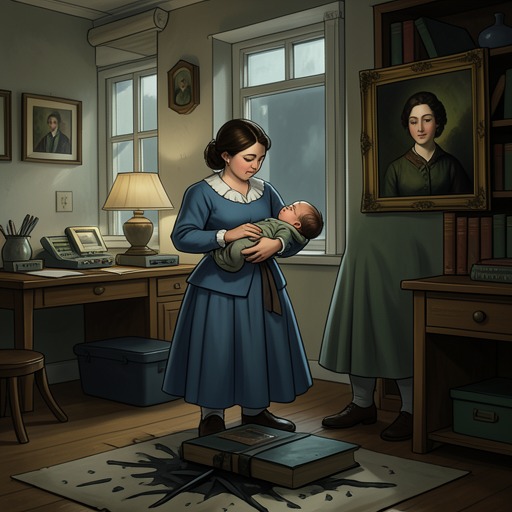
Mrs. Hummel is portrayed as a poor mother struggling to support several children while taking whatever work she can find. In the Christmas episode, she is away seeking employment when the March sisters arrive, leaving the children in a cold and distressed condition. The family’s poverty is not presented as an abstract condition: the house has broken panes, little fuel, and no sufficient meal, while the children are hungry and their hands are purple with cold. Mrs. March responds by giving tea and gruel, dressing the baby as tenderly as her own child, and promising further help; Hannah carries wood, makes a fire, and stops the broken windows with old hats and her cloak.
The episode also establishes the Hummels’ linguistic and social distance from the March family. The children speak broken English and express their gratitude in German, calling the sisters angel children as they eat beside the fire. The March girls, who have given away their own Christmas breakfast, leave the Hummel household comforted but return to bread and milk themselves. Their sacrifice is therefore concrete rather than ceremonial: Mrs. Hummel’s family receives the food and warmth that the March household could have kept.
Poverty, Work, and Dependence
Mrs. Hummel’s position is defined by precarious labor as well as by lack of money. When Beth later explains the family’s worsening crisis, she says that Mrs. Hummel goes away to work while Lottchen cares for the baby. The arrangement leaves the household dependent on children for care and unable to respond adequately when the baby becomes dangerously ill. Mrs. Hummel’s absence is not negligence in the simple sense; it is forced by the need to earn a living, and the family’s poverty makes ordinary childcare and medical supervision impossible to secure.
Her situation contrasts with the March family’s relative ability to mobilize help. The Marches can send Beth, Hannah, food, clothing, and eventually a doctor’s attention, but Mrs. Hummel must first attempt to manage the illness herself. When she returns with the doctor, she explains that she is poor and had tried to cure the baby without professional help. The doctor initially rebukes her for calling too late, but becomes kinder when he understands that she cannot pay and asks only that he help the other children while trusting to charity for his fee. The scene links poverty to delayed treatment: the disease is not merely a private tragedy but a medical emergency intensified by economic exclusion.
The Scarlet-Fever Crisis
Mrs. Hummel’s baby dies in Beth’s lap before Mrs. Hummel returns home. Beth holds the child softly until the doctor arrives, and the doctor identifies scarlet fever, warning that Heinrich and Minna have sore throats and should have been treated earlier. Mrs. Hummel’s grief is therefore accompanied by immediate fear for her surviving children, while the doctor’s warning also creates a danger for Beth, who has been physically caring for the infected baby.
The consequence reaches far beyond the Hummel home. Beth develops the fever and becomes much sicker than the March sisters initially realize. Her illness reorganizes the March household: Jo nurses her day and night, Meg remains at home to avoid infecting the Kings, Hannah controls the nursing arrangements, and the family debates whether to tell Mrs. March, who is away with Mr. March in Washington. The Hummel family’s medical emergency thus becomes the event that exposes the March sisters’ ignorance, tests their capacity for care, and places Beth’s life in jeopardy.
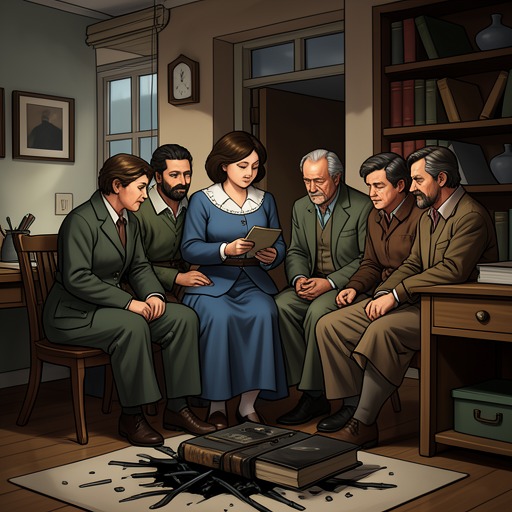
Mrs. Hummel herself later comes to the March household seeking forgiveness for her thoughtlessness and asking for a shroud for Minna. Her visit gives the crisis a reciprocal emotional dimension. She is not left as a passive recipient of charity: she recognizes the danger into which Beth has been drawn and feels responsible for the consequences. At the same time, the March family and the wider neighborhood respond with practical support, while tradespeople inquire after Beth and neighbors send comforts and good wishes. Mrs. Hummel’s suffering helps reveal how a community is knit together through repeated acts of concern, even across differences of language and class.
Relationship with Beth and the March Family
Beth’s connection with Mrs. Hummel’s children is grounded in humble, unpublicized service. She visits because the baby is worsening and because Lottchen, left in charge, does not know what to do. Jo admits that she is willing to go out with Laurie even though she claims not to be well enough to visit the Hummels, and Beth’s earnest question about why Jo will not go herself exposes the moral inconsistency. Beth’s intervention makes the visit an obligation rather than an optional act of benevolence.
The baby’s death shows the special character of Beth’s compassion. She does not flee when the child becomes still; she tries to warm its feet, accepts milk from Lottchen as part of the effort to save it, and then sits holding the body until Mrs. Hummel and the doctor arrive. Her care is quiet and embodied, and it becomes one of the experiences through which the March family learns the seriousness of illness. Jo’s frightened response to Beth’s possible infection also reveals how Beth’s service to Mrs. Hummel’s family threatens the family she serves at home.
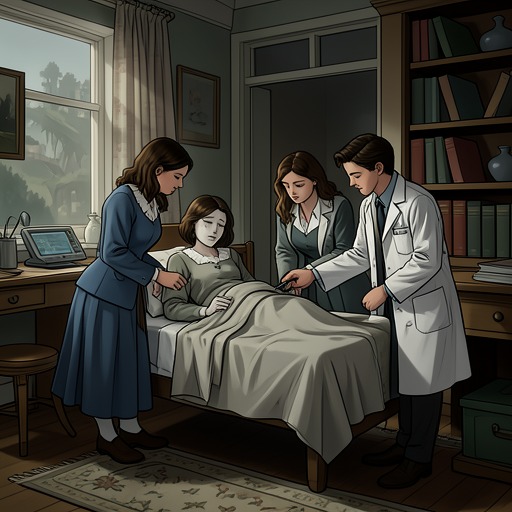
After Beth falls ill, Mrs. Hummel remains part of the emotional landscape of the March household. Her request for a shroud for Minna occurs amid the family’s fear that Beth may die, binding the two households through parallel experiences of maternal grief and threatened loss. Beth eventually survives the scarlet-fever crisis, but the illness leaves her visibly changed. When Jo returns in the spring, Beth has a transparent, fragile appearance, and the sisters’ later seaside retreat makes clear that recovery has not restored her former strength.
Narrative Significance
Mrs. Hummel’s role is less that of an individually developed social presence than that of a recurring human connection through which the novel tests its ethic of neighborly love. The March sisters’ Christmas charity first appears joyful and almost playful, yet the later illness shows that poverty cannot be solved by food and clothing alone. Mrs. Hummel’s family lacks secure work, adequate care for children, and timely access to medicine; charitable kindness can relieve immediate suffering, but it cannot erase the structural vulnerability that makes the crisis possible.
Her story also gives moral consequence to Beth’s character. Beth’s gentleness is not merely a private virtue practiced among sisters and pets. It sends her into a poor household, places her beside a dying child, and exposes her to contagious disease. The resulting danger makes the cost of compassion visible. At the same time, the narrative refuses to treat Mrs. Hummel only as a device for Beth’s development: Mrs. Hummel’s poverty, remorse, maternal fear, and dependence on the goodwill of others remain concrete realities within the March family’s world.
Through Mrs. Hummel, Little Women connects domestic virtue with social responsibility. The March family’s generosity is measured not by the grandeur of what it gives but by its willingness to share food, clothing, attention, and nursing when those resources are scarce. Mrs. Hummel’s household enlarges the meaning of family in the novel: care crosses the boundary between neighboring homes, and grief makes visible the network of obligations that ordinary prosperity tends to conceal.