Rome
Little WomenRome occupies a double position in Little Women: it is first an emblem of Amy Curtis March’s “castle in the air,” the destination toward which her artistic ambition is directed, and later the place that forces that ambition into a more chastened form. Amy imagines going there to make “fine pictures” and become the greatest artist in the world, but her experience of Rome’s artistic wonders leaves her feeling insignificant and unwilling to become merely an ordinary painter. The city therefore functions not simply as a travel destination but as a measure against which personal aspiration is tested.
The City as an Artistic Dream
Amy names Rome as part of her “pet” wish when the sisters and Theodore Laurence disclose what each hopes to possess or achieve. Her desire is specific: she wants to be an artist, travel to Rome, produce fine pictures, and become “the best artist in the whole world.” The grand scale of the wish reflects both genuine artistic aspiration and the youthful absolutism of wanting either exceptional greatness or nothing at all. Rome gives that dream a geographic form; it is not an abstract ambition but a city Amy expects to reach as the setting of her artistic fulfillment.
The conversation places Amy’s wish beside the other young people’s hopes. Elizabeth March asks only that the family remain healthy and together, while the others are described as wanting wealth, fame, and beauty. Josephine March speaks of having the key to her own “castle in the air,” leaving open whether she can unlock its door. Amy’s Rome belongs to the same imaginative architecture: it is a promised future whose meaning depends on whether desire can be converted into achievement.
European Experience and Artistic Looking
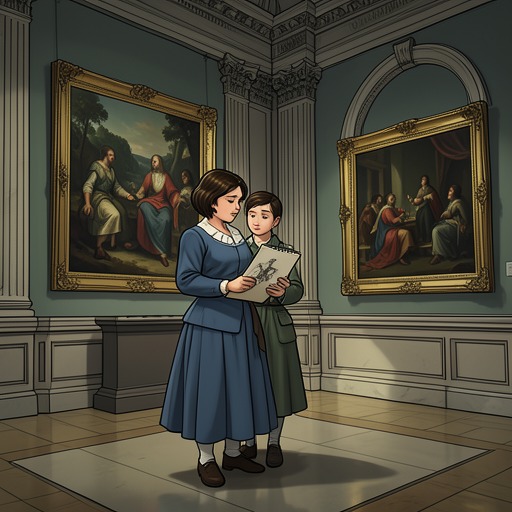
When Amy later travels through Europe, Rome is part of a broader education in seeing, taste, and cultural judgment. In Paris, she spends rainy days in the Louvre, reveling in pictures and deliberately cultivating her eye and taste. She contrasts her own attraction to art with Josephine March’s preference for relics associated with famous people, such as Napoleon’s cocked hat and gray coat, his baby’s cradle and old toothbrush, Marie Antoinette’s little shoe, the ring of Saint Denis, and Charlemagne’s sword. This contrast shows Amy defining herself through visual culture: she wants to respond to works of art as art, not merely to historical objects as curiosities.
Her account of travel also establishes the social and practical setting in which artistic ambition develops. She describes sightseeing from morning until night, lunches in lively cafes, amusing adventures, and visits to museums and gardens. Rome’s importance is thus prepared by a larger movement through European culture, where Amy encounters works, monuments, and traditions on a scale far beyond the domestic world from which her ambition began. The city becomes the culminating standard of artistic greatness rather than a decorative backdrop.
Rome’s Humbling Reversal
Rome ultimately produces the opposite of the triumph Amy had imagined. When Theodore Laurence asks when she will begin her great work of art, Amy answers that she never will. She explains that Rome took all the vanity out of her: after seeing its wonders, she felt too insignificant to live and abandoned her foolish hopes in despair. The reversal is sharp because the city fulfills one part of her dream while destroying another. She reaches the artistic world she longed to enter, but contact with its highest achievements makes her former confidence impossible.
Amy then distinguishes talent from genius. She admits that she possesses energy and talent but believes that neither can create genius, and she refuses to become a commonplace dauber. Her decision not to try anymore is therefore not presented as simple laziness or indifference. It is a severe response to an ideal that has become absolute: if she cannot be great, she will not accept an ordinary artistic life. Rome exposes the destructive edge of that standard, turning aspiration into self-judgment.
Narrative Significance
Rome gives Amy’s development a material and intellectual turning point. Before her European experience, it represents artistic fame and the possibility of becoming “the best artist in the whole world.” Afterward, it signifies scale, comparison, and the painful limits of individual talent. The city’s wonders do not merely inspire her; they alter her understanding of what art demands and of where she stands in relation to it.
At the same time, Rome does not erase Amy’s cultivated eye. Her delight in the Louvre and her careful distinctions between paintings, relics, monuments, gardens, and historical curiosities show that the encounter has deepened her participation in art even as it has damaged her confidence. The city’s lasting significance lies in this tension: Rome is both the destination of an ambitious girl’s dream and the place where that dream must be revised. Its grandeur converts naïve artistic self-belief into a more difficult knowledge of excellence, limitation, and the cost of demanding greatness from oneself.