The Weekly Volcano
Little WomenThe Weekly Volcano is the newspaper through which Jo March enters a more demanding and compromising form of literary employment. It offers her a practical route from private ambition to public circulation: her stories can reach readers, earn money, and help sustain the people she loves. Yet the paper’s appetite for sensational fiction also draws her toward material and methods that conflict with her conscience. Its importance lies in this double function. The Weekly Volcano is both an instrument of independence and the marketplace that teaches Jo how easily financial necessity can distort an author’s work and character.
Definition and Editorial Market
The paper operates within a market that values excitement above moral instruction, grammatical precision, or strict probability. Its editor, Mr. Dashwood, accepts sensational tales because readers want them and because the paper needs a steady supply of such material. When Jo brings him a manuscript, he recognizes that she has already written for publication and tells her that the paper has more work of this kind than it can readily use, while still promising to examine her submission and answer her the following week.
The Weekly Volcano’s editorial standards become explicit when Mr. Dashwood accepts one of Jo’s tales only on condition that she make alterations. He considers the manuscript too long and marks passages for removal. Jo is dismayed to discover that the editor has struck out the moral reflections she had inserted as a counterweight to the romance, including the parts in which sinners repent. The paper therefore does more than print her work: it actively reshapes it, privileging speed, sensation, and marketability over the ethical balance Jo had attempted to provide.
Jo’s Entry into the Paper
Jo approaches the paper during a period when she is determined to earn her own living and help her family. After hearing of a writer who makes a good income from sensational stories, she covertly records the paper’s address and resolves to compete for a hundred-dollar prize. She writes a tale set in Lisbon, fills it with desperation and despair, and ends it with an earthquake. After six weeks of anxious waiting, she receives a letter containing the hundred-dollar check. The payment confirms that her writing can produce material support, while the encouragement in the accompanying letter matters to her even more than the money because it validates years of effort.
The prize changes the practical meaning of her literary labor. Jo uses the money to send the family to the seaside, where Elizabeth March becomes healthier and Mrs. March feels renewed. She then earns several more checks, converting individual stories into household comforts: one pays the butcher’s bill, another supplies a new carpet, and another provides groceries and clothing. The paper’s market thus gives Jo a form of economic power unavailable through mere aspiration. Her work, once dismissed as literary rubbish, becomes a means of paying for tangible needs.
The Weekly Volcano also stands beside Jo’s earlier publishing experiences. Her first published story appears under the name Miss Josephine March, and her family celebrates seeing her name in print. On that occasion she explains that the paper initially allowed beginners to print without payment, calling the arrangement useful practice and promising payment after improvement. The later prize and the Weekly Volcano work extend this first step into a sustained attempt at professional authorship. Across these episodes, publication is presented not as an abstract honor but as a sequence of negotiations involving anonymity, editorial approval, payment, and the gradual acquisition of skill.
Sensationalism and Secrecy
Mr. Dashwood permits Jo to fill the paper’s columns at low prices, though the narrative reveals that his apparent generosity also serves his own need: a regular contributor had left after being offered higher wages. The arrangement benefits Jo because it gives her frequent employment, but it also places her within an impersonal system in which writers are replaceable sources of copy. She becomes increasingly interested as her previously emaciated purse grows stronger and as the savings intended to take Elizabeth March to the mountains increase steadily.
Jo conceals the work from her family because she suspects that Mr. March and Mrs. March would disapprove. Since her stories appear without her name, anonymity makes the secret easy to maintain. Mr. Dashwood discovers her authorship but promises not to reveal it. Jo tells herself that she is writing nothing of which she should be ashamed and imagines the future moment when she can display her earnings and turn the secrecy into a harmless family joke. The paper therefore creates a private space in which Jo can exercise professional agency, but it also separates that agency from the moral judgment of the household that ordinarily guides her.
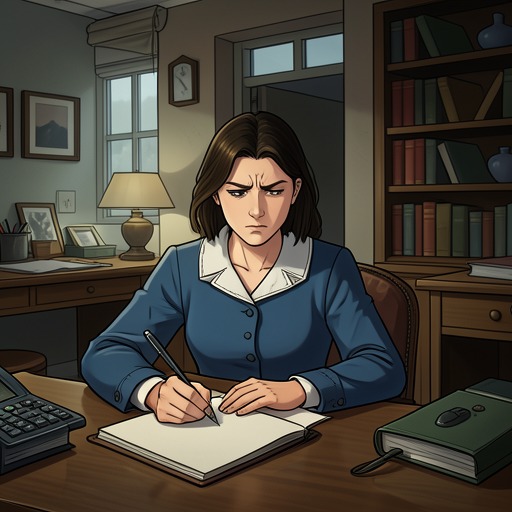
The paper’s demands steadily broaden the darkness of the material Jo must study. Mr. Dashwood will accept only thrilling tales, and Jo concludes that she must search across history, romance, land and sea, science and art, police records, and lunatic asylums for incidents capable of disturbing readers. She studies newspapers for accidents, incidents, and crimes, asks librarians for books about poisons, observes faces and characters in the streets, and searches the remote past for usable facts or fictions. The Weekly Volcano’s editorial appetite transforms the world into a reservoir of shocks and turns research into a hunt for danger, crime, folly, sin, and misery.
Moral Crisis and Withdrawal
The immediate commercial success of this work hides its effect on Jo. Although she believes that sensational fiction is merely silly rather than genuinely harmful, the narrative shows her becoming immersed in an imaginary bad society. Repeatedly describing other people’s passions leads her into morbid speculation about her own feelings. Her writing does not simply represent dark experience; it feeds her imagination with what the story calls dangerous and unsubstantial material, gradually brushing away the innocence that had marked her earlier life.
The crisis becomes visible when Friedrich Bhaer encounters a sensational paper bearing an illustration of a lunatic, a corpse, a villain, and a viper. Jo fears that it may be the Weekly Volcano and briefly panics at the thought that one of her own tales might be exposed, though her anonymous publication would prevent the paper from naming her. Her blush and expression nevertheless betray her. Friedrich Bhaer recognizes that she is ashamed of the work and objects that such material is unfit for young readers, comparing its concealed harm to poison placed inside a sweet for children. His criticism identifies the paper’s central moral problem: commercial demand does not make the product harmless, and earning an honest living from it does not automatically make the labor ethically sound.
After this encounter, Jo rereads her stories under what she imagines as Friedrich Bhaer’s moral spectacles. Their increasing sensationalism becomes unmistakable to her, and she admits that she has been hurting herself and other people for money. She burns the entire bundle in her stove, producing such a blaze that the chimney is nearly set on fire. The destruction is not a rejection of writing or publication altogether. Rather, it is Jo’s rejection of the particular bargain offered by the Weekly Volcano: money in exchange for stories whose thrills depend on material she can no longer regard as spiritually safe.
Literary and Thematic Significance
The Weekly Volcano embodies the tension between authorship as vocation and authorship as paid labor. Jo’s earlier manuscripts are lovingly prepared in the garret, tied with red ribbon, and read with serious hope; the newspaper market subjects such private work to deadlines, editorial cuts, anonymous circulation, and consumer demand. The contrast makes publication concrete. A writer does not simply move from inspiration to fame: she must confront the editor’s power, the reader’s appetite, the price of a manuscript, and the pressure to turn imagination into household necessities.
The paper also clarifies why poverty can both strengthen and endanger Jo. Its payments enable her to support the family, pay bills, improve the home, and plan medical or restorative journeys for Elizabeth March. At the same time, the need for money encourages her to treat dangerous subjects as raw material and to suppress her doubts until the prospect of earnings becomes more persuasive than artistic judgment. The Weekly Volcano makes economic independence possible, but it reveals that independence requires more than receiving money; it requires deciding what forms of work are compatible with the self Jo wishes to become.
Finally, the newspaper serves as a test of Jo’s developing authorship. Publication in The Weekly Volcano teaches her that success can be real and still be inadequate. The paper gives her readers, payment, and professional experience, but its editorial culture rewards sensation while cutting away moral reflection. By leaving that market, Jo does not abandon ambition. She learns that literary production has consequences beyond the author’s immediate needs, and that the desire to help loved ones cannot by itself justify every profitable use of imaginative power.