Jinyoung
Living with 7 vampiresJinyoung is a green-eyed infiltrator whose defining power is the ability to hide his identity by taking on other forms. He first appears indirectly, as the figure who changed into Jin in the other world, before his name is finally recognized by the vampires. Later, he emerges from the form of a book, turning an apparently passive object into a living adversary. Through these disguises, Jinyoung becomes one of the clearest embodiments of the story’s unstable boundary between person, body, and object.
Identity and Introduction
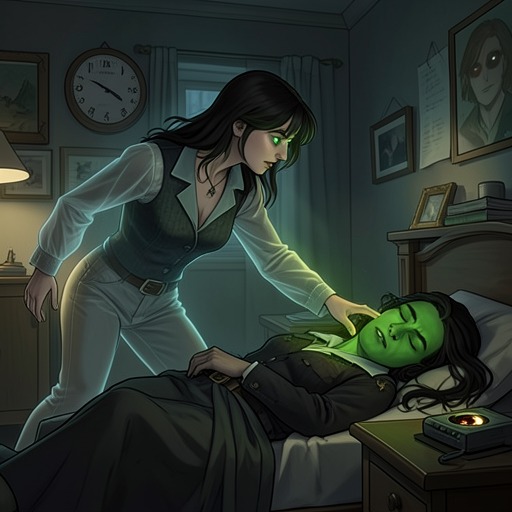
Jinyoung’s identity is connected to the other world and to the green-eyed beings who cannot freely pass through the gate between worlds. J-Hope explains that such beings sometimes take over the bodies of vampires while the vampires sleep, establishing the mechanism that makes Jinyoung’s deception possible. The revelation changes the meaning of earlier encounters: a familiar face can no longer guarantee a familiar person beneath it.
His first decisive identification occurs when Jimin recognizes the stranger connected to the earlier incident, Jungkook recalls the figure in the other world who changed into Jin, and Jin supplies the name Jinyoung. The recognition is therefore collective and retrospective. Jinyoung is not introduced through a stable self-presentation; he is reconstructed from contradictory appearances and from the damage caused by his impersonation.
Forms, Deception, and Intrusion
Jinyoung’s most striking manifestation occurs when a book suddenly changes form and becomes human. JB had ordered the intruder to leave after taking the book from Y/N, but the object itself becomes the threat, and Y/N immediately recognizes the transformed figure as Jinyoung. The scene gives physical shape to the story’s recurring suspicion that appearances, possessions, and familiar surroundings may conceal hostile agency.
The same pattern of disguise appears in Jinyoung’s use of a borrowed face. His transformation into Jin is not merely visual camouflage; it allows him to enter the vampires’ intimate circle under the authority and familiarity of another member. The deception attacks trust at its foundation, because the group must distinguish between a body they know and the consciousness inhabiting it.
Jinyoung’s threat is also tied to bodily control. The green-eyed beings are described as entities from a neighboring world that take over vampire bodies, and Jinyoung’s ability to alter his face and form extends that possession logic into deliberate infiltration. His presence turns the body from evidence of identity into an unreliable surface.
Conflict with Y/N and the Vampires
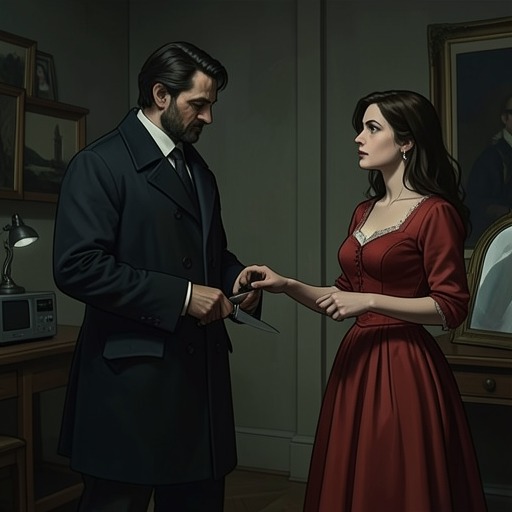
Jinyoung’s encounters with Y/N are marked by forced proximity and intimidation rather than cooperation. When he appears in another guise, Suga reacts protectively and pushes the stranger away after the figure takes Y/N’s hand. The gesture establishes Jinyoung as someone the vampires immediately treat as a danger to her bodily safety and autonomy.
His hostility becomes explicit while Y/N is imprisoned. A sudden blow against her cell is followed by the command, "Shut up!" Jinyoung then complains that the return of another figure is already driving him mad and orders everyone to be silent. The scene places him in a controlling role within the prison environment, using physical intimidation and surveillance to reinforce confinement.
Jinyoung’s conflict belongs to the wider struggle between the vampires and the green-eyed faction. The vampires are already forced to question whether a companion has been replaced, while Y/N is repeatedly exposed to abduction, confinement, and supernatural manipulation. Jinyoung intensifies these dangers by making recognition itself a battlefield: before the group can fight him, it must determine where he is and whose form he is wearing.
Narrative Function and Significance
Jinyoung functions as a shapeshifting antagonist and as a recurring test of perception. His name is revealed only after the characters connect separate clues, so his characterization is built through delayed recognition rather than biography. This withholding produces suspense while reinforcing one of the narrative’s central rules: familiar appearances cannot be trusted, especially when green-eyed entities are involved.
His transformation from book to human is especially significant because it collapses the distinction between a clue and a character. The book seems to be something the vampires can carry, examine, and use to understand the threat; once it becomes Jinyoung, the source of knowledge becomes an active participant in the danger. The change exposes the material world itself as vulnerable to infiltration.
Jinyoung therefore represents more than a single hostile individual. He is the narrative form of stolen identity: a face detached from its rightful person, a body occupied by another will, and an object that conceals a living enemy. Against Y/N’s movement from vulnerable human blood vessel toward active resistance, Jinyoung embodies the opposing force that seeks power through disguise, possession, and confinement. His appearances repeatedly force the characters to replace trust in surfaces with collective recognition and vigilance.