The Mountain Cave
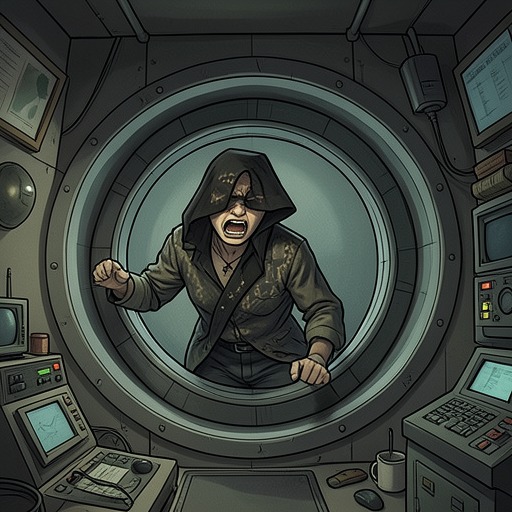
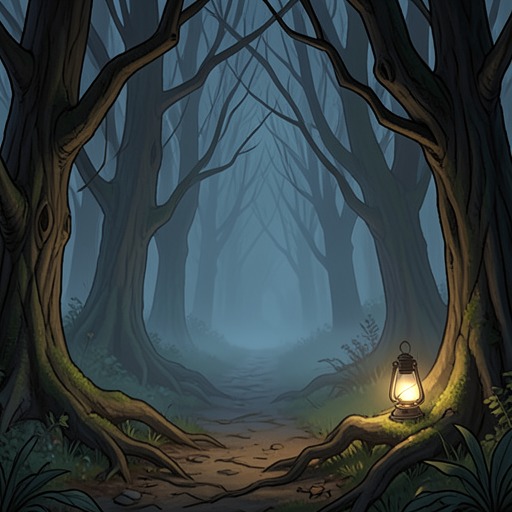
Living with 7 vampiresThe Mountain Cave is one of the story’s most unstable locations: a vast underground environment that offers concealment and possible escape while continually exposing Y/N and the vampires to pursuit, confinement, and supernatural danger. Its passages connect waterfalls, mountain gaps, underwater routes, and stone chambers, so that every apparent exit becomes another threshold rather than a secure destination.
Definition and Physical Setting
The cave is presented less as a single chamber than as an interconnected underground landscape. Jackson’s giant bird reaches it by flying at lightning speed through a small, narrow space between two mountains before landing, establishing the cave as difficult to access even from the air. Inside, the geography is similarly restrictive: one route narrows toward a serious risk of falling into water, leaving the fleeing Y/N with only one viable direction.
Water dominates the cave’s physical design. Jin carries Y/N through a waterfall and into the same giant cave where the bird had previously landed. A small exit lies beyond water that must be crossed by swimming, although Jin warns Y/N to watch for the water snake. The cave therefore functions simultaneously as shelter and trap; its water conceals routes, but it also turns passage into a hazardous test of endurance and attention.
Pursuit, Escape, and Concealment
The cave becomes important during attempts to evade the green-eyed forces. Jin carries Y/N toward the waterfall while advising her to speak only when permitted, then moves quickly through the cavern toward a concealed exit. The movement gives the location a temporary protective function: the waterfall and the cave obscure the group’s route and provide a hiding place when ordinary escape is no longer possible.
That protection is never complete. Y/N’s flight through the cave leads to a narrow space where the path appears to end in a potentially fatal fall into water. The restricted route transforms the cave from a refuge into a forced-choice environment. The characters are not choosing freely among several exits; they are being driven through the only passage available, with the landscape itself imposing the next danger.
The giant water snake makes the cave’s threat recur rather than remain a single obstacle. After the group reaches relative safety, Y/N looks underwater and sees the same enormous snake again, prompting an urgent demand to leave immediately. The repetition gives the cave a memory of danger: the earlier warning from Jin is confirmed later by the snake’s reappearance, and the water that enabled concealment becomes the place from which the threat emerges.
Prison and Threshold Space
The cave also contains spaces that resemble imprisonment. During the search for Jin, the group sees a small cave that looks more like a stone prison than a natural shelter, with the outline of a person inside. This discovery changes the meaning of the underground setting. The cave is not merely wilderness beneath the mountains; it can be organized into a structure of captivity, where stone, darkness, and restricted visibility hide a person from rescuers.
Its threshold quality is reinforced by the story’s broader pattern of passages and altered spaces. The characters move through waterfalls, water-filled routes, narrow mountain gaps, and prison-like chambers, while other parts of the narrative involve the Castle Library, the gaming room, and mirrors that function as portals. In this spatial system, location determines knowledge and power: the person who knows the hidden route, controls the exit, or can move through an altered boundary gains temporary authority over those who cannot.
Connections to Other Unstable Spaces
The Mountain Cave is linked to spaces whose apparent solidity cannot be trusted. The mirror passage is literally filled with water, yet allows breathing and swimming, making it another environment that overturns ordinary physical expectations. The cave’s submerged exits therefore echo the mirror’s contradictory nature: both are passages that resemble barriers, and both require characters to enter an unfamiliar medium in order to continue.
The cave’s narrative function also contrasts with the Castle Library. The library is vast and maze-like, filled with books and reached when Y/N hides from approaching footsteps; it represents an enclosure of accumulated knowledge. The Mountain Cave, by contrast, is a maze of physical survival, where knowledge consists of recognizing routes, dangers, and concealed openings. The characters’ movement from one kind of labyrinth to the other shifts the central question from what can be discovered in writing to what can be survived in space.
Narrative Significance
The cave concentrates the story’s recurring pattern of separation, pursuit, rescue, and renewed uncertainty. Y/N enters underground routes while being moved or pursued, Jin uses the waterfall and cavern as a hiding strategy, the water snake reasserts the danger of the setting, and the prison-like chamber turns the search for Jin into an investigation of confinement. Each movement briefly promises freedom before producing a new restriction.
As a result, The Mountain Cave is not simply a backdrop for action. It materializes the story’s unstable relationship between refuge and captivity. Its narrow passages limit choice, its water conceals and threatens, and its hidden chambers preserve the possibility that a missing person may still be found. The location’s decisive significance lies in this contradiction: it permits the characters to escape one form of danger only by entering a space where the next danger is already waiting.