V
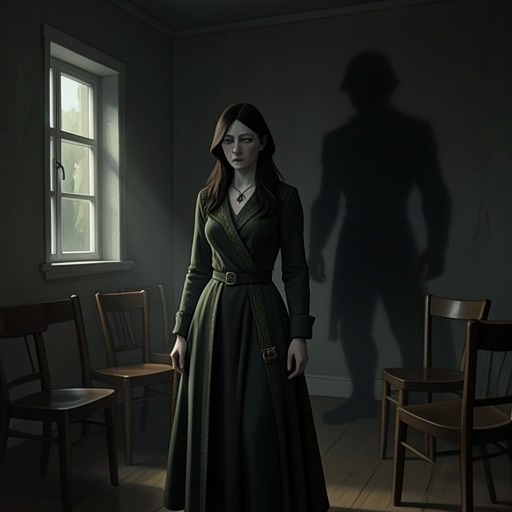
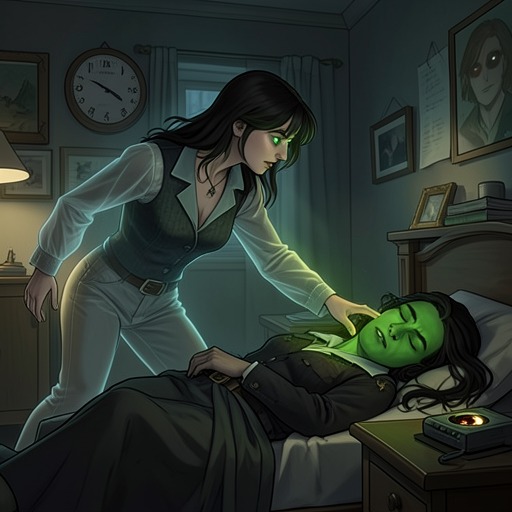
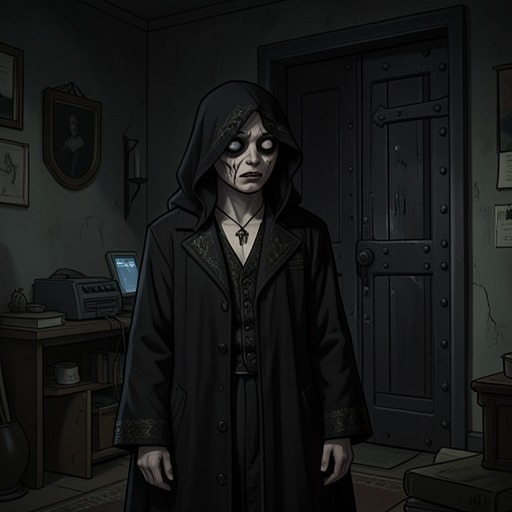
Living with 7 vampiresV is one of the vampires surrounding Y/N, and his significance lies in the instability of his presence. He can appear as a playful predator, a possessive claimant, a transformed animal, a source of misdirection, and eventually a returning member of the group. Through him, the narrative repeatedly tests whether protection and possession can be distinguished when Y/N is treated as both a person and a source of blood.
Identity and Introduction
V is introduced after Y/N has been abandoned by her mother and brought into contact with the vampires. The initial encounter establishes the story’s central identity conflict: Y/N assumes that the figures around her are human, while they question what she is and then reveal that they are vampires. V identifies himself by name only after Y/N has already encountered the group’s threatening atmosphere. His introduction therefore combines personal recognition with supernatural uncertainty; he is not merely another member of the household but one of the figures whose behavior makes the distinction between curiosity and danger difficult to read.
V’s identity is also linked to the story’s recurring concern with mistaken appearances. J-Hope later explains that a nearby other world contains beings who sometimes take over the bodies of the vampires while they sleep. That revelation supplies a supernatural context for later uncertainty about who V is and whether a figure claiming to be V can be trusted. The question of identity is consequently not settled by a name or familiar face. It remains vulnerable to possession, disguise, and transformation.
Predator, Tease, and Possessive Claim
V’s first direct interactions with Y/N are openly predatory. Jungkook asks whether he can suck Y/N’s blood, and RM stops him, but V soon tells Y/N that he can finish something now that she has returned. His smirk and Y/N’s refusal preserve the scene’s threatening imbalance: V presents the encounter as playful, while Y/N recognizes that the implied danger is real. When he resumes drinking, an owl suddenly flies into him and knocks him to the ground, giving Y/N the opportunity to escape. The interruption changes the immediate balance of power, but it does not remove V’s appetite or the danger attached to his attention.
V’s possessiveness is made explicit during a confrontation with RM. When RM questions why V wants to protect the human, V answers, “….it’s mine.!” The statement does not frame Y/N’s safety in terms of her autonomy. Instead, it converts protection into ownership, revealing a desire that is simultaneously defensive and controlling. This possessive language later echoes when V tells Jimin to move away from Y/N because she is his, while Jin counters that she belongs to all of them. The exchange places V within a collective vampire claim over Y/N, even as his individual attachment appears especially forceful.
Suga offers a partial mitigation of V’s violence by explaining that V is not exactly trying to kill Y/N and is still young. This distinction separates intention from consequence: V may be playing rather than pursuing deliberate murder, yet his feeding and pursuit remain dangerous to a human body. His youth therefore functions less as an exoneration than as an explanation for impulsive behavior that the others must restrain.
Transformations and Repeated Pursuit
V’s threat is not limited to his human form. During an escape with Jin, Y/N looks back and sees V running toward them in the form of a lion. Jin orders Y/N to get down, identifying the transformed V as an immediate physical danger. The lion form intensifies the contradiction already present in V’s behavior: he is recognizable to Y/N, but his body becomes that of a pursuing predator. Animal transformation turns an emotional dynamic into visible action, making the chase literal without resolving whether V intends capture, harm, or something closer to play.
V’s pursuit is part of a recurring pattern in Y/N’s story. She is abandoned, approached by vampires, attacked or threatened, and repeatedly seeks escape; the vampires then retrieve, pursue, or protect her. V occupies several positions within this cycle. He can cause Y/N to run, interrupt her escape, defend his claim over her, and later appear as the lion advancing through the forest. His function is therefore not simply that of an antagonist. He is a volatile threshold figure whose presence repeatedly moves Y/N from apparent safety back into supernatural danger.
The narrative also associates V with the instability of bodily boundaries. The existence of possession from the other world means that a vampire’s body may be occupied by another entity, while V’s own lion transformation shows that even an authentic vampire body is mutable. These changes make V a particularly effective vehicle for the story’s larger uncertainty: a face, voice, or familiar relationship cannot always guarantee a stable identity.
Deception, Companionship, and Return
V’s connection to the group is not confined to conflict. In one later scene, the vampires are described as bored, with V standing on one of the spikes in an unfamiliar place. The moment gives him a more casual relation to the others, counterbalancing the earlier scenes of blood and pursuit. His presence belongs to the group’s ordinary rhythm as well as its emergencies, though even this apparently relaxed setting remains embedded in an unfamiliar supernatural environment.
V also reveals that he has a dog, and Jungkook adds that all of them do. The detail gives V an identity beyond appetite and rivalry. It associates him with care for an animal and with a shared domestic life among the vampires. The animals do not erase the group’s violence, but they complicate the image of the vampires by placing tenderness, routine, and attachment beside predation.
Yet V is also involved in the story’s misrecognition plot. When Y/N and the others examine a book, V abruptly takes it from them. Jungkook then realizes that the person before them was not V and asks where V is, revealing that Jinyoung had been impersonating him. This deception demonstrates the practical consequences of the possession and disguise motif: V’s identity can be used as a mask, and the group’s familiarity with him becomes a tool against them. The revelation separates V from the threatening figure who had claimed his appearance and turns his absence into a crisis requiring investigation.
V’s absence is later followed by his return. During the period when Y/N is separated from the others, the narrative briefly shifts to the group’s viewpoint and shows Jimin and V quarrelling over a cookie. The trivial argument restores V to a communal, almost domestic register. It also contrasts sharply with the earlier supernatural conflicts: V can be a predator, a transformed pursuer, or the absent subject of a search, but he can also re-enter the story through an ordinary dispute among companions.
Change and Narrative Significance
V’s trajectory does not present a simple moral transformation from danger to safety. The evidence instead shows a repeated oscillation. He threatens to feed on Y/N, insists on possessing her, and appears as a lion during pursuit; elsewhere he is described as young, participates in the vampires’ boredom, keeps a dog, and belongs to the group’s everyday life. His characterization is built from contradiction rather than resolution. The same figure can produce fear and familiarity without the narrative fully separating those emotional registers.
V’s role is especially important because Y/N’s position changes in relation to him. At first, she is an abandoned human who does not understand what surrounds her. The vampires define her through questions about whether she is human, while V’s behavior defines her as something desirable and claimable. Later developments place her in situations where bodies can be possessed, mirrors can become entrances, and supernatural power can be actively used against an enemy. In the climactic confrontation with Gehan, Y/N pushes him away and imagines the gates of hell into existence, demonstrating that she is no longer only the pursued object of other characters’ actions. V’s earlier claim over her thus belongs to a stage of the story that her growing agency complicates.
V ultimately represents the book’s unstable fusion of affection and threat. His declaration that Y/N is his, his attempt to feed, his lion form, his dog, his participation in group banter, and the later revelation that someone impersonated him all place intimacy under pressure. He is recognizable precisely because he is inconsistent: the narrative uses his shifting roles to show how quickly protection can resemble control, how play can become danger, and how a familiar companion can be hidden behind another body. In that sense, V is not only a member of the vampire group but one of the story’s clearest embodiments of its recurring question about whether closeness can remain humane in a world organized around blood, possession, and escape.