Y·N and the Seven Vampires in the Castle
Living with 7 vampiresY/N’s relationship with the seven vampires in the castle is the central bond through which the story repeatedly tests the difference between protection and possession. At sixteen, Y/N is abandoned by her mother in the woods, left with no apparent human support. Jin and the other vampires discover her, identify her as human, and initially frame her presence in terms of prey. Yet the same household that threatens her also becomes the place to which she is repeatedly returned, defended, searched for, and emotionally attached. Their relationship therefore never settles into a simple family, romance, or captivity narrative: it is a shifting alliance formed under supernatural danger, bodily vulnerability, and incomplete knowledge of the past.
First Encounter and Unequal Terms
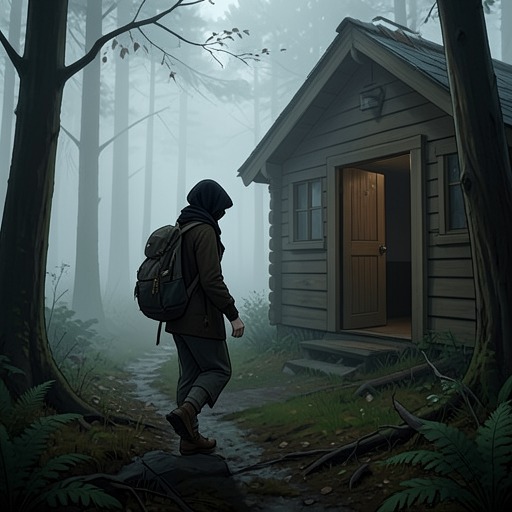
Y/N first meets the group after being deliberately left behind. Her mother tells her to leave the car, then closes the door and drives away, ignoring Y/N’s pleas to return. In the woods, Jin explains to another vampire that Y/N is lost and has no one. The immediate response is not uncomplicated compassion but the suggestion that the vampires can keep her. When Y/N questions their strange behavior, Jin reveals that they are not human, and another member identifies them as vampires. The disclosure establishes the original imbalance: Y/N is an isolated human entering a household whose nature, strength, and rules are hidden from her.
The group’s first reception remains divided. J-Hope demands to know what Y/N is doing there, while Jin calls her their new prey. Jungkook, by contrast, asks Jin to let her speak, creating an early distinction between treating Y/N as an object of appetite and recognizing her as a person with a voice. Jimin later asks why she left and whether the vampires were that bad, but J-Hope interprets her departure as fear rather than hostility. These exchanges show that the seven vampires do not form a single emotional unit around Y/N; they negotiate her status among themselves, with suspicion, hunger, irritation, and concern operating at the same time.
Shelter, Flight, and Repeated Retrieval
Y/N does not freely choose the arrangement. Jin tells her that living with the vampires will be better, but when she asks when she agreed to stay, he answers that the vampires decided it. The statement makes the castle a refuge imposed upon her rather than a refuge she has consented to. Her fear is therefore structurally understandable: the vampires offer shelter while denying her control over whether she receives it.
The relationship is repeatedly interrupted by flight and forced return. Y/N runs away from the castle, only to encounter J-Hope again, who asks why she fled. Her escape connects the vampires’ protective role to their capacity to confine her. Later, a shadow pulls her through a mirror, placing her inside a hostile other space where she is welcomed as belonging to a “new world.” The vampires’ concern becomes visible when she is eventually recovered: Jungkook greets her with relief, and Jin says that the group thought they had lost her. Their reaction supplies genuine attachment, but it does not erase the earlier pattern in which Y/N’s movement is controlled by forces more powerful than herself.
The bond is also marked by direct physical and emotional reassurance. V strokes Y/N’s head, tells her that she is safe as long as she remains with the vampires, and kisses her forehead before she loses consciousness. The gesture makes the household appear protective and intimate, yet its timing is significant: reassurance is followed by a collapse of Y/N’s awareness. Even tenderness is entangled with altered consciousness and dependence, so safety in the vampires’ presence is never entirely separable from surrendering control.
Blood, Loss, and the Politics of Memory
Y/N’s human vulnerability is sharpened when she returns to her parents’ house and finds her mother on the ground in a pool of blood. She takes her mother’s head in her hands, turning the family home into a scene of bereavement rather than protection. Against that loss, the vampires become the surviving collective around her, but they cannot simply replace the parent she has lost. Their castle is a new social structure formed after abandonment and violence.
Y/N’s search for explanation proceeds through material traces as well as relationships. She opens a locked book with a key and begins reading an entry dated 14 April, making the book a medium through which hidden history can emerge. The vampires’ own powers likewise affect what can be remembered. Jin explains that he sacrificed his power to lock seven other beings inside a mirror, then used what remained to make the other vampires forget that those beings had ever been there. His account reveals that collective safety has been purchased through controlled forgetting. Memory is not merely personal within the group; it is something a powerful member can remove from everyone else.
This pattern culminates when Assiah tells the vampires that she erased Y/N’s memory. The revelation changes the relationship at its foundation. Y/N’s apparent place among the vampires may continue, but her understanding of how she reached it has been deliberately taken from her. The group’s care is consequently shadowed by an ethical rupture: those who promise safety have also participated in determining what Y/N is allowed to know about herself and about them.
From Prey to Active Power
The vampires’ initial classification of Y/N as prey becomes increasingly unstable as she acquires knowledge and agency. She survives abduction through the mirror, returns from extraordinary danger, and is welcomed back by the group rather than remaining a passive object to be protected. Her movement through mirrors also makes the relationship spatially recursive: separation does not end the bond, but repeatedly sends Y/N into another realm before drawing the vampires into rescue, pursuit, or confrontation.
The clearest reversal occurs when Y/N takes a glass ball from one of Gehan’s pockets, pushes Gehan away, concentrates, and imagines the gates of hell into existence. The action gives her a decisive role in the conflict that once seemed to belong exclusively to supernatural beings such as the vampires and their enemies. She is no longer only the human whose blood and vulnerability organize the group’s protective instincts. Her power becomes an instrument capable of changing the structure of the worlds around her.
The relationship therefore develops through a transfer of function. At first, Y/N is the missing and endangered figure, while the vampires appear to be rescuers, wardens, or predators. Later, she becomes someone whose survival and choices determine whether the vampires remain imprisoned, endangered, or free. Their attachment to her is not only emotional; the plot makes her increasingly consequential to their continued existence.
Shared Life and Narrative Significance
Even while Y/N is separated from them, she thinks about how the others are doing and hopes that they are recovering better than she is. The narrative then shifts to a BTS perspective in which Jimin and V quarrel over a cookie. The small dispute contrasts with the surrounding supernatural violence and preserves the vampires as a household with ordinary habits, irritation, and playfulness. Their shared life is not reducible to predation or battle; domestic familiarity is one of the forces that makes Y/N’s connection to them durable.
At the same time, the group’s recurring practices expose the limits of their intimacy. They speak for Y/N before she consents, define her as prey, protect her through physical control, comfort her while she loses consciousness, and erase memories in the name of repair. Their relationship is thus organized by a repeated contradiction: the vampires are the closest collective available to Y/N after abandonment, but they are also the beings most capable of deciding her movements, her bodily safety, and her access to truth.
By the later stages of the story, Y/N’s bond with the seven vampires in the castle has become a struggle over who may protect, remember, and act. The vampires’ relief when she returns demonstrates that she has become one of their own circle, while her use of power against Gehan demonstrates that the circle can no longer define her merely as a dependent human. Yet the erasure of her memory leaves the relationship under a permanent question of continuity: the vampires may remember what happened, while Y/N’s restored life is shaped by what Assiah has removed. The relationship’s decisive significance lies in this unresolved tension between chosen belonging and imposed belonging, between the comfort of a dangerous household and the price of remaining within it.