Y·N's power-loss and possession state
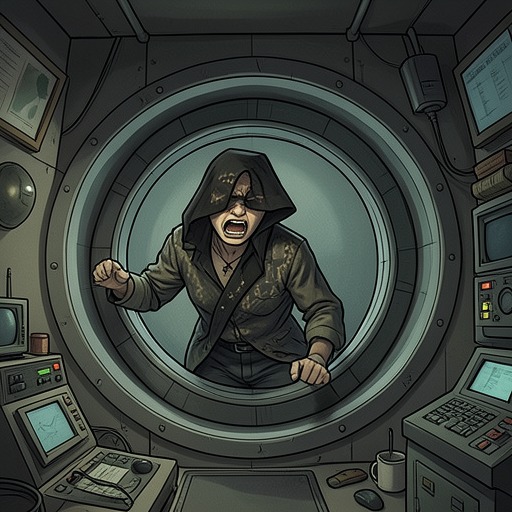
Living with 7 vampiresY/N's power-loss and possession state is the supernatural condition in which Y/N's own emerging power seizes control of the body and displaces ordinary consciousness. It is decisive because the threat does not come only from an outside attacker: Y/N becomes both the endangered person and the uncontrolled force. The state exposes the danger of Y/N's hidden inheritance, transforms earlier experiences of bodily control into an internal crisis, and ends only when Assiah intervenes and erases Y/N's memory.
Definition and Early Signs
The condition is prepared by a recurring loss of bodily autonomy. Y/N is sixteen, and the narrative repeatedly places her body under forces she cannot fully interpret. In one earlier episode, her head becomes heavy, her eyes grow heavy, and her hand reaches toward an unseen hand before she follows a person without being able to control her own body. In another, the lights come on to reveal a shadow with green eyes; the encounter is followed by the sensation that her life has left her body. A later meeting with glowing green eyes produces the same bodily disappearance, showing that possession is connected to altered perception and direct control rather than to ordinary fear alone.
The state also develops within a story that repeatedly reduces Y/N to a body defined by others. V calls her the only blood vessel present, while Y/N rejects the label and insists that she is not a blood vessel. Earlier, a trusted figure drinks her blood while covering her mouth, leaving her in pain, tears, and confusion about why he would hurt her. These episodes establish a pattern in which Y/N's body is treated as available for another person's hunger or purpose. Her later possession is different in source but continuous in structure: the body that others once claimed becomes the site of a power that acts without her conscious permission.
The Gehan Awakening
The full state emerges beneath a blood-red moon, with Y/N placed in the middle of its light. Gehan commands her to feel the power, but nothing happens at first. Y/N remains restrained by chains around her wrists and neck, so the scene combines physical imprisonment with the attempted activation of an inner force. The first unmistakable change is bodily: something seems to crawl up her back and travel through her veins, reaching her neck and then moving slowly across her face. Her eyesight becomes blurred as the power advances.
The physical invasion is accompanied by an anger Y/N cannot explain. Rage builds inside her without a clear origin, and she loses the ability to control it. Her body begins moving on its own, pulling against the chains as though it is trying to break free. She suddenly yells and screams, while her own thought registers alarm and incomprehension. The narration therefore separates the experiencing body from the observing consciousness: Y/N knows that something is happening, but knowledge no longer gives her command over her movements.
Gehan treats the transformation as the desired outcome of the ritual. He rises from his throne, spreads his arms, calls Y/N toward him, and urges her to let her true self take over. His language frames possession as revelation, as if the uncontrolled state were more authentic than Y/N's ordinary identity. Yet Y/N experiences it as a danger. Her mind becomes numb, her thoughts no longer feel like her own, and she fears that the invading force will harm the others. The crisis thus carries a conflict between Gehan's demand for surrender and Y/N's attempt to preserve responsibility for the people around her.
Divided Identity and Reversal of Control
The state produces an unexpected encounter with Y/N's own divided self. Two figures explain that they are Y/N, both of them, forcing her to confront an identity that cannot be reduced to the single consciousness she had previously recognized. This disclosure changes the meaning of the possession. The force controlling her is not simply an alien intruder; it is tied to a concealed dimension of Y/N's own nature.
The recognition does not immediately restore ordinary control, but it gives Y/N a new position within the crisis. After describing the encounter as having a conversation with herself, she feels stronger. She moves her right arm, and the chain breaks. The gesture reverses the earlier arrangement of power: Gehan, who had restrained Y/N and directed the awakening, now appears frightened. Y/N identifies the contradiction directly by asking why he is afraid of his own daughter. Her emerging agency turns the ritual's intended subject into the person capable of threatening its operator.
The reversal remains unstable. Y/N rises at least five meters above the ground while her mother calls for her to come down and warns that she cannot control the power. Y/N responds by challenging the possibility that her mother might take the power away or make it her own, and she compares Assiah to her father. The exchange shows that possession has altered not only Y/N's movements but also her relationships: inherited family conflict is voiced through a body that has become physically elevated and difficult to reach.
Assiah's Intervention and Memory Erasure
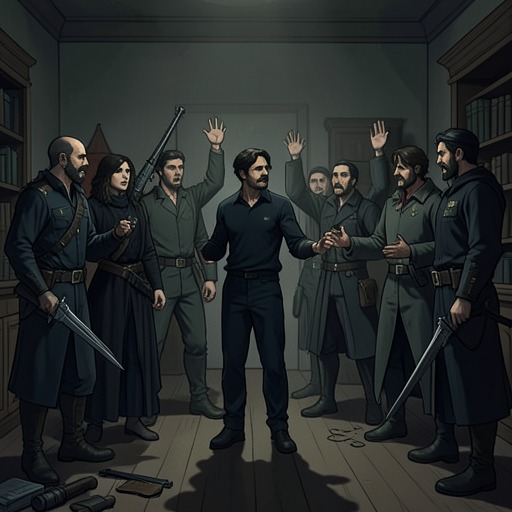
The immediate danger ends through Assiah's direct intervention. While Y/N is suspended above the ground, Assiah places her hand inside Y/N's chest. The gesture is presented as an attempt to calm or restrain the uncontrolled power, though it is so violent in appearance that the others question whether Assiah is helping. Y/N then falls, and Jungkook catches her before she hits the floor.
Assiah insists that she does not mean to harm Y/N and explains that Y/N was possessed by her own power. Her account confirms the condition's central distinction: the force is internal, but it behaves as something capable of possessing its host. Assiah asks to finish helping her, and the others allow the intervention to continue. Once it is complete, Assiah states that Y/N will be all right, but the cure carries a severe cost. She admits that she erased Y/N's memory, provoking shock and protest from Suga and J-Hope.
Memory erasure resolves the visible crisis without resolving the underlying identity. Y/N is protected from the immediate return of the possessed state, but the knowledge gained during the awakening is removed from her. The intervention therefore functions as both rescue and suppression: it saves Y/N from being ruled by her own power while also taking away her access to the experience that might have allowed her to understand it.
Narrative Significance
Y/N's power-loss and possession state develops a sustained contrast between bodily action and conscious intention. The earlier episodes of heaviness, involuntary following, life seeming to leave the body, and paralysis before glowing green eyes foreshadow the later transformation, while the blood-vessel conflict and the forced drinking of Y/N's blood establish the wider politics of a body treated as a resource. In the awakening scene, that history is intensified rather than abandoned: the body is no longer merely controlled by another person's appetite, but its own power becomes an active claimant.
The crisis also changes Y/N's position in the plot. She begins as someone whose origins are uncertain and whose body is repeatedly interpreted by others, including those who call her a blood vessel and those who conceal the truth about her parents. During Gehan's ritual, she discovers that she is divided, breaks the chain, and confronts Gehan as his daughter. Her agency is therefore real but precarious. It appears at the precise moment when ordinary self-command fails, and it is preserved only through an intervention that removes memory. The state leaves Y/N alive and temporarily safe, but it also deepens the story's central question of whether protection can exist without another form of control.