Y·N–Assiah relationship
Living with 7 vampiresThe Y/N–Assiah relationship is the story’s central conflict between a daughter’s need for origins and a mother’s determination to control what that daughter is allowed to remember. Assiah is Y/N’s real mother, but her motherhood is defined by absence, secrecy, and protection that repeatedly takes the form of intervention in Y/N’s body and memory. Their reunion turns the question of abandonment into a struggle over inheritance, power, and the right to know one’s own past.
Identity and Separation
Y/N is introduced as a sixteen-year-old girl whose family identity is already unstable. She learns that the woman who raised her is not her biological mother and immediately connects that discovery to the unresolved wound of abandonment: she asks who her real parents are and why they left her. That question gives the later encounter with Assiah its emotional force. Assiah is not merely a newly discovered supernatural figure; she is the missing parent behind the absence that has structured Y/N’s understanding of herself.
The relationship is also marked by the unequal conditions under which it begins. Y/N has been treated by the vampires as a human blood vessel, a role that reduces her body to its usefulness to others. V’s question about what Y/N is good for as the only blood vessel makes that objectifying environment explicit. Against it, Y/N’s decision to save the others rather than pursue immediate answers about her parents shows how her maternal search is repeatedly displaced by the urgent needs of the group. Assiah’s later choices continue this tension: she claims to act for Y/N’s welfare, but she also decides what Y/N may know and what must be taken from her.
Reunion and Recovered Origins
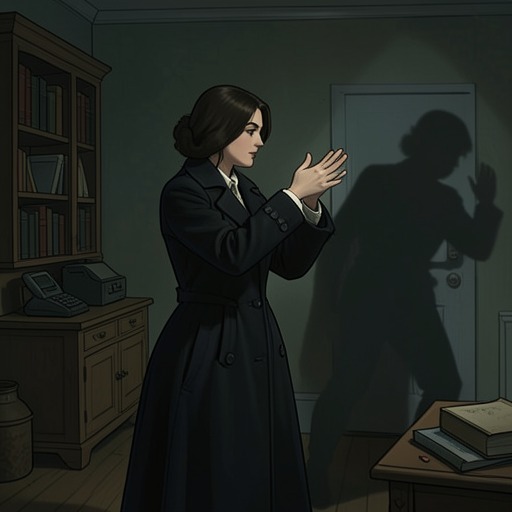
Assiah first reaches Y/N through a strange encounter in which an unknown woman greets her and says that Y/N no longer remembers her. Y/N recognizes her gradually, asking whether she is her real mother, and Assiah confirms it. The recognition is not presented as a simple reunion. Assiah’s aura makes Y/N feel unexpectedly comfortable, while her appearance marks her as something other than an ordinary human. Maternal familiarity therefore survives beneath memory loss, but it arrives attached to supernatural difference and unanswered danger.
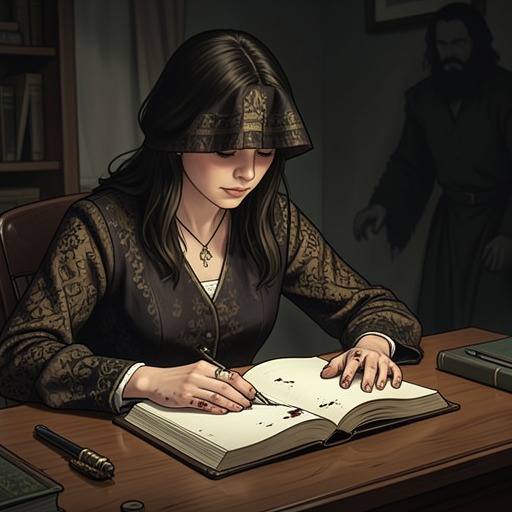
Assiah offers to explain why she left Y/N. Rather than merely answering the daughter’s questions in the present, she takes Y/N’s hand and proposes returning to the past. This gesture makes memory a shared but controlled passage: Assiah is both the person Y/N wants answers from and the one who possesses access to the history Y/N cannot recover alone. The revelation later places Assiah beside a queen and a child’s crib, while a frightening king stands nearby in black with dark red and gold details. The scene identifies Y/N’s origins with a royal and ominous supernatural household, expanding the meaning of her abandonment from a private family failure into part of a larger inheritance.
The history also connects Y/N’s paternal line to Gehan, identified as the ruler of Gehenna, which Jinyoung explains is what humans call Hell. Assiah’s relationship with Y/N is consequently caught between two legacies: a mother who appears concerned with the daughter’s survival and a father associated with Gehan’s infernal authority. The maternal bond cannot be separated from the political and supernatural power surrounding Y/N’s birth.
Power, Possession, and Maternal Intervention
The relationship changes decisively when Y/N’s own power becomes active. Under a blood-red moon, the force binding her is broken; Y/N moves her arm and shatters the chain, then takes the glass ball from Gehan and imagines the gates of Hell into existence. Her new agency reverses the earlier image of Y/N as a blood vessel or captive body. She can now act upon the forces that have attempted to contain her, and she confronts Gehan by asking why he is afraid of his own daughter.
Assiah reappears as a blue bubble changes into a human form. She is worried and asks whether the powerful figure before her is Y/N, but the reunion immediately becomes confrontational. Y/N accuses Assiah of wanting to take the power away and make it her own, then declares that Assiah is no different from her father. The accusation reveals how deeply Y/N’s abandonment has shaped her interpretation of protection: any attempt to control her power can resemble the exploitation and authority associated with Gehan.
Assiah nevertheless intervenes physically when Y/N becomes possessed by her own power. She places her hand inside Y/N’s chest, after which Y/N collapses and is caught before hitting the ground. The action is alarming to the vampires, and Assiah must insist that she does not mean to harm her daughter. She explains that Y/N was possessed by her own power, framing the intervention as an attempt to separate Y/N from a force that had overwhelmed her rather than as an attack. Her care is therefore inseparable from bodily intrusion: Assiah saves Y/N through an act that also demonstrates the extent of her access to Y/N’s body.
Memory, Protection, and the Ending of the Bond
After the confrontation, Assiah says that Y/N will be all right, but she reveals that she has erased Y/N’s memory. The decision is deliberate and paternalistic rather than accidental. Assiah explains that if Y/N remembered everything that had happened in this supernatural world, Y/N would be unable to live the normal life Assiah had always wanted for her. The mother’s stated goal is protection through separation: remove the memories, remove the supernatural burden, and return Y/N to an ordinary existence.
That justification does not resolve the relationship’s central injury. Y/N’s original pain came from not knowing who her real parents were and why they had abandoned her; Assiah’s solution to the danger of recovered knowledge is another enforced absence. The mother who finally answers the question of identity also takes away the daughter’s ability to retain the answer. Memory becomes the final contested territory between them, and Assiah holds the power to decide whether the reunion will survive in Y/N’s consciousness.
Assiah’s intervention extends beyond Y/N. She discovers that Bambam has a hole through his chest from trying to stop Y/N and finds Gehan’s mark on his wrist. She calls the curse affecting the others too long-lasting and begins working on the mark’s energy. This connects her maternal action to a wider act of release: Assiah is not only containing Y/N’s power but also attempting to undo Gehan’s control over the people caught in it. Even so, the consequences remain unequal. The others may be freed from the curse, while Y/N is freed from her memories by force.
Narrative Significance
The Y/N–Assiah relationship gives the revelations about Y/N’s identity an intimate form. The blood-red moon, the gates of Hell, the royal chamber, the glass ball, and the mark of Gehan place their family history within a mythology of bloodline and captivity, but the emotional question remains recognizably human: whether a parent’s protection can justify deciding a child’s truth for her. Assiah is neither simply absent nor simply rescuing. She returns with answers, guides Y/N through the past, confronts the daughter’s fear and anger, restrains a dangerous manifestation of power, and finally erases the experience she had helped reveal.
The relationship also marks Y/N’s movement from object to subject. Earlier, others define her as a blood vessel; during the climactic encounter, she breaks the chain, opens the gates of Gehenna, and challenges the authority of her own father. Yet the ending shows that agency remains vulnerable to maternal power over the body and memory. Assiah saves Y/N from possession, but she also determines the terms under which Y/N can continue living. Their bond therefore embodies the story’s recurring paradox: love may offer shelter, while control can make that shelter resemble another form of captivity.