Y·N’s Threefold Nature
Living with 7 vampiresY/N’s Threefold Nature is the story’s central explanation of Y/N’s divided identity and supernatural power. At sixteen, Y/N has understood herself as an ordinary human girl, even while the surrounding worlds repeatedly classify her through blood, parentage, and danger. The revelation that the human, light, and shadow selves are all aspects of one person transforms her from an object of other characters’ claims into the agent who can finally act through the whole of her being.
Definition and Revelation
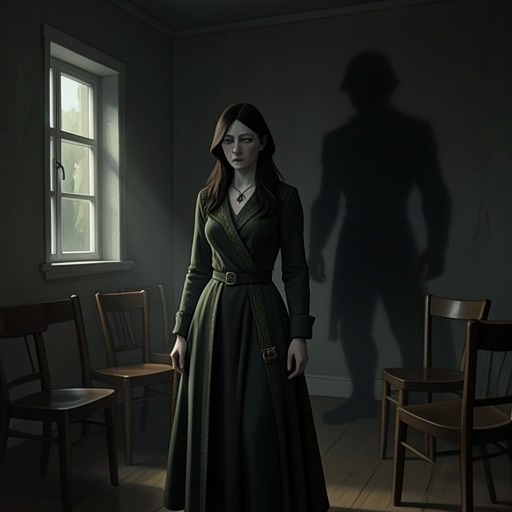
Y/N’s threefold nature is disclosed in the white room, where she encounters a version of herself with wings and other unfamiliar features. The encounter initially appears to present another person, but the figure explains that she is there to help rather than harm Y/N. A second self is also present, and the explanation identifies the three aspects directly: Y/N is the human self, one counterpart is the shadow self, and the winged figure is the light self. The revelation therefore does not describe three unrelated beings. It presents a single identity divided into human, light, and shadow forms.
The division is confusing to Y/N because her previous life has been organized around incomplete answers. She has already questioned whether the woman who raised her was her real mother and asked why her biological parents abandoned her. Elsewhere, the castle’s inhabitants reduce her to a possible blood vessel, while J-Hope’s warnings about people with green eyes and Jimin’s insistence that she should watch their eyes place her body and perception under constant threat. Against that background, the threefold revelation supplies a deeper explanation: Y/N’s human life is only one visible part of a much larger inheritance.
Origins and Family Legacy
The light and shadow selves explain that the crisis has been intensified by what Y/N’s father did. The shadow aspect says that its side has gone out of control because of him, linking Y/N’s internal division to the actions of a parent rather than treating it as a random supernatural mutation. The conversation also identifies the opposed origins of her parents. Y/N learns that her father comes from Gehenna, which Jinyoung describes as the realm humans call Hell, while her mother comes from Heaven, though she is explicitly said not to be an angel.
This parentage gives the threefold nature a mythic structure without reducing it to a simple opposition between good and evil. The light self and shadow self are not presented as moral strangers fighting for ownership of Y/N. They insist that all three are the same person. The maternal and paternal inheritances instead meet inside one human life, producing a mixed identity whose supernatural aspects have been separated but not made independent. Y/N’s divided nature is consequently both a family secret and a bodily condition.
Integration and Awakening
The light self tells the human Y/N that they must work together, or merge together. The shadow self clarifies the consequence: because all three are the same person, the merging will not change Y/N’s actions; it will allow her to possess her powers fully. Integration is therefore framed as cooperation rather than replacement. Y/N does not surrender her human identity to a more powerful double, nor does one supernatural side simply destroy the other. The human self becomes capable of acting with the light and shadow dimensions acknowledged as part of her.
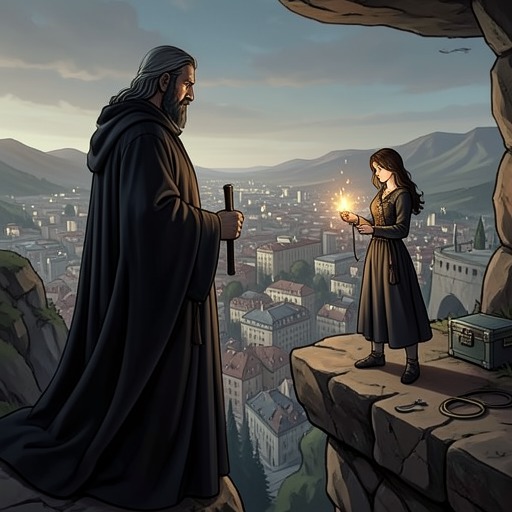
The immediate result is visible when Y/N opens her eyes in the chained place and finds Gehan before her with blue fire in his hands. She feels much stronger, and the change is demonstrated physically: a movement of her right arm breaks the chain. Gehan is frightened by the reversal, especially when Y/N addresses him as her own father and questions why he is afraid of his daughter. The scene turns the language of inheritance against the ruler who helped create the crisis. What had marked Y/N as vulnerable now becomes the source of her resistance.
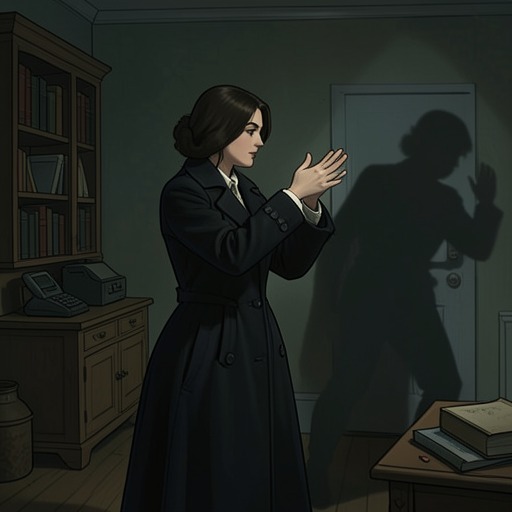
The awakening also gives Y/N telekinetic power. When she stretches out her arm, she feels a new force within it and lifts Gehan through the movement, sending him flying. Her reaction is playful and astonished, but the action carries a larger consequence: the power is no longer merely an implied potential or a possession controlled by others. It has entered her physical agency. The same body that was treated as a blood vessel can now move an enemy without touching him.
Conflict with Gehan and the Parents
The integrated power immediately becomes a challenge to Gehan’s authority. When Y/N asks whether he would like to return to Hell, Gehan answers that he is its ruler and can come back. Y/N responds by declaring that she will lock the gate to Hell. The exchange places a boundary-making power against Gehan’s claim of permanent sovereignty. His title as ruler does not settle the conflict because Y/N’s newly awakened ability allows her to imagine closing the route by which he retains access.
The family conflict also extends to Y/N’s mother. In another moment, Y/N rises at least five meters above the ground and above her mother, who orders her to come down because she cannot control the power. Y/N interprets the warning through the history of parental control, asking whether her mother wants to take the power away and make it her own. When the mother denies that intention, Y/N still answers that she is no different from her father. The accusation shows that integration has not produced emotional reconciliation. Y/N can command her power, but she remains suspicious of both parents’ relationship to it.
Meaning and Narrative Function
Y/N’s Threefold Nature changes the meaning of the entire plot. Earlier, the castle’s demand that she stay with the vampires and V’s description of her as the only blood vessel position her as something to be kept, used, or protected. Y/N rejects that reduction, and her later decision to save the trapped companions rather than concentrate only on discovering her parents’ identities makes the issue ethical as well as genealogical. Her priorities shift from asking what she is to deciding what she will do.
The threefold structure also turns the story’s recurring warnings about perception into an inward problem. J-Hope tells Y/N how to answer someone with green eyes, and Jimin tells her that she should look at such a person’s eyes, because appearances and hidden identities determine survival. In the white room, Y/N must likewise learn to recognize the unfamiliar figures as parts of herself. The most important discovery is not simply that supernatural beings exist around her, but that the boundary between the ordinary girl and the extraordinary forces pursuing her runs through her own identity.
The integration functions as a threshold rather than a final return to ordinary life. Y/N emerges from the encounter stronger, breaks her chains, uses telekinesis, and threatens to seal Gehenna, yet the conflict over control continues through her confrontation with her mother. Her threefold nature thus provides both liberation and danger: it grants the agency needed to resist Gehan, while demanding that Y/N confront the inherited forces, divided selves, and unresolved parental claims that made her vulnerable in the first place.