
Weil’s Passage Through Suffering
LongingThis thread follows Simone Weil’s movement from political solidarity through religious encounters toward a demanding, unfinished Christian commitment.
increasing Bearing strength in each event
 decreasing
Bearing strength in each eventdecreasingThe Radical Intellectual
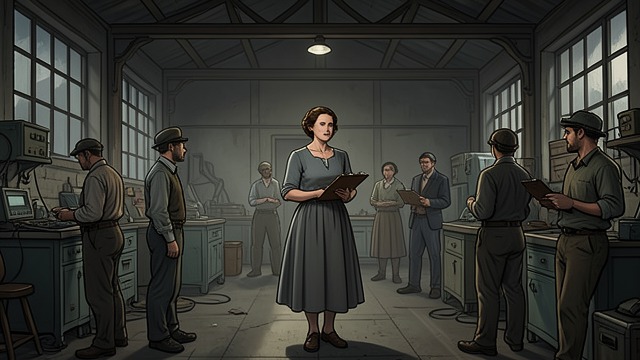
The Radical Intellectual
Thinking beside the poor
Weil teaches philosophy while joining demonstrations and giving resources to people in need.
She refuses to let intellectual analysis substitute for lived experience.
A search without easy belonging
Her political convictions are intense, but she remains wary of institutional commitments.
The Factory’s Affliction
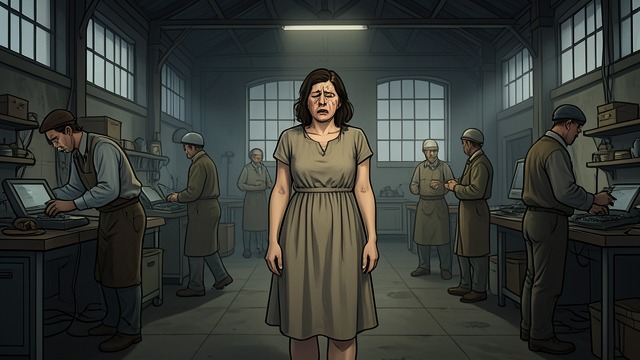
The Factory’s Affliction
Labor experienced firsthand
Weil works in a factory and confronts exhausting, dehumanizing conditions.
Production quotas and physical pain erode her sense of dignity.
Solidarity through the body
The experience brings the affliction of workers into her own understanding of social life.
The Portuguese Procession
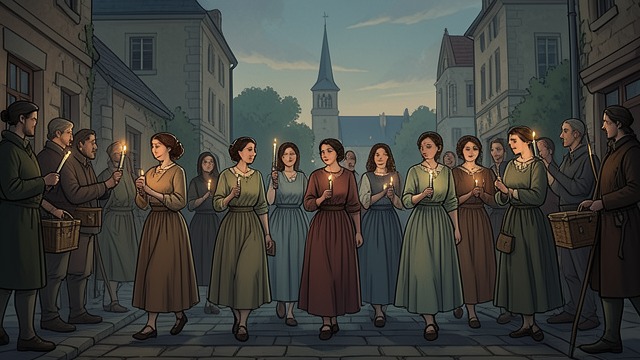
The Portuguese Procession
A religious encounter among workers
Weil watches fishermen’s wives process with candles and mournful hymns.
She recognizes Christianity as a religion with a particular meaning for the oppressed.
An opening to faith
The experience unsettles her earlier distance from religion without ending her intellectual independence.
Assisi and Solesmes

Assisi and Solesmes
Prayer and beauty
At Assisi, Weil finds herself compelled to pray for the first time.
At Solesmes, chant and the Passion of Christ reshape her understanding of suffering.
A mystical turning
While reciting a poem at Solesmes, she experiences Christ’s presence without sensory vision.
A Difficult Christian Ending

A Difficult Christian Ending
Exile and conviction
Weil works with the Free French government but remains distressed by the distance from occupied France.
She loves Catholic worship while resisting institutional membership.
Baptism and death
Near the end of her life she is baptized after asking a priest for spiritual counsel, then dies in a sanatorium.
Early 1930s
1934 to 1935
During Weil’s 1935 visit to Portugal
1937 and Easter 1938
From 1942 to 1943
