
The Song as a School of Desire
LongingThis thread follows the book’s use of the Song of Songs as a scriptural language for longing, absence, and union.
increasing Bearing strength in each event
 decreasing
Bearing strength in each eventdecreasingA Difficult Love Poem

A Difficult Love Poem
The surface story
The Song presents lovers who praise, seek, and miss one another.
Its bodily imagery can seem unexpected in Scripture.
The spiritual question
Christian interpreters ask how human desire might illuminate the soul’s longing for God.
Origen’s Church and Soul

Origen’s Church and Soul
An allegorical reading
Origen reads the bride’s plea for a kiss as the Church longing for Christ.
He then applies the image to the individual soul seeking the Word.
Desire as knowledge
Understanding Scripture becomes an intimate encounter rather than a merely intellectual exercise.
Bernard’s Passionate Image

Bernard’s Passionate Image
The kiss as encounter
Bernard makes the bride’s desired kiss a metaphor for divine intimacy.
The image marks a longing that doctrine alone cannot satisfy.
A spiritual progression
His interpretation links purification, illumination, and union through the images of feet, hand, and mouth.
Presence and Absence

Presence and Absence
Love in separation
The lovers’ distance gives interpreters a language for spiritual dryness and longing.
God may seem present at one moment and absent at another.
Desire persists
The painful interval does not cancel faith; it can deepen the desire to seek God again.
A Lifelong Text
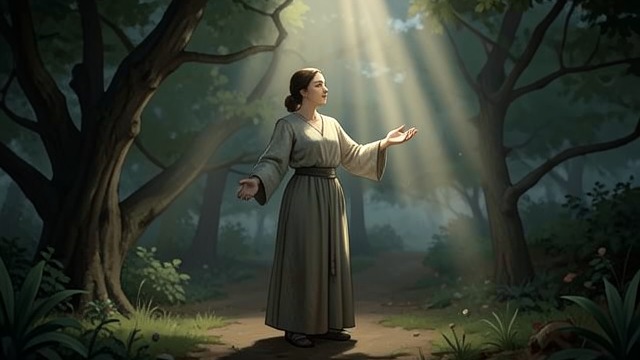
A Lifelong Text
Meaning without exhaustion
The Song remains a source of meanings that no single reading can settle.
Its poetic language invites continued prayer and interpretation.
Love as the destination
The book presents its deepest lesson as the love of God and neighbor.
In the book’s early account of Christian interpretation
Third century
Twelfth century
Across the medieval sermons discussed in the book
In the book’s concluding reflections
