
Fire as Hope and Danger
Lord of the FliesThis flow follows fire's double meaning as a rescue signal, a source of warmth, and ultimately an instrument of destruction.
increasing Bearing strength in each event
 decreasing
Bearing strength in each eventdecreasingHope on The Mountain
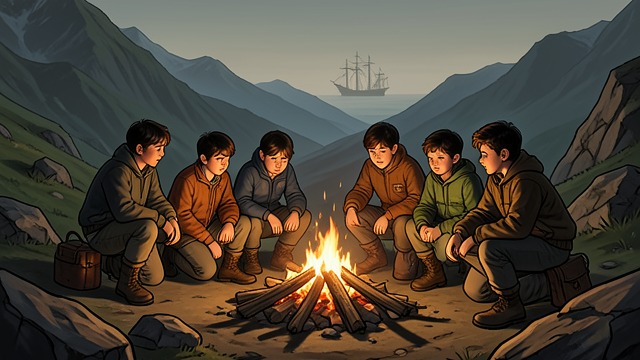
A Beacon Imagined
Ralph asks the boys to make a fire on The mountain so a passing ship may see them.
Rescue Made Visible
The signal gives hope a concrete form and makes cooperation measurable. If the fire fails, the boys lose more than warmth: they lose a chance to be found.
Flame Escapes Control
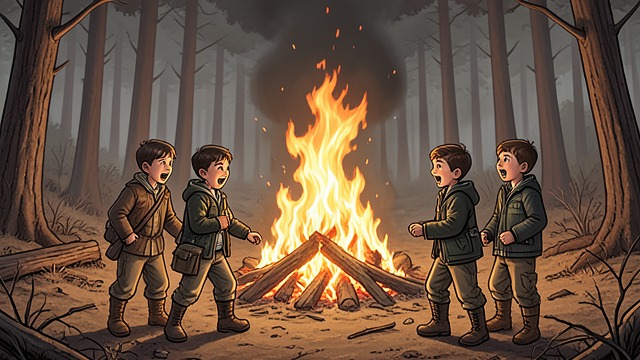
A Beacon Becomes A Blaze
The boys ignite a large pile, and fire spreads through dry undergrowth before they can manage it.
Power Without Judgment
Their excitement briefly hides the danger of what they have made. Fire embodies the gap between a desired result and the consequences of careless action.
Signal Goes Dark
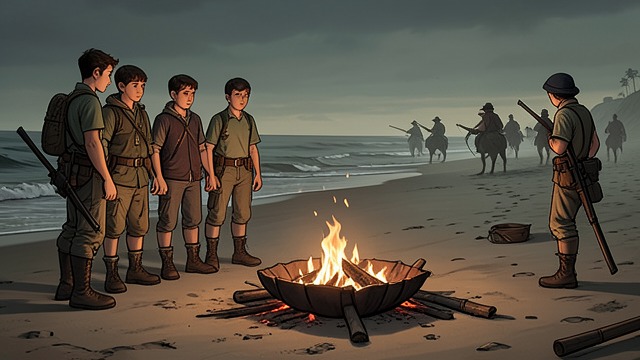
An Unkept Promise
The signal fire is abandoned while the hunters pursue pigs, and a ship disappears over the horizon.
Hope Requires Labor
The missed rescue makes the fire's meaning depend on continued shared effort. Enthusiasm alone cannot keep hope alive.
A Hearth at The Beach
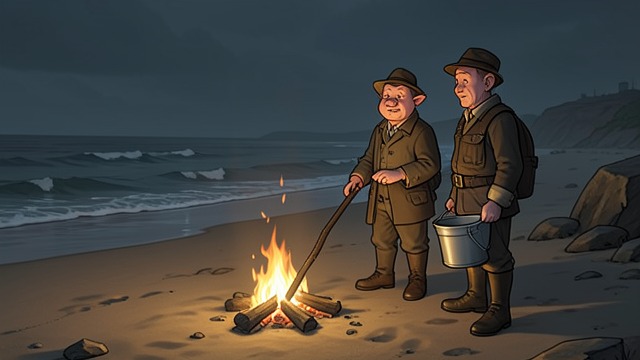
Warmth Close at Hand
Ralph and Piggy relocate the fire nearer The beach, where it can comfort the group at night.
Hope Reframed
The fire's domestic use grows alongside its signal function. The change makes it more accessible but less effective as a distant beacon.
Fire Brings Rescue
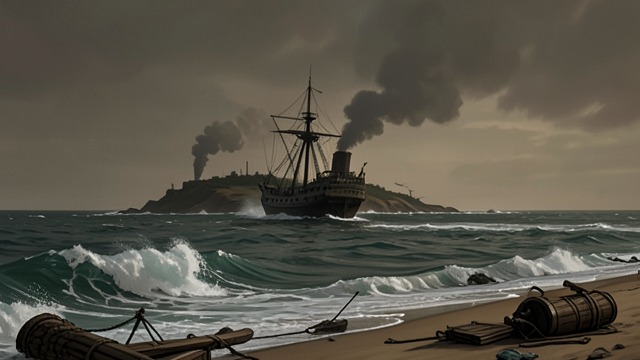
Destruction Seen From Sea
Jack Merridew's tribe sets The island on fire, and the smoke draws a naval officer toward The beach.
A Rescue With A Cost
Fire finally produces rescue, but only as a by-product of an attempt to kill Ralph. Its meanings of hope and destruction converge in the ending.
The first afternoon, when Ralph proposes a signal
The first afternoon, as the woodpile catches the forest
After the first successful hunt, when the ship passes
After Jack Merridew's departure, during the rebuilding of camp
At the climax, during the hunt for Ralph
