The platform
Lord of the FliesThe platform is a natural shelf of pink granite beside The lagoon, at once a shaded refuge and the boys’ main meeting place. Its physical features shape the first pleasures of life on The island, but its greater significance emerges as Ralph and the others use it to assemble, speak, and establish rules. The changing use of the place traces the distance between a community that can gather around shared procedures and one increasingly governed by force.
Setting and Physical Features
The platform rises about four feet above the surrounding sand and terrace, a broad, square interruption in the landscape. Pink granite thrusts through The forest, terrace, sand, and lagoon to form a raised ledge. A thin covering of soil and coarse grass supports young palm trees, but the soil is too shallow for them to grow tall: when a palm reaches roughly twenty feet, it falls and dries across the rock. Their trunks lie in a convenient criss-cross pattern, creating ready-made seats beneath the palms that remain standing.
The surviving palms make a green roof. From below, shifting reflections from The lagoon tremble across its underside and scatter moving patches of light in the shade. Ralph climbs onto the platform, notices the coolness, and looks down through clear water to coral, tropical weed, and tiny glittering fish. Nearby, a long pool enclosed by sand and a pink-granite ledge gives him a place to swim. The outcrop thus enters the story first as part of a sensuous landscape: elevated above the beach, sheltered from the sun, and closely joined to the water.
The meeting area grows from this improvised terrain rather than from any built structure. A particularly large dead palm trunk serves as Ralph’s seat, parallel to the beach and facing inland; from the boys’ side, he appears against the shimmer of The lagoon. Smaller logs define the other sides of the roughly triangular gathering space. Their arrangement is uneven, and one seat is so springy that boys leaning back have repeatedly been thrown into the grass. The awkwardness remains unfixed through assembly after assembly, a small but telling contrast between the group’s elaborate talk about rules and its failure to make even this shared setting more workable.
From Discovery to Assembly Ground
The platform is already close to the first discovery of The conch. Ralph sees the shell among the weeds in The lagoon, and Piggy recognizes it as a conch and explains that it can be blown. Once Ralph lifts it from the water, it becomes more than an attractive object: its sound gathers the boys. The platform’s convenient shade and fallen trunks provide the setting where a scattered group can become an assembly, and where the shell can be seen and heard by those assembled.
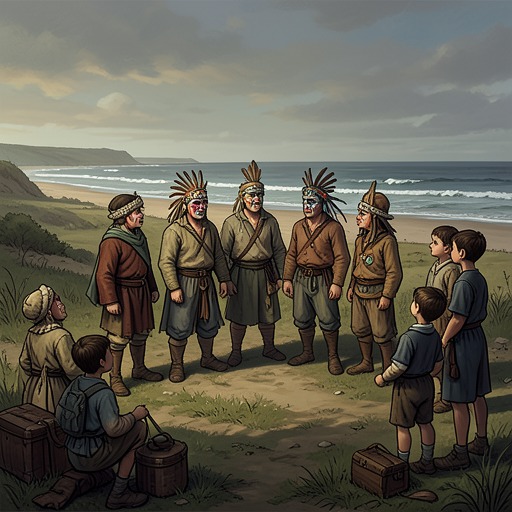
At the first meeting, the boys give their names, learn that there are no adults to look after them, and choose a chief. Jack Merridew claims the position on the grounds of his school authority and choir leadership, but the boys elect Ralph. The conch contributes to Ralph’s distinction: he has blown it and waited on the platform, making the raised meeting place and the shell part of the new chief’s public authority. Piggy supplies much of the practical knowledge behind the discussion, though the boys’ laughter at his nickname leaves him socially exposed even as his ideas matter.
The platform also gives the boys a place to define how discussion should work. Ralph proposes that the person holding The conch may speak without interruption, establishing a procedure that borrows the familiarity of school meetings. Jack eagerly calls for rules, while Piggy uses the shell to bring order back when the gathering breaks into noise. The arrangement depends on more than the object or the platform itself: it requires the boys to recognize the procedure and restrain themselves. For a time, the shaded outcrop makes their attempt at collective government tangible.
A Civic Space Under Strain
At a later assembly, Ralph uses the platform to explain that the boys are on an uninhabited island and must care for themselves. The existence of pigs leads Jack to press for hunters, while Ralph argues that the boys also need a signal fire and rules against speaking all at once. The conch becomes a practical means of distributing speech, and the platform a place where different responsibilities can be stated before the group. Yet agreement at a meeting does not ensure that those duties will be carried out beyond it.
That gap becomes visible when the signal fire on the mountain fails and the boys return to the platform to argue over what happened. Jack contests Piggy’s right to speak, insisting that the conch does not count on the mountain. Ralph reasserts that the assembly rules apply there too, but the disagreement exposes the weakness of rules that lack common enforcement. Later, when Jack’s defiance breaks up another assembly, Ralph clings to the idea that rules are all the boys have, while Jack declares that strength and hunting matter more. The platform still gathers them, but it cannot make their competing claims to authority compatible.
The boys eventually move the fire down from the mountain and build it on the sand near the bathing pool and the platform. Piggy suggests this alternative when the beast’s presence makes the mountain fire inaccessible. He helps gather wood from a fallen tree on the platform, crossing a boundary that had made even useless timber seem protected by the meeting place’s sanctity. His glasses focus sunlight on the tinder, and a fire burns nearby. The outcrop now serves not only as a forum but as a source of material for keeping a rescue signal alive.
Fracture and Lasting Significance
After Jack’s hunters raid Ralph’s camp and take the fire, Ralph, Piggy, and the twins return to the platform at dawn. The assembly is reduced to the remaining boys: Ralph sits on the familiar trunk while Sam and Eric sit nearby, and Piggy holds The conch. Piggy asks Ralph to speak and urges him to decide what to do. The scene recalls the first meetings, but its smaller gathering and Piggy’s impaired sight register how much the group’s shared life has narrowed. The platform can still host an assembly; it cannot restore the fire, Piggy’s glasses, or the boys who have left Ralph’s side.
The final destruction of The conch occurs not on the platform but at Castle Rock, where Piggy is killed and the shell is shattered. That distinction sharpens the platform’s meaning: the place that once gave the boys a setting for deliberation cannot contain the violence that has displaced their order. When a naval officer reaches the beach, the fire has spread into the palms, and the platform’s trees are being swallowed by flame. The outcrop’s green roof and the boys’ meeting ground are thus caught in the same burning landscape. Throughout the story, The platform remains a physical landmark, but its civic importance depends on a fragile practice of gathering and listening—one that the rock itself cannot preserve once the boys abandon it.