
The Church Arsons and Their Aftermath
Lords of ChaosThis thread traces the symbolic campaign against Christian buildings from its early fires through police attention, trials, and public memory.
increasing Bearing strength in each event
 decreasing
Bearing strength in each eventdecreasingFantoft Burns
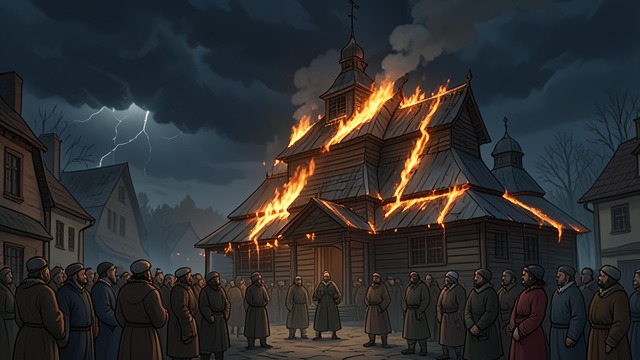
A Landmark in Flames
The first defining fire
Fantoft Stave Church, a historic wooden building near Bergen, burned in June 1992. The arson was never proven against Varg Vikernes, although he later discussed it in ways that encouraged speculation and attached the church to his public image.
Meaning assigned afterward
For Vikernes and other extremists, the fire could represent revenge against Christianity and the occupation of older sacred places. The book also stresses that this interpretation does not erase the church's cultural value or the harm done to its community.
A signal to others
The blaze became an emblem of the movement. Its notoriety helped turn a local crime into a model that other young people could imitate, whether from ideology, rivalry, or a desire for attention.
A Wave of Fires
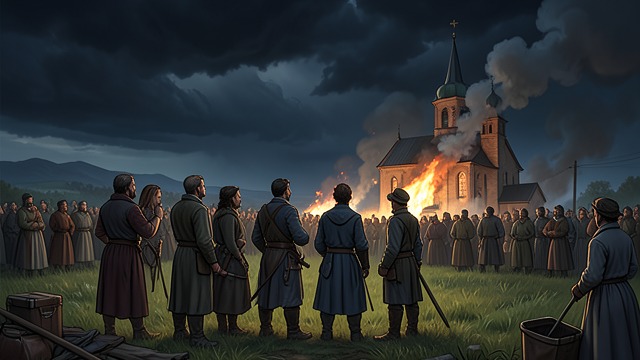
Arson as a Campaign
Repeated attacks
After Fantoft, churches and chapels in Norway were damaged or destroyed, including Holmenkollen Chapel, Skjold Church, and Åsane Church. Responsibility varied from case to case; the pattern did not prove a single centrally directed operation.
Symbol and consequence
Some participants described arson as anti-Christian retaliation or a demonstration of commitment. Congregations experienced the loss as an attack on shared memory, community life, and places associated with rites of passage.
Imitation spreads
The crimes created an escalating contest inside the scene, where deeds could establish status more forcefully than statements. The fires also invited copycats beyond the original circle, widening the gap between subcultural theater and public danger.
Trials and Their Legacy
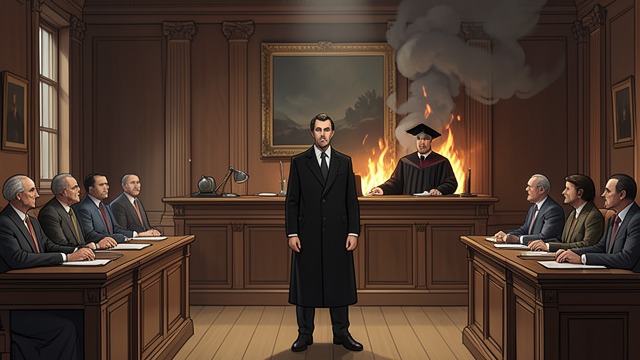
The Legal Reckoning
Convictions and sentences
In 1994, courts convicted several members of the scene for arson and related crimes. Vikernes received Norway's maximum twenty-one-year sentence for murder, arson, and weapons offenses; other participants received substantial prison terms.
Beyond criminal punishment
Damages for burned churches added a long financial burden, and a later judgment ordered Vikernes to pay significant compensation. The cases disrupted bands, friendships, and the scene's earlier center of activity.
A lasting public image
The fires remained inseparable from Black Metal's international reputation. The book argues that criminal notoriety helped attract attention and imitators, even as many musicians later sought to distance themselves from the original crimes.
June 6, 1992
Summer 1992 to early 1993
1994 to 1997
