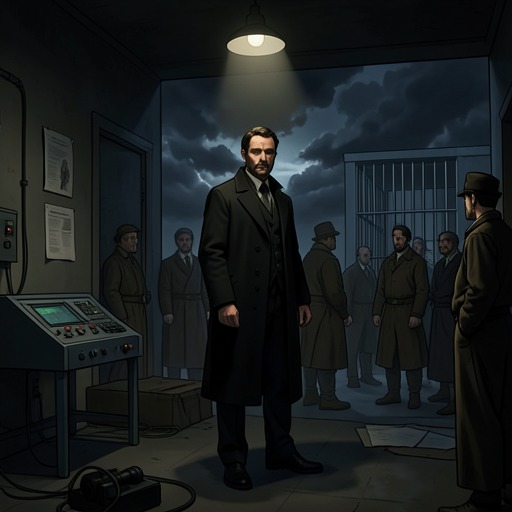
1997 Plot to Free Vikernes and Attack Public Figures
Lords of ChaosThe 1997 Plot to Free Vikernes and Attack Public Figures was an alleged conspiracy reported in Oslo in April 1997, in which perpetrators planned attacks on political and religious figures while seeking to free the imprisoned Varg Vikernes. Its significance in the book lies in the convergence it announces: a subculture first made notorious through music, image, and church arsons now appeared in headlines as a setting for political violence and a prison-break scheme.
The April 1997 Headlines
The account opens with newspaper headlines announcing a plot to kill progressive politicians and religious leaders in Norway. The alleged conspirators were described as possessing weapons and substantial sums of money, and their plans extended beyond the proposed killings. They also intended to liberate an imprisoned comrade and smuggle him out of the country.
The proposed prisoner was not, the opening suggests, a familiar underground political activist. He was 24-year-old Varg Vikernes, identified as the world’s most infamous Black Metal musician. That contrast gives the revelation its force: a figure associated with an extreme musical scene had become the intended beneficiary of a conspiracy framed in the language of political terrorism.
From Music Scene to Political Violence
The book presents the plot as part of a longer, uneven passage from pop music into militant action, and as the latest development in a saga that had largely gone unwritten. It places the allegations against a background of violence associated with Black Metal, including murders and an ongoing campaign of church arsons that brought religious intimidation into the scene’s public image. The account does not establish that music itself caused the 1997 conspiracy; rather, it shows how the plot entered a history already shaped by violence, defiant rhetoric, and the deliberate crossing of social boundaries.
That history had also acquired a public life through news coverage. In January 1993, the Norwegian daily Bergens Tidende put Varg Vikernes on its front page beneath the headline WE LIT THE FIRES. Two months later, Kerrang! presented Norwegian Black Metal to an international readership through a lurid cover feature centered largely on alleged comments from Vikernes and Øystein Aarseth. By the time the 1997 plot reached the headlines, Black Metal was already recognizable far beyond Norway, in part through such coverage.
A Wider Field of Imitation and Attention
The book places Norway within an international spread of Black Metal rather than treating it as an isolated phenomenon. It describes the loosely connected Norwegian Black Circle as a source of an example that later surfaced in distant scenes, while cautioning through its account of those scenes that local histories and actions differed. In Sweden, for instance, an attempted arson at Christopher Jonsson’s home in July 1992 was described as the first documented Black Metal transgression there and as having taken place under Varg Vikernes’s direction. In the United Kingdom, underground fans carried out church attacks in emulation of him, while a separate homegrown scene gained much wider popularity through Cradle of Filth.
These episodes provide context for the 1997 headlines, not proof that an international network organized the conspiracy. The book’s framing connects musical subculture, political extremism, and media attention, while preserving the distinction between a shared reputation and demonstrated coordination. The alleged plot matters as a new escalation in the public story of Black Metal: an effort to turn a notorious musician’s imprisonment into the stated objective of a conspiracy involving attacks on public figures.