Coven
Lords of ChaosCoven’s importance rests less on musical innovation than on how completely it joined Satanic themes to album design, recorded performance, and live theatre. Its debut, Witchcraft: Destroys Minds and Reaps Souls, paired conventional late-1960s rock with conspicuous Satanic lyrics and imagery; its stage show extended that presentation into a sustained ritual spectacle. Though the band later reduced the diabolic emphasis on its major-label releases, the debut remained a vivid point of reference for later Satanic musicians.
The debut and its presentation
Witchcraft: Destroys Minds and Reaps Souls appeared in a striking gatefold sleeve that presented the three band members in possessed-looking imagery and suggested the atmosphere of a Black Mass. The packaging made the album’s identity clear before the music began. Its songs were described as standard late-1960s rock, not far removed from Jefferson Airplane; the distinctive element was the persistent Satanism of the lyrics and artwork, rather than an especially forceful musical departure.
The album’s final track was a thirteen-minute Satanic Mass. An inside-cover note described it as, to the band’s knowledge, the first Black Mass recorded in writing or audio, and cautioned against its use by listeners who had not studied Black Magic and understood the risks. The warning framed the recording as something presented not simply as a song, but as a purportedly researched ritual document.
Coven’s singer Jinx Dawson led the group, which also included Oz Osbourne. The book explicitly distinguishes him from Ozzy Osbourne, the British vocalist. The debut’s first track was titled Black Sabbath, and the album appeared a year or two before Black Sabbath’s eponymous 1970 debut. The timing and shared title invite speculation about a connection, but the account does not establish one.
The live ritual spectacle
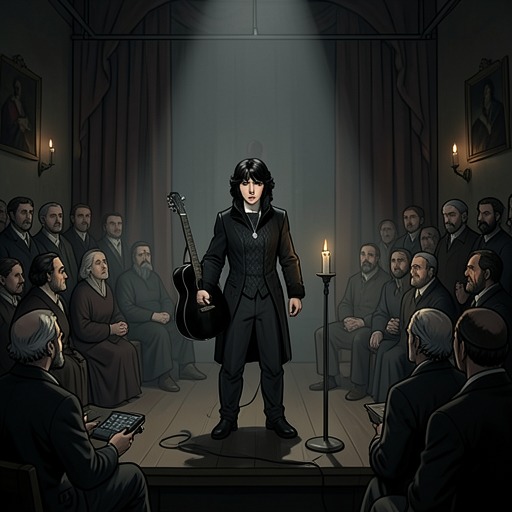
Coven translated the album’s themes into a theatrical concert format. Former member Oz Osbourne recalled that the group built its set around songs and ritual passages, with an altar behind the stage, candles, red lighting, and a road crew member portraying Jesus on a cross. The band wore costumes and performed material about witchcraft; these staging choices made the ritual imagery a continuous part of the show rather than a single visual effect.
At the close, the performance joined a Procol Harum song to an excerpt from Ave Maria. Jinx Dawson delivered the Black Mass benediction, recited Latin passages, invoked a line associated with Aleister Crowley, and hailed Satan. The performer portraying Jesus then left the cross, inverted it into a Satanic symbol, and danced offstage as the music continued. The sequence turned religious imagery into a carefully timed stage reversal, bringing the set’s musical and theatrical elements to a single conclusion.
Later performances and changing emphasis
After the debut, Coven recorded several more albums for major labels, but the diabolic content diminished with each succeeding release. The retreat from the debut’s stark presentation did not erase the band’s reputation for it; instead, the later albums marked a clear change in emphasis within the group’s recorded career.
A planned early-1970s event described as a Satanic Woodstock was to feature Coven before an address by Anton LaVey, High Priest of the Church of Satan. The festival, scheduled for Halloween in Detroit, was canceled amid controversy. Coven nevertheless performed its full Black Mass spectacle at a Detroit nightclub the following evening. Timothy Leary was in attendance, and the account recalls that the performance frightened him.
Reception and influence
Coven’s broadest recognition came years later through the unexpected national hit One Tin Soldier. Some observers speculated that the success resulted from the pact with the Prince of Darkness that the band had once openly acknowledged. The book presents that explanation as speculation, not as an established cause of the single’s success.
The debut’s influence persisted beyond the band’s period of relative obscurity. King Diamond, singer and driving force behind Mercyful Fate, identified Jinx Dawson as an inspiration, praising her singing and range while distancing himself from the album’s religious viewpoint. Alongside his account of being moved by a Black Sabbath concert as a child, that acknowledgement places Coven within a longer line of performers whose dark imagery and stage presentation helped shape later Satanic rock and metal.