Jan Axel Blomberg
Lords of ChaosJan Axel Blomberg, known in Mayhem as Hellhammer, entered the band in 1988, early in Dead’s tenure, and became its drummer as the group’s underground standing and reputation for extremity were growing. His place in the story is documented less through a detailed account of his own ambitions than through his recollections of Dead, the band’s shared living arrangements, and Euronymous’s handling of the aftermath of Dead’s death. Those memories make Blomberg an important witness to the way private events became material for Mayhem’s public mythology.
Joining Mayhem
Mayhem had been active since its first show in 1985. The band’s debut demo appeared the following year in a numbered edition of 100 copies, and its 1987 mini-album Deathcrush sold out an edition of 1,000 on the band’s own label, Posercorpse Music. Dead, formerly the singer of the Stockholm cult band Morbid, joined after that release and moved to Oslo. Blomberg was found as a new drummer during this period; the account identifies him as one of the underground’s most talented musicians.
In an interview, Blomberg placed his own start in Mayhem in 1988, describing himself as joining early alongside Dead. The two arrivals thus belong to the same phase of the band’s development, but their positions in the surviving account differ: Dead became a defining presence as vocalist, while Blomberg appears principally as a bandmate and later witness. Even as Deathcrush sold briskly and Mayhem’s reputation expanded, its members remained extremely poor. Blomberg’s entry into the group therefore coincided with growing cultural notoriety rather than financial security.
The house outside Oslo
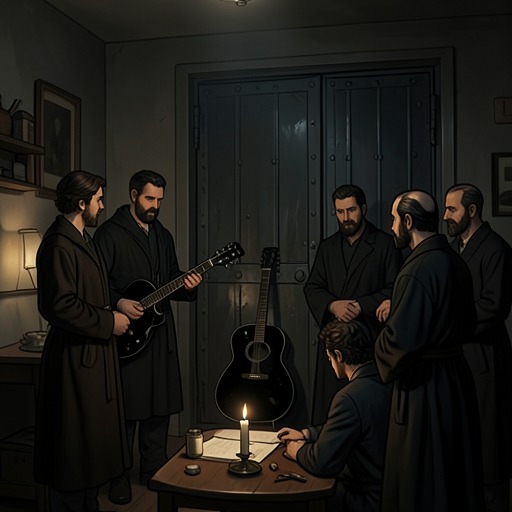
Blomberg recalled living with Dead and Euronymous in an old house outside Oslo where Mayhem rehearsed. The arrangement joined the band’s domestic life to its work: the house was both a shared residence and a rehearsal space. When Dead died, Blomberg was away at his parents’ home in Oslo. He had planned to return, but Euronymous telephoned to tell him that the police had closed the house and that Dead had died.
This account establishes Blomberg’s distance from the event itself without removing him from its immediate aftermath. He did not describe witnessing Dead’s death; instead, the news reached him through Euronymous, and the police closure marked the interruption of the household and rehearsal routine. His testimony consequently preserves a specific change in circumstance: a place where the musicians had lived and worked was suddenly inaccessible, and the band’s private loss became a matter involving the police.
Remembering Dead
Blomberg described Dead as a strange but decent person, a former Morbid vocalist from Sweden whom he regarded as kind, melancholic, and depressive. The account offers a personal impression rather than a clinical explanation. It sets Dead’s manner and emotional character alongside the death that later became inseparable from Mayhem’s image, while leaving the causes of his inner life unresolved.
Blomberg also rejected the rumor that Euronymous had killed Dead. He recalled Euronymous telling him afterward that Dead had died by suicide, while allowing others to suspect him because the rumor would generate further stories about Mayhem. In Blomberg’s account, Euronymous’s silence about what he had done after the death was part of the same strategy: withholding a definitive explanation allowed outsiders to imagine the worst. The distinction matters to Blomberg’s testimony. It separates what he said he knew about the death from the uncertainty Euronymous deliberately encouraged around his own conduct.
Aftermath and public image
Blomberg’s recollections also connect the handling of Dead’s remains with Mayhem’s cultivation of an extreme reputation. He described Euronymous collecting material that became jewelry for close associates, and remembered that Euronymous treated the aftermath as a way to support claims about himself. In a separate recollection, Blomberg said Euronymous had considered preserving another part of Dead’s body, but abandoned the idea because the police would ask about it. The detail presents the police not merely as an outside presence but as a practical limit on how far Euronymous’s attempts at display could go.
The book places these memories beside Euronymous’s later claim that Dead’s death belonged to a war against the music scenes Mayhem had rejected. Blomberg’s testimony supplies a more intimate and revealing counterpoint: it portrays the transformation of a bandmate’s death into rumor, objects, and reputation as a conscious process. His narrative role is therefore that of an insider whose recollections clarify both the shared life of the band and the deliberate ambiguity surrounding its public image.