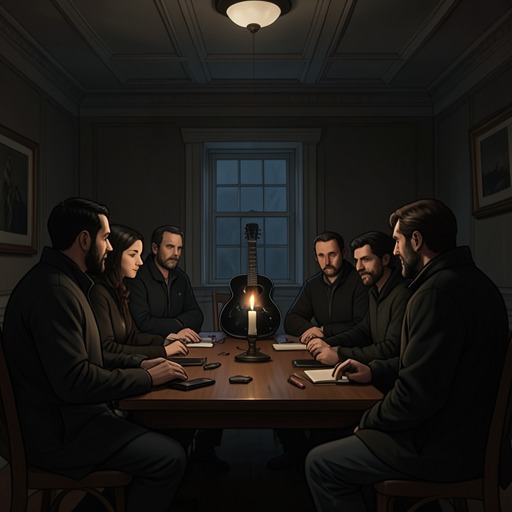
Lundby New Church Fire
Lords of ChaosThe Lundby New Church Fire was the destruction of a stone church in Gothenburg, Sweden, on February 7, 1993, during a period when Black Metal-associated church attacks were gaining attention beyond Norway. The fire became an early documented instance of this pattern in Sweden; three men, all about eighteen, eventually received sentences of two to three years for arson, and another Christian building nearby was vandalized the same night.
Background and Chronology
The book places the fire amid escalating criminal activity associated with the Norwegian Black Circle in late 1992 and early 1993, as comparable events began appearing in Sweden. On January 20, 1993, the daily newspaper Bergens Tidende brought the Norwegian Black Metal scene to wider public attention with a front-page story about Varg Vikernes. The Lundby fire followed less than three weeks later. The book describes Swedish adherents as taking up their own firebrands after the example set in Norway, presenting the event within a cross-border sequence rather than as an isolated act.
A prior Swedish incident forms part of that chronology but was distinct from the Lundby arson. On July 26, 1992, Suuvi Mariotta Puurunen attempted to burn down the home of Christopher Jonsson under Vikernes’s direction. That attempt did not amount to much, but Puurunen’s diary later supplied material for media portrayals of Vikernes. The account distinguishes this earlier case from the February 1993 fire and does not identify the Lundby arsonists as participants in Puurunen’s attempt.
The Church and the Attack
Built of stone in 1886, the Lundby New Church was known for its acoustics and for recordings made there. On February 7 it burned down. The same night, another Christian building nearby was vandalized, extending the damage beyond the church itself. The account gives no further description of how the Lundby fire was set or of the damage to the second building.
The contrast between the church’s musical reputation and its destruction is part of the episode’s documented setting: the building was valued for its sound, yet became the target of an arson committed by young music devotees. The source does not establish that musical interest alone explains the attack; it places the incident in a wider subcultural and criminal context.
Sentences and Wider Significance
Three male arsonists, each about eighteen, eventually received prison sentences of two to three years. The account supplies no names for them. Their prosecution gives the episode a definite legal outcome, although the book’s emphasis also falls on the fire’s place in the expansion of church attacks beyond Norway.
The fire occurred before Kerrang! published its widely circulated Norwegian Black Metal cover feature on March 27, 1993. That later article helped bring the Norwegian scene to international attention, but the Lundby attack already belonged to a developing cross-border story: the book describes Black Metal as a worldwide phenomenon and the Norwegian Black Circle’s embers as surfacing in distant places. The event is therefore presented both as a specific act of arson in Gothenburg and as evidence of the way a conspicuous Norwegian example could be taken up elsewhere.