
The Paradox of the Asylum’s Home
Los renglones torcidos de DiosThe hospital is both a site of coercion and a home for people abandoned by the world, complicating any simple opposition between freedom and confinement.
increasing Bearing strength in each event
 decreasing
Bearing strength in each eventdecreasingA Building of Contrasts
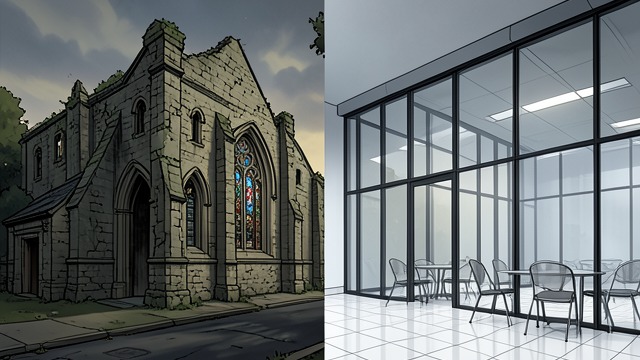
A Monastery Turned Hospital
Old walls and new wards
Alice enters a former monastery whose ancient architecture surrounds modern, sometimes inelegant clinical spaces. The building’s scale makes it feel both sheltering and oppressive.
A world apart
The boundary and long corridors make the hospital seem separate from ordinary society. Yet it contains a working community with routines, friendships, and forms of life that exceed the idea of mere incarceration.
Those Who Have Nowhere Else
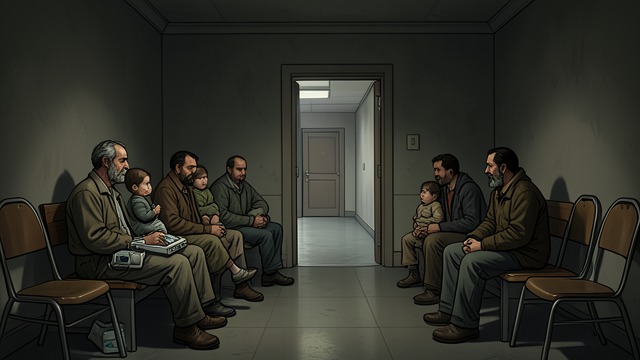
The Hospital as Home
Abandonment repeated
Cosme remains after recovery because his family refused him, while other residents have no one willing to receive them. The institution becomes their stable home even when its rules limit them.
A social failure
Their stories shift attention from individual illness to families and communities that reject vulnerable people. Alice begins to ask whether the outside world is automatically freer or more humane.
A Voluntary Return
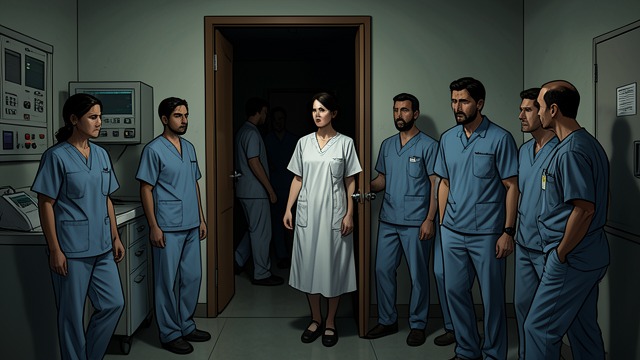
Choosing the Place Again
A changed relationship to confinement
Alice’s first entry is driven by a delusional assignment, and her later detention is genuinely distressing. After release, she nevertheless sees the hospital as a place where she can do meaningful work.
An unresolved homecoming
Her projected return does not prove that the institution was right to hold her. It shows that belonging may be chosen after coercion, provided the person regains agency over that choice.
Alice’s first evening at the hospital
During Alice’s conversations with residents
At the novel’s conclusion
