«La salud pertenece al presente»
Los renglones torcidos de Dios«La salud pertenece al presente» is a compact maxim about the unequal claims of present life and the past. In a conversation involving Alice Gould and Ignacio Urquieta, it is expanded into a contrast between health, which belongs to the present, and memories, which belong to a time that cannot be recovered. Its decisive point is not that the past should be forgotten, but that the present should not be surrendered to it.
The Exchange and Its Context
The phrase occurs in a discussion of Ignacio Urquieta’s suffering around water and his wish to understand its cause. He insists that he does not need doctors to tell him that water brings him torment; what he needs is an explanation of why. The question makes his distress more than a symptom to be named: he wants the hidden history that might account for it. The conversation thus places the maxim beside a genuine search into the past, rather than treating memory as irrelevant.
Within that exchange, a speaker says, “¡La salud pertenece al presente!” and continues, “¡Y los recuerdos, al pasado!” The formulation responds to the idea of giving up health in order to forget something concrete. It then sharpens the distinction: the “hoy” is still remediable, while the time gone by is irreparable. The argument is directed against exchanging what can still be cared for now for what cannot be changed retrospectively.
The Maxim’s Logic
The expression works through parallel oppositions: health and memory, present and past, the remediable and the irretrievable. Its short first clause sounds like a general principle; the next clause completes the balance, and the question that follows turns the principle into a challenge. The speaker is not merely defining where health and memory belong. The appeal asks what could justify sacrificing a life that remains open to change for a past that cannot be undone.
That distinction gives the line its practical force. Memory may explain suffering, as Ignacio’s question about the cause of his fear suggests, but explanation does not automatically make the past recoverable or worth placing above present well-being. The maxim therefore holds two concerns in tension: the desire to know what happened and the need not to let that desire consume the health that remains. It does not settle the mystery behind Ignacio’s condition; it offers a limit on what the search for its cause should cost.
Alice’s Response and the Line’s Effect
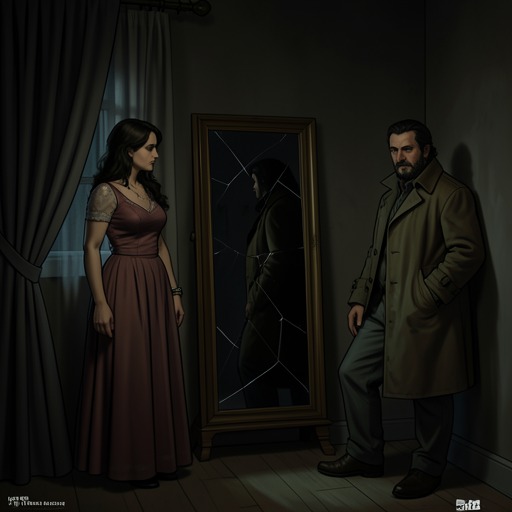
After the exchange, Alice’s face is visibly altered. She says that she does not feel well and is going to leave. The text places this bodily reaction immediately after the words about health and memory, giving the maxim a consequence within the scene rather than leaving it as detached advice. It has reached her, though the passage does not explain precisely what she recognizes in it or why it unsettles her. The scene preserves that uncertainty: her reaction is clear, its private meaning is not.
The line’s force consequently depends on more than its general wisdom. In conversation, an abstract distinction between present and past becomes personal enough to disrupt Alice’s composure. Her response also complicates the speaker’s counsel. The claim that health belongs to the present may sound reassuring, but here it touches a subject whose memories and present condition cannot simply be separated by assertion. The maxim offers a way to resist being ruled by the past, while Alice’s visible distress leaves open how difficult that resistance may be.
Meaning in the Novel
The expression condenses a recurring problem in the scene: how to listen to a person’s account of suffering without reducing that account either to a diagnosis or to an explanation from the past. Ignacio seeks the cause of his distress; the response redirects attention toward the present without denying that the past matters. The phrase’s balance is therefore not a command to stop remembering. It distinguishes remembering from allowing an irreparable time to take precedence over what is still possible.
Its aphoristic form makes that distinction portable, but the scene keeps it attached to particular stakes: a question about the origin of fear, a warning against sacrificing present health, and Alice’s abrupt admission that she feels unwell. The maxim can be read as counsel for living with memory, yet it is not presented as an easy cure. Its immediate effect is not to resolve anyone’s history, but to expose the strain involved in deciding how much of the present can be given over to it.