Alicia’s Mental Barrier
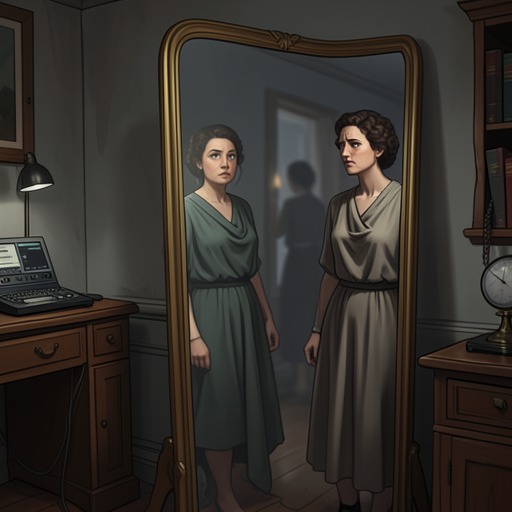
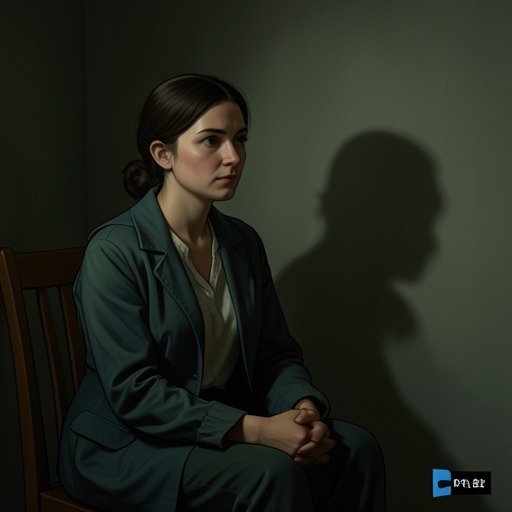
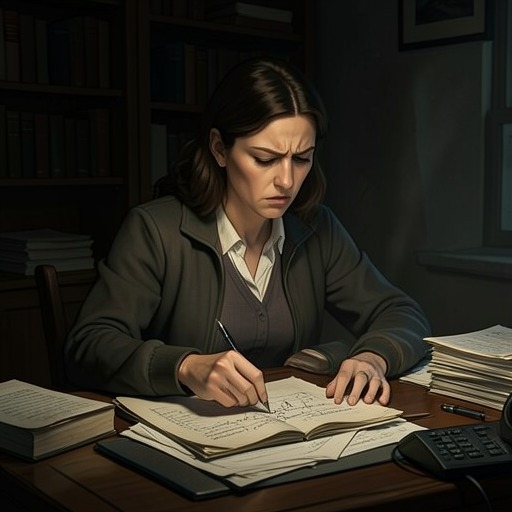
Los renglones torcidos de DiosAlicia’s Mental Barrier is the name for the obstruction Alice Gould encounters whenever she tries to reason alone about her own confinement. It is not presented as a visible hallucination: it is an intellectual boundary that blocks access to thought, memory, and the feared explanation of her situation. Its importance lies in the contradiction it creates. Alice can reason and speak brilliantly about her case in company, yet cannot cross the same ground in private; the barrier eventually shapes not only what she can know, but what she is willing to let others discover.
The obstruction and its images
The barrier first takes the form of an immense iron curtain, compared to the old theatre curtains intended to stop a fire from spreading. The image gives an inward failure of thought the force of a physical partition: something has come down between Alice and her attempt to reason, and she experiences it as a boundary she cannot pass. The narration distinguishes this from a visible hallucination, such as the giant snake Teresiña Carballeira saw where her mother was. Alice’s curtain is instead an imagined or intellectual vision. The distinction matters: the image is vivid, but its function is to describe blocked thinking, not to establish that Alice sees an actual object before her.
The curtain seems to mark a prohibited tract of mind, like a fenced hunting ground where entry is forbidden. That sense of restriction gives way, in other attempts, to images of overwhelming motion: a flood like the waters that engulfed Pharaoh’s armies as they pursued Moses, or a great emptiness that sucks Alice in like a detached asteroid drawn by the gravity of a drifting mass. These are not interchangeable decorations. The curtain bars passage; the flood overwhelms it; the void threatens to pull the thinker away altogether. Each image makes the same effort to inquire feel less like ordinary reflection and more like approaching a dangerous limit.
A divided capacity for reasoning
The blockage is selective rather than a general inability to think. Alice can discuss abstruse subjects with ease and, before other people, argue brilliantly about the causes of her admission. Alone, however, she cannot make herself continue. Her thought feels stopped as if a runner trying to reach a goal had met a wall that cannot be penetrated. The contrast makes the barrier especially unsettling: intellectual competence remains visible, but it does not give her access to the question that matters most personally.
The obstruction also reaches in two directions. The narration likens it to an amnesia projected partly into the past and, paradoxically, partly into the future. Alice is not free to approach the blocked region from either side. When she tries, the curtain may appear; at other times, her mind substitutes the deluge or the consuming void. The recurring images therefore register both a limit on recollection and an inability to imagine what lies ahead. The account does not identify a single hidden memory or disclose a definitive cause for this boundary; what it establishes is the boundary’s felt operation and its effects on Alice’s efforts to understand herself.
The question she cannot answer
The barrier becomes more consequential as Alice compares her apparent failure to recover with the course of other residents’ illnesses. She observes that many crises remit on their own, as if the cycle of illness had entered a cooler season, and asks why genuine patients can find resolution while she, who believes herself sane, cannot. At the same time, Raimundo García del Olmo’s delay in appearing, even after he had been told that Alice’s assigned mission was complete, becomes intolerable to her. The missing explanation and the missing visitor leave her with an unresolved question about why she remains in the hospital.
That question also has an institutional edge. Alice insists that she entered willingly as a professional detective, but the director tells her that her file records involuntary procedures: a medical certificate from E. Donadío stating that she was ill and needed admission, and an application from her husband, Heliodoro Almenara. The paperwork does not itself explain the mental barrier, and the two should not be conflated. It does, however, make the blocked question more urgent: Alice’s account of her presence and the official account recorded in her file do not agree, while her attempts to examine that discrepancy meet the same inward obstruction.
From blocked thought to chosen ignorance
The barrier affects Alice beyond the moments when she tries to reason. When questioned about matters she does not understand, she is forced to lie; later, she comes to believe, or to believe that she believes, those lies. The progression blurs the distinction between an answer offered to escape an immediate difficulty and a conviction she can rely on afterward. What begins as an inability to proceed thus alters her relation to truth, including her sense of which statements are genuinely hers to believe.
Eventually, Alice asks Obdulio Limón to cease all his investigations. Her stated preference is not to know rather than to learn what she fears. This is more than another failed attempt to cross the mental boundary: it is a consequential decision made under its pressure. The narrative leaves the feared answer unspecified, but shows how the barrier can turn uncertainty into active avoidance. The repeated impasse therefore carries a double force: Alice remains driven to ask why she is there, yet fears the knowledge that might follow if someone else reaches an answer she cannot approach herself.