Dolores Bernardos
Los renglones torcidos de DiosDolores Bernardos begins as a specialist physician within Fuentecilla’s medical hierarchy and ends as its director, a change that places her at the center of the hospital’s struggle over how Alicia should be treated and whether she should be released. Her importance lies not in a single diagnosis but in the way she uses professional authority: she attends to the institution’s technical and procedural demands while challenging Samuel Alvar’s handling of Alicia and insisting that the doctors decide together.
Medical role and expertise
At the Wednesday medical meeting, Dolores is identified as the physician responsible for operating the hospital’s computed-tomography and electroencephalography equipment and for administering electroshock. Her work locates her in the practical machinery of psychiatric care, alongside the doctors who lead clinical units. Non-psychiatric doctors such as analysts and anesthetists do not attend those weekly meetings, which helps define the particular institutional circle in which she participates.
Her role is not confined to equipment. During a period when Alicia is being kept inactive so that doctors can assess her claims, Dolores questions her about her doctoral thesis on juvenile delinquency. The exchange places Dolores among the clinicians testing Alicia’s account, though the available scene does not establish what conclusion Dolores draws from the questioning. She is also present in a medical encounter in which Maruja Maqueira is brought before the doctors, who receive her with smiles. The scene gives a glimpse of Dolores’s work within a team, rather than presenting her as an isolated authority.
Attention to Alicia and opposition to Alvar
Dolores’s connection with Alicia becomes more personal through repeated acts of attention. On one visit, she brings Alicia a box of chocolates and searches through the hospital’s rooms and service areas when Alicia cannot be found. The search leads to the ward known as the Lions’ Cage and then to the Showcase of Monsters, where Alicia is discovered beside an empty baby bottle near the Cyclops. The starkness of that location contrasts with Dolores’s modest gift and active effort to find her; her concern takes the form of a visit and a search, not merely a clinical entry in a file.
Her concern develops into open opposition to Alvar. Dolores and Salvador Sobrino visit the director to protest the severity of his treatment of Alicia. She also knows that the nurses are preparing a written petition to the ministry seeking Alvar’s removal, and argues that the doctors should act before the nurses do. This is more than private sympathy: she tries to turn concern for Alicia into institutional pressure. The effort belongs to a wider challenge to Alvar, but Dolores’s intervention gives it a medical and administrative voice.
Dolores’s understanding of Alicia is shaped not only by the dispute over her confinement but also by the impression Alicia makes on those around her. María Luisa Fernández reflects that Dolores, like herself, has been won over by Alicia’s unusual personality. The observation suggests that Alicia’s influence is not limited to one friendship. In Dolores’s case, however, personal regard does not replace procedure; it becomes a reason to take Alicia’s case seriously within the hospital’s decision-making structure.
From physician to director
After Alvar’s departure, the hospital’s leadership changes. César Arellano is the first candidate for the directorship, but refuses because he does not want to give up direct contact with patients. Dolores is then proposed unanimously and becomes the new director. The choice gives formal power to a doctor who has already opposed Alvar’s treatment of Alicia, while distinguishing her from Arellano, whose preference is to remain in hands-on clinical work. The celebration in her honor at Pepe el Tuerto’s Roast Grill marks the appointment as a collective institutional transition, not simply a private promotion.
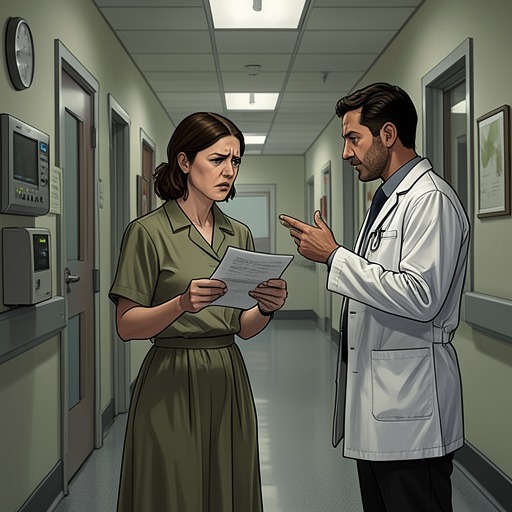
As director, Dolores still receives María Luisa Fernández, although she warns that she is busy and asks her visitor to be brief. The meeting concerns Alicia and the medical committee’s judgment. María Luisa presses the case for her friend, and Dolores takes responsibility for presenting the matter to her colleagues. Her position now requires her to manage the same conflict she had earlier protested from outside the directorship: how to balance the doctors’ assessment with the consequences of keeping Alicia in the hospital.
Collective judgment and narrative significance
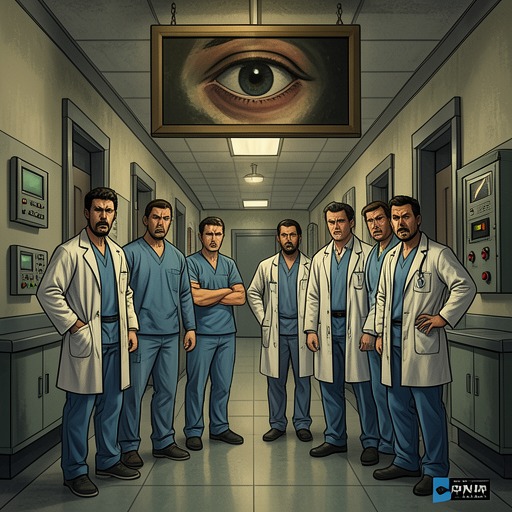
At the committee meeting, Dolores explicitly rejects reliance on a majority alone. She says that she wants a collegial decision and requires unanimity after hearing María Luisa’s account. She frames the conflict as a contest in which Alicia, an intelligent patient with paranoia, has put Alvar out of action and provoked his resignation. The formulation acknowledges both Alicia’s diagnosis and her effectiveness in the struggle with the director; neither category cancels the other.
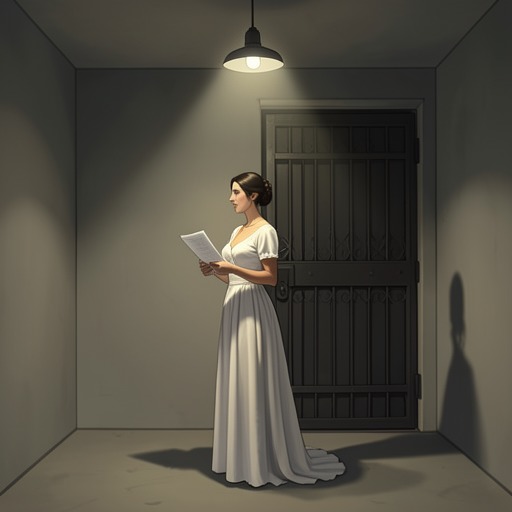
Dolores then begins the ballot, unfolding and reading the papers aloud. The scene ends in the act of counting, with the recorded votes beginning in the affirmative. Her insistence on unanimity makes the method itself consequential: Alicia’s future is not to rest on one director’s authority or a narrow majority, but on agreement among the physicians charged with deciding her case. Dolores’s arc therefore joins care to governance. She becomes an advocate without abandoning clinical process, and a director whose first defining test is whether the institution can reach a shared judgment about a patient who has unsettled its assumptions and its leadership.