El telón de hierro
Los renglones torcidos de DiosEl telón de hierro is the image Alice Gould gives to a blockage in her own thinking, a barrier that keeps her from reaching conclusions about herself. It is not a visible hallucination but an imagined, intellectual obstruction: she can reason brilliantly about her confinement with other people, yet struggles to examine its causes alone. The image turns that contrast into a physical boundary in the mind, and makes the possibility that she is genuinely ill harder—not easier—to confront.
An Image of Blocked Thought
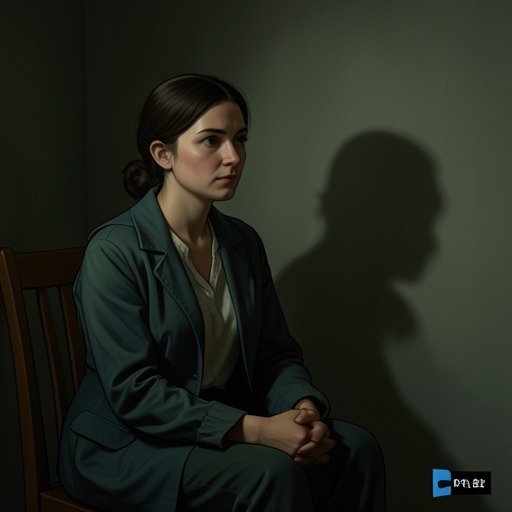
Alice imagines an immense iron curtain of the kind once used in theatres to prevent a fire from spreading. Unlike the serpent Teresiña Carballeira sees where her mother is, Alice’s curtain is not something visible in the room. Its force is inward: it seems to mark off an area her thought cannot enter.
The image belongs to a wider difficulty in making sense of her situation. Alice reflects that some patients’ crises subside as their illness moves into a new phase, while she, who believes herself healthy, cannot resolve her own predicament. The delayed appearance of Raimundo García del Olmo, even after he has been told that the mission he assigned her is complete, sharpens her distress. Her mind can follow difficult arguments, but the question of why she is in the hospital remains inaccessible.
The Boundary Around Self-Examination
The curtain does not mean that Alice is unable to think in general. She can discuss the causes of her admission lucidly when others are present; the obstruction appears when she tries to reason about those causes alone. She makes repeated efforts, but cannot cross into the part of her mind where an answer might lie. The narration also describes the barrier as a kind of amnesia extending paradoxically both backward into the past and forward into the future. At other moments, the obstruction takes another imagined form, an overwhelming flood, suggesting that the image changes while the underlying limit remains.
The Unresolved Question
The image returns when Alice withdraws to her room to reconsider her position. Lying on the bed with her eyes closed, she finds her capacity to think stopped up and experiences the mystery as a wall. She cannot accept that the director would have presented an impostor before the commissioner, and the idea that the director and the head of the emergency unit were partners in a deception also fails to hold together. Yet José Muescas had said that he knew Raimundo García del Olmo. As the explanations she can bear fall away, the remaining possibility is the one she resists most: that she may really be mad.
El telón de hierro therefore marks more than a failure to remember or reason. It dramatizes the divide between Alice’s confident public arguments and her inability to settle the question of her own sanity in private. The barrier protects no easy conclusion: it keeps her from confirming either her belief that she is healthy or the frightening alternative pressing in behind the wall.